With Global Aid in Retreat, a Pooled Philanthropic Fund Backs Cities on the Front Lines of Migration
Backed by donors including the Conrad N. Hilton Foundation, the project channels resources directly to municipal governments, helping them design their own solutions.

By Eden Stiffman
Senior Editor
September 25, 2025 | Read Time: 7 minutes
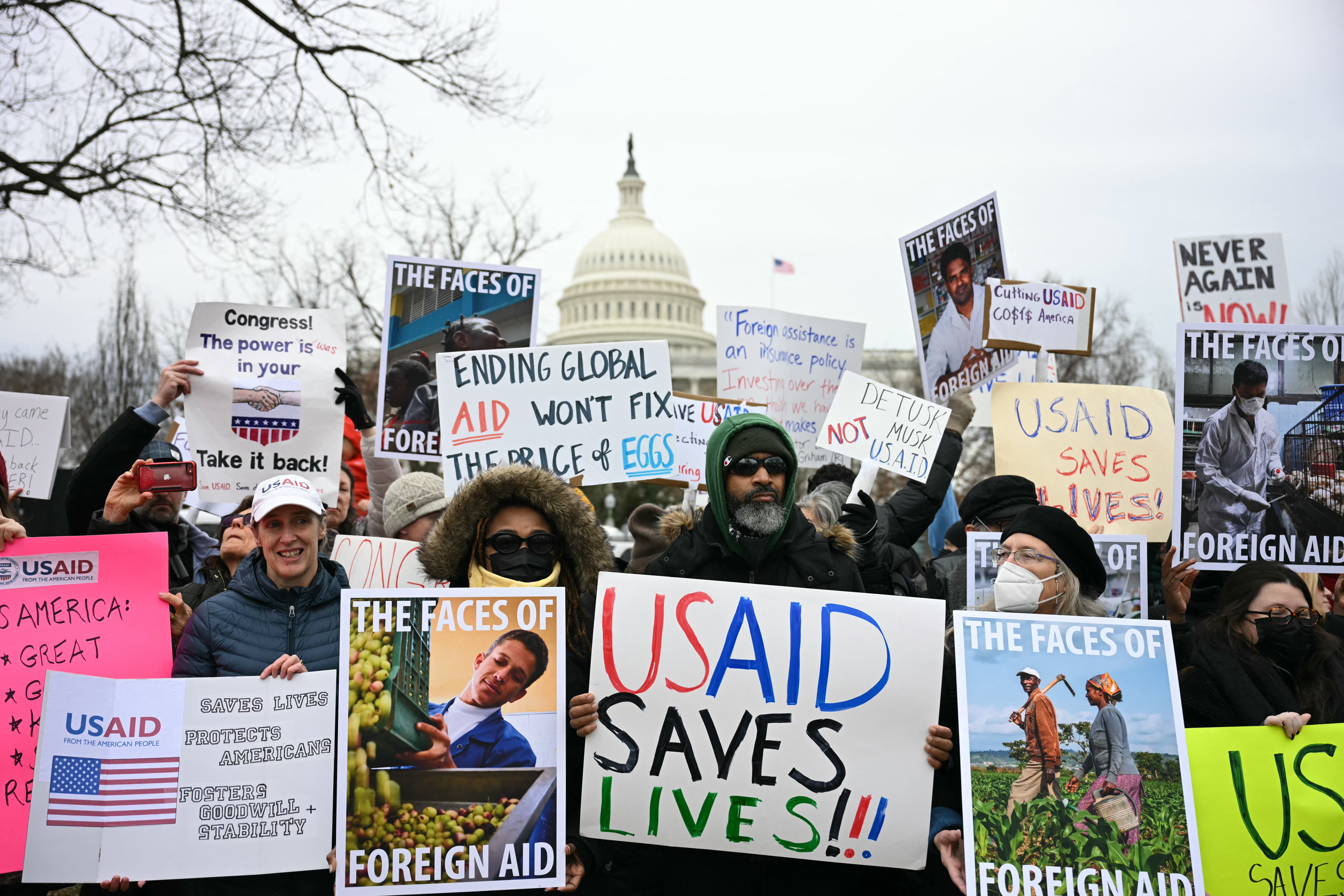
With international government aid in retreat — from the shuttering of USAID to deep cuts at the United Nations and in European giving — migration programs are among the hardest hit. The Migration Policy Institute estimates that as much as $2.3 billion in annual U.S. foreign aid earmarked for migration and displacement projects has been slashed. Funders are looking for new ways to ensure people escaping political conflict and persecution, economic hardship, and the escalating impacts of climate change — and the communities they join — have the support they need.
One emerging model is the Global Cities Fund for Migrants and Refugees, which channels financial and technical resources directly to solutions led by local governments, a rare approach in international aid.
Created in 2021 by the Mayors Migration Council, a sponsored project of Rockefeller Philanthropy Advisors, the fund began with a $1 million seed investment to help five international cities weather the Covid-19 pandemic. In five years, it has distributed $28 million to efforts in 26 global cities, including Beirut, Milan, and Guayaquil, Ecuador. This week, the fund announced its next round of grantees: a total of $3 million will go Boston, Mass.; Kanifing, Gambia; Koboko, Uganda; Manta, Ecuador; Quezon City, Philippines; and Turin, Italy, for projects that aim to drive economic inclusion.
The fund’s backers have included the Van Leer Foundation, the Conrad N. Hilton Foundation, the IKEA Foundation, Open Society Foundations, and the German philanthropy Robert Bosch Stiftung.
Vittoria Zanuso, the council’s executive director, spoke with the Chronicle about why cities are uniquely positioned to respond to these challenges but often struggle to access funding.
This interview was edited for brevity and clarity.
How did the fund come about, and what gap in the global aid system was the Global Cities Fund created to fill? Why center cities rather than NGOs?
The Mayors Migration Council was created in 2019 by cities like Los Angeles, Milan, Freetown, and Amman, who felt they were on the front lines of migration but excluded from the big policy conversations. Seventy percent of displaced people settle in cities, yet mayors were expected to provide for new arrivals with limited resources and no access to big aid flows.
They often rely on very restricted national transfers, and they cannot really borrow internationally because that’s something that is controlled by their national government. They typically are not the typical grantee of big foundations and philanthropic actors.
When the pandemic hit, local governments were being asked to do more with less. We realized we needed to create a new instrument to help philanthropies and donors channel their money directly to city governments. The idea was to use small grants to prove a concept, and then hopefully facilitate follow-on funding to help these cities expand or continue projects.
In 2021, we started with just $1 million and a focus on inclusive pandemic response. Then we realized that we could be using it for other pressing issues that mayors are interested in, like climate migration and economic inclusion.
How do cities apply? How much support do they receive?
The projects are designed by cities; they are not imposed from the top down. We ask our cities to collaborate with migrants and refugees in the design and implementation of their projects.
We typically issue an invite-only call for proposals, help cities develop their proposals, and an independent committee reviews them. Initially grants were about $200,000 per city. Now they range from $200,000 to half a million dollars.
The point is to help them build a precedent of fiscal feasibility that they can use to attract follow-on funding to continue or expand their projects.
What kinds of projects are you funding?
In Medellín, Colombia, the city used a grant to provide emergency shelter for Venezuelan migrant and refugee families at risk of homelessness. Along with temporary shelter and housing, the city was also able to connect clients with employment services, work-authorization assistance, and child care so parents could put their children into schools or daycare while they were applying for jobs. Thanks to this holistic approach, the city was able to secure permanent housing for families and improve their long-term prospects.
A $200,000 investment helped unlock an additional $2 million from municipal revenues and philanthropic sources to continue the project, which continues to this day.
Traditional development funding is under strain, with major funders like the U.S. pulling back support for humanitarian programs. How are you navigating that climate?
We are seeing repercussions of these funding cuts. USAID is a big contributor to U.N. agencies that we partner very closely with. In some cases they were involved in projects that were expected to continue, but that follow-on support has stopped.
Read More
-
Government & Regulation
Emergency Fundraisers Offer a Lifeline to Groups Who Have Lost Foreign Aid
-
Podcast | Giving Done Right
Gates Foundation CEO Mark Suzman on Funding Urgent Needs
As the funding pool shrinks, instruments like this are more needed than ever. It’s a vehicle for philanthropic funders that want to fill the gap and channel money quickly and efficiently to cities and local actors in need.
Philanthropies are generally nervous about investing in migration, so it’s already a competitive pool. That said, our core funders have doubled down on their commitment.
Most philanthropies don’t grant directly to local governments. What resistance or skepticism have you encountered?
Some funders have internal rules that prevent them from giving directly to cities simply because they’ve never done it before. So there’s still work to push and encourage philanthropists to expand and revise some of their rules.
Others are concerned about political affiliation with a given mayor, or bureaucratic inefficiencies that could slow down the process. But this is exactly why we built the fund: to explore and work in as many contexts as possible so that we can then advise funders based on their needs and constraints on where their investments would be better directed.
The majority of city grantees have been able to unlock additional investment. Where is that follow-on funding generally coming from?
Ninety percent of the cities we’ve granted to date have secured enough resources to continue the project, doubling or tripling our initial investment. The majority comes from philanthropists because we’re still in that catalyzing, proof-of-concept phase. But we have had instances in which the follow-on funder was a multilateral bank or a government. That is the ultimate goal because they are the ones that can really help us get to scale.
What’s a moment when the fund didn’t work as intended? And what did you take away from that?
Out of 28 cities, two didn’t work out as planned. In one case, the government didn’t guarantee the political buy-in needed to continue the project. In another, internal bureaucratic processes slowed down spending and created barriers and delays.
These projects are almost as important as the ones that succeed. We now check more closely for mayoral buy-in and interview stakeholders to identify potential obstacles. We also put more check-ins in place to catch problems earlier.
What’s the long game?
We want to get the fund to $50 million over the next five years. That will allow us to give cities larger grants with longer time frames to design more ambitious projects. We cannot possibly grant every city in the world, but we do want to reach a tipping point where we’ve built enough evidence that it becomes business as usual for funders of all kinds to invest in cities directly.
The Global Cities Fund is not the solution, it’s the demonstration of the solution. So the long-term game is almost getting out of business.