Gates Digs In
With a new CEO and last year’s Ebola crisis behind it, America’s largest foundation is taking a more disciplined approach to health care, education, and other causes.

By Alex Daniels
Senior Editor, Foundations
August 31, 2015 | Read Time: 12 minutes
Seattle
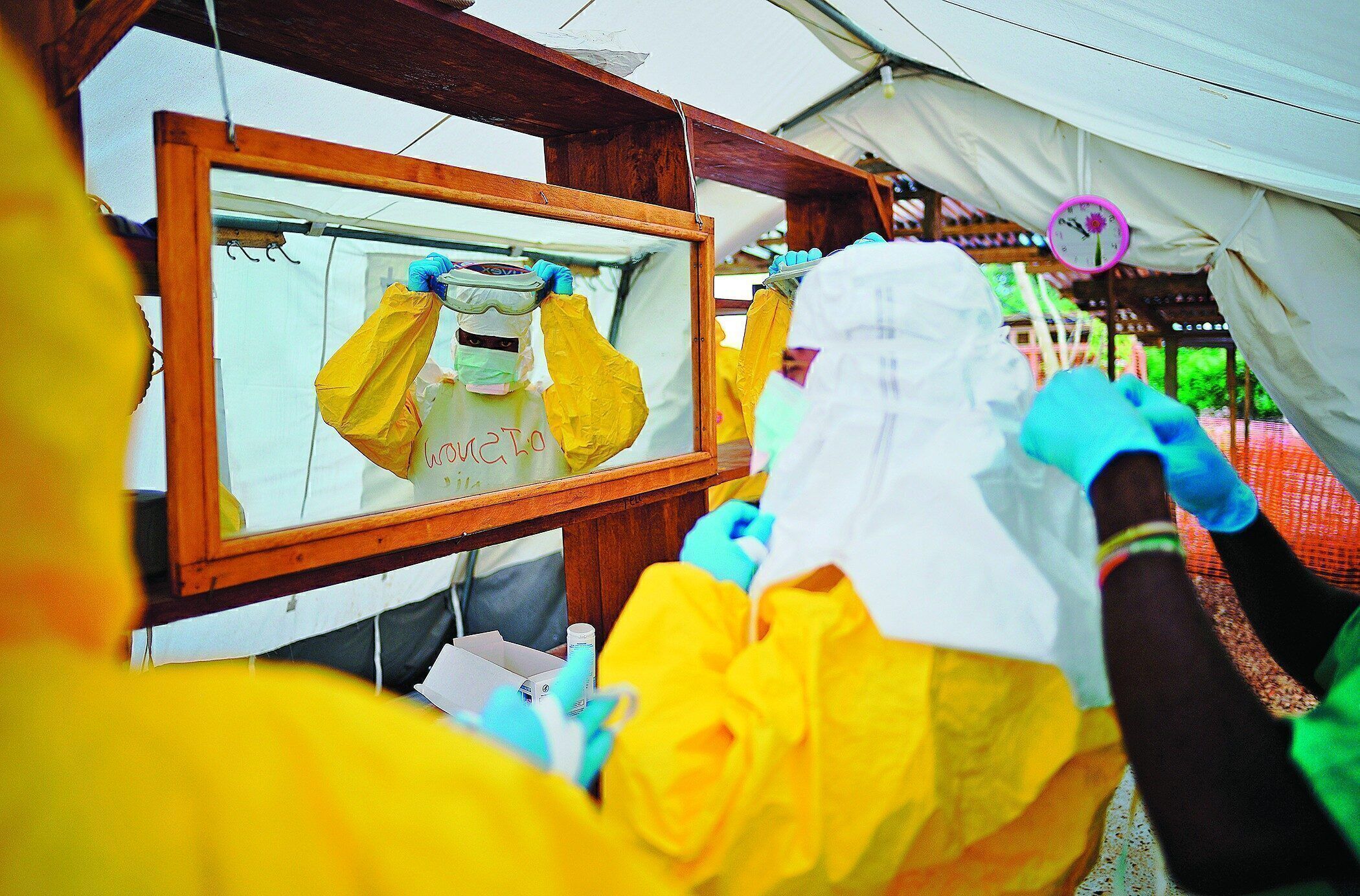
Last September, cries for help in West Africa grew desperate. Thousands of people in Guinea, Liberia, and Sierra Leone had contracted Ebola.
Following a conference call with other grant makers revealed the severity of the problem, Sue Desmond-Hellmann called her bosses, Bill and Melinda Gates.
After she filled them in on the dangers posed by the epidemic, they responded within a week by earmarking $50 million to stop the spread of the deadly disease.
Dr. Desmond-Hellmann, an oncologist who took over as head of the Gates Foundation 16 months ago, is proud of how quickly she could get a large sum out the door.
But the Ebola response also laid bare the organization’s limits: what some say is an overreliance on technological fixes, the advice of big institutions like the World Health Organization, and narrowly directed responses to eliminating diseases like malaria and polio at the expense of the gritty work of helping poor countries strengthen their health systems.
The difficulty that Gates and other global-health institutions faced in their efforts to defuse the Ebola crisis has shaped Dr. Desmond-Hellmann’s views about how the philanthropy must change to become more effective.
On her watch, Gates will embed itself deeper into the areas it serves and build ties with local nonprofits, government agencies, and patients, says Dr. Desmond-Hellmann. She promises to take a more “holistic” approach and work to improve local health systems — a messier job that requires a more sustained and coordinated effort than the approaches Gates took in the past.
In addition to putting money and muscle into making sure it is better prepared for the next global health crisis, the foundation is designing its next big project: a $776-million pledge to fight malnutrition, in closer cooperation with local governments, international organizations, and nonprofits.
The approach requires the Gates staff to use a different set of talents than it did in the past. Whether it is developing a new vaccine or designing a new school curriculum, the foundation has put its money behind projects that have proved successful on a small scale, then invested in deploying them on a larger scale. Dr. Desmond-Hellmann is pushing program officers to be more flexible and to find out what the groups they seek to serve believe are smart solutions.
“Can you come to a middle ground?” she asks members of her staff. “You’re not just an investor, you’re a negotiator. That back-and-forth skill set is so important.”
Fewer Consultants
Dr. Desmond-Hellmann, who joined the foundation in May 2014, doesn’t contemplate a “strategic revolution” under her leadership.
It is perhaps surprising that the first Gates chief executive who is a scientist, not a Microsoft executive, sees the battle to improve public health as a management challenge more than a laboratory experiment. She plans an aggressive push to instill a sense of “self-imposed discipline” on the grant maker so its growing staff can realize the Gateses’ vision.

One of her first moves was to cut in half the budget for outside consultants advising the foundation. She thinks the reliance on consultants meant program officers didn’t get invested in working with grantees to devise solutions, nor did they do enough to seek out the expertise of others at the organization’s large Seattle complex.
She hopes the change will improve staff morale and that people working on different programs at the foundation will design more projects together, such as coming up with ways to screen children for malnutrition at vaccination sites. She also hopes it will help relationships blossom between the grant maker and its grantees.
“When a mom has a sick child, she doesn’t really care what silo you’re in at the Gates foundation,” she says.
Learning From Failure
Dr. Desmond-Hellmann has a huge reservoir of cash at the ready to help her succeed. As a result of money donated by the Gateses and the investor Warren Buffett, the philanthropy holds $43.5 billion in assets.
Even though such wealth enabled the foundation to speed money to Ebola-stricken regions last fall, the disease’s rampage through West Africa claimed more than 6,000 lives. And Dr. Desmond-Hellmann still worries because when the crisis subsided, the world remained ill-equipped to handle the next outbreak of a deadly ailment.
Warning flags should have gone up faster, she says: “The world learned that our pandemic-response system failed. We at the foundation learned that we should take advantage of our flexible, fast, and responsive nature.”
In May, after assessing its Ebola response over the winter, Gates announced it would commit up to $75 million to the Child Health and Mortality Prevention Surveillance Network, designed to monitor disease outbreaks.
Over the next 20 years, health-care centers and laboratory sites will collect data on vaccinations, disease, and mortality rates in sub-Saharan Africa and South Asia. The foundation’s general approach may be revamped for use in areas where disease outbreaks occur, such as in West Africa last year.
Questioning Cost-Effectiveness
But some public-health officials say Ebola spread because of a leadership deficit rather than a dearth of information.
Emmanuel d’Harcourt, senior health director at the International Rescue Committee, credits the Gates foundation for hiring some of the best disease experts in the world, but he says the foundation has been reluctant to finance community groups and establish the trust of providers and leaders in local and regional health-care systems. Instead, he says, Gates has preferred to support bigger institutions, such as the World Health Organization.
“Some of those partners have done good work, but by and large they’re not a cost-effective investment,” he says. “What Ebola showed us is that some of the biggest problems in public health are less technical and more about the connection to and understanding of the people we’re trying to benefit.”
Jason Cone, U.S. executive director of Doctors Without Borders, has similar concerns. He says a lack of disease surveillance wasn’t the reason Ebola spread so rapidly.
“Our doctors were screaming at the top of their lungs, and it didn’t evoke a response,” he says. “You can have lots of tools, but unless you have competent people on the ground, they’re useless.”
Mr. Cone’s group has been a longtime critic of the Gates foundation, mostly for what the group views as an unholy collaboration between Gates and international pharmaceutical companies. He said Gates hoards a trove of information on the cost and effectiveness of medical therapies and vaccines under development. Without that data, Mr. Cone says, countries facing health crises may not be getting the most cost-effective help.
In May, Joanne Liu, the international president of Doctors Without Borders, was invited to share those views at the foundation’s annual grantee meeting in Seattle. Mr. Cone sees that as a good sign.
“They did open their doors,” he says. “They’re open to new ideas. Whether that’s changed anything in practice remains to be seen.”
Defending Vaccines
The foundation defends its support of drug and vaccine development, saying it is a cost-effective approach to improving the lives of millions. Gates has warned that if groups like Doctors Without Borders criticize pharmaceuticals that provide help in areas hit by diseases, drug companies will ignore the developing world altogether out of fear of bad publicity.

Immunization is “the cheapest thing ever done on health,” Bill Gates told The Guardian in January.
But the foundation seems to be taking some of the other criticism to heart, including the idea that Gates typically depends on technology fixes rather than getting deeply involved in the health systems of nations in which it operates. The grant maker’s bid to fight malnutrition, a six-year effort announced in June, will test a new approach.
Gates plans to start by devoting its attention to five countries — Bangladesh, Burkina Faso, Ethiopia, India, and Nigeria — to figure out what can make a lasting difference. Gates hopes to “see who the other players are and see where we can fit in,” says Shawn Baker, who leads the international grant program on nutrition at Gates.
In addition to pushing for technologies to fight hunger, such as developing produce containing fortified amounts of nutrients, the new program will promote breastfeeding and maintaining a proper diet during pregnancy. The plan will entail working closely with local and international agricultural groups, scientists, village organizations, and national governments.
“If you develop a new product or a new solution of some sort but you don’t actually have implementation channels at the ready to deploy it quickly, you lose a huge amount of time,” Mr. Baker says. “We want to see who the other players are and see where we can fit in.”
Boosting Morale
Since Dr. Desmond-Hellmann took the lead at Gates and jettisoned a large share of the foundation’s external advisers, new grant-making projects, including the nutrition investment, have been developed largely in-house.
The increased self-reliance, Mr. Baker says, is designed to build enthusiasm within the foundation and give the Gates staff “a real sense that we own this.”
Being excited about the grants could go a long way toward boosting staff morale and increasing grantee satisfaction, which have been problems for years, the foundation’s leader and some of its alumni say.
Katharine Kreis joined the Gates foundation as a family-health expert in 2002 and quickly became indoctrinated into a culture of hypergrowth at Gates, with lots of late-night and weekend work.
“When I walked through the door, I was given a portfolio of 157 grants,” says Ms. Kreis, who is now director of strategic efforts for international development at PATH, a global health nonprofit and Gates grantee.
She says the foundation was growing so quickly that it needed to rush grants out the door simply to meet its federal requirement to distribute at least 5 percent of assets, on average, every year. The result: high employee burnout and excessive turnover.
Grantees noticed. In a survey released last summer, many Gates grantees indicated that they lacked a clear understanding of the foundation’s goals and strategies and that they faced regular “disruption” in their relationships with the foundation. A quarter of the grant recipients said their contact persons at the organization had departed within the previous six months.
When asked how she wants to make her mark at the foundation, Dr. Desmond-Hellmann doesn’t mention the eradication of AIDS or saving millions of young lives, both key goals outlined by Bill and Melinda Gates.
Instead, she’d like to be thought of as an outstanding manager. Her role, she says, should be to make the foundation a great place for its staff, which will, in turn, encourage them to stay longer and make a personal investment in the work the Gateses are trying to accomplish.
Daily, she asks herself this question: “Have I used my energy and passion and the energy and passion of the foundation to stack the deck in our favor?”