September 9, 2025 | Read Time: 14 minutes
Amid the chaos of 2025, organizations are adapting and innovating to survive. The new approaches might eventually make them stronger.
For Gloria Cruz Cardenas, it’s not if the ax will fall but when. Cardenas is chief impact officer at the San Diego LGBT Community Center, and 30 to 40 percent of the charity’s funds come from federal grants. She’s watched similar groups in other cities endure cuts to federal support, and she wants the center — and its employees — to be prepared for what’s coming. In July, the center sent out “warn letters,” required under California law, to alert the center’s staff of 107 that mass layoffs may be on the horizon.
“We have seen other agencies receive cuts,” Cardenas says. “So for us, it’s going to happen, right? We just don’t know when.”
The center has plenty of company — charities of all stripes are weighing how the many threats of 2025, including tariffs, federal funding cuts, and economic uncertainty, will affect their work. For seasoned leaders, steering their organizations through troubled times is nothing new: The financial crisis and the pandemic left plenty of battle scars. What’s different this time, some leaders say, is the Trump administration seems intent on hastening problems for the sector rather than serving as a backstop.
“In both the financial crisis and the pandemic, the government was trying to help organizations figure stuff out,” says Onuka Ibe, managing partner at La Piana Consulting, whose work involves mergers and restructuring. “In this case, uncertainty is part of the design. The way the [administration’s] changes have been rolled out, organizations don’t have time to plan or understand what’s happening or make contingencies.”
Charities are now left digging deeper into scenario planning, exploring new sources of earned income, and eyeing partnerships that could help them ride out the turmoil. They’re also debating over boardroom tables whether they should rewrite website language — or even mission statements — to dodge Trump administration scrutiny. It’s all led to a reckoning about how nonprofits should operate going forward.
‘A Hard-Nosed Re-Examination’
Michael Smith has cycled through the highest reaches of the nonprofit world — including stints at the Case Foundation, overseeing the Social Innovation Fund during the Obama administration, and heading AmeriCorps during the Biden administration. None of those jobs started with the kind of disruption he’s seen since taking over in May as president at Eckerd Connects, a work-force development charity with a $240 million budget.
Related Content
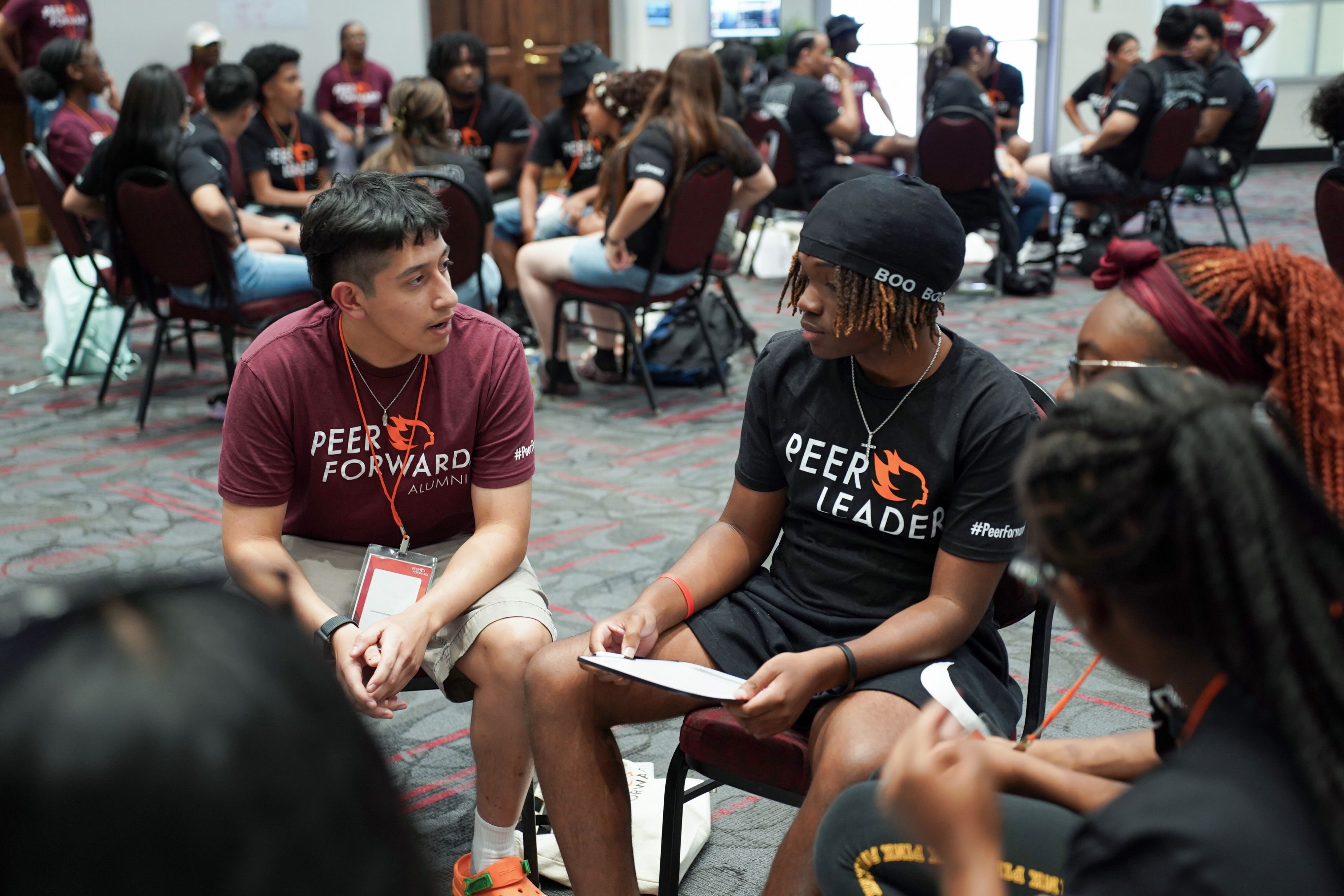
About the time Smith started, the Trump administration said it would eliminate the Job Corps program by midyear. Eckerd quickly announced it would lay off nearly 500 people, more than 20 percent of its staff. But as Eckerd was poised to take action, the administration’s plans were halted by a court injunction. To date, no one at Eckerd has been laid off, although a few have responded to the uncertainty by leaving the organization voluntarily, Smith says.
Notwithstanding the abrupt start, Smith has a more sanguine view of today’s threats than many others. While the challenges are real, he says, a tougher environment may force charities into a hard-nosed re-examination of their operations — potentially leading to the kind of reinvention that many charities haven’t undertaken since the financial crisis.
“There is no doubt that this is an extraordinarily challenging time,” Smith says. “Nothing can replace the federal investment in the nonprofit sector.”
Still, he’s been around long enough to know that lack of challenge can breed complacency. “When I got to AmeriCorps, I was shocked at the number of old policies that had come into place 25 years ago, and they were still there and were no longer serving the community,” he says.
While change is kind of being forced upon our sector, I think you’re going to see a lot of people getting creative.
Today, he says, some charities are bloated, kept alive by a sole donor or no longer producing results. Eckerd itself was headed toward failure two decades ago; Smith’s predecessor wrote in 2020 about how a series of mergers helped turn the charity around.
“Maybe this is a moment where we’ll see some great mergers, some great alignment, some focus on impact,” Smith says. “While change is kind of being forced upon our sector, I think you’re going to see a lot of people getting creative.”
Tough Decisions
This is the time when management consultants pitch the benefits of scenario planning — but the first seven months of the second Trump administration have been so unusual that the reality charities are dealing with was hard to predict.
“Some of the changes were hard to envision, like ‘Will federal agencies that we previously worked with even exist?’” says Isaac MacDonald, director of planning and impact at Trepwise, a consulting firm that works with nonprofits. “If we made a plan three years ago, that wasn’t one of the big considerations.”
SBP, a disaster-recovery organization in New Orleans, offers an example of how a nonprofit can take a financial threat and turn it into an opportunity. Trump has floated the idea of phasing out the Federal Emergency Management Agency after hurricane season ends in November. Federal revenue constitutes 15 percent of SBP’s $30 million budget.
But the organization hopes to make up those federal losses by working more closely with states and localities — and aggressively expanding a program that will establish resiliency fellowships in as many as 50 cities over the next several years, says Carol Markowitz, the nonprofit’s CEO.
“It’s just going to require us to master new learning curves,” Markowitz says. “In a world where FEMA provides fewer resources, the services that SBP provides will only become more necessary.”
During hard times, the road map is clearer in the for-profit sector, where boards have a fiduciary duty to look out for the interests of shareholders. At charities, the vested interests are many — including the needs of low-income clients, the interests of big donors, and the paychecks for nonprofit workers who might slide into poverty if the organization fails.
“In our scenario-planning trainings, we ask leaders: ‘What are your nonnegotiables — what is the most important thing to you when you make these very difficult decisions?’” says Annie Chang, a vice president at the Nonprofit Finance Fund.
Some charities may favor a broad salary cut for all employees over targeted layoffs. Others may choose to tap into reserves to continue providing needed services in their community — even if it raises the risk that the organization will fail. And some will whittle employment down to bare bones to raise the odds that the charity makes it to the other side.
“It’s almost like a values decision of who you are,” Chang says. “We always say you have to start with that first before you make a decision on what to cut.”
Small Nonprofits at Risk
For charities facing the most dire scenarios, few options remain. The Corporation for Public Broadcasting, a nonprofit authorized by Congress in 1967, announced in August that it would wind down after the current Congress provided no funding for the organization for the first time in more than five decades. Equal Justice USA, a victims-rights charity that has also advocated for criminal-justice reforms, shut down in August after losing $3 million in federal grants.
Arts groups are also starting to feel real pain as donors shift funding toward charities that help with essentials like housing and food. “The orchestras are going to be playing fewer concerts,” says Richard Mittenthal, president of the TCC Group, a consulting firm. “The off-Broadway theaters in New York — a lot of them used to have four plays a year. Now they’re down to three. Everybody’s thinking about how to do more with less.”
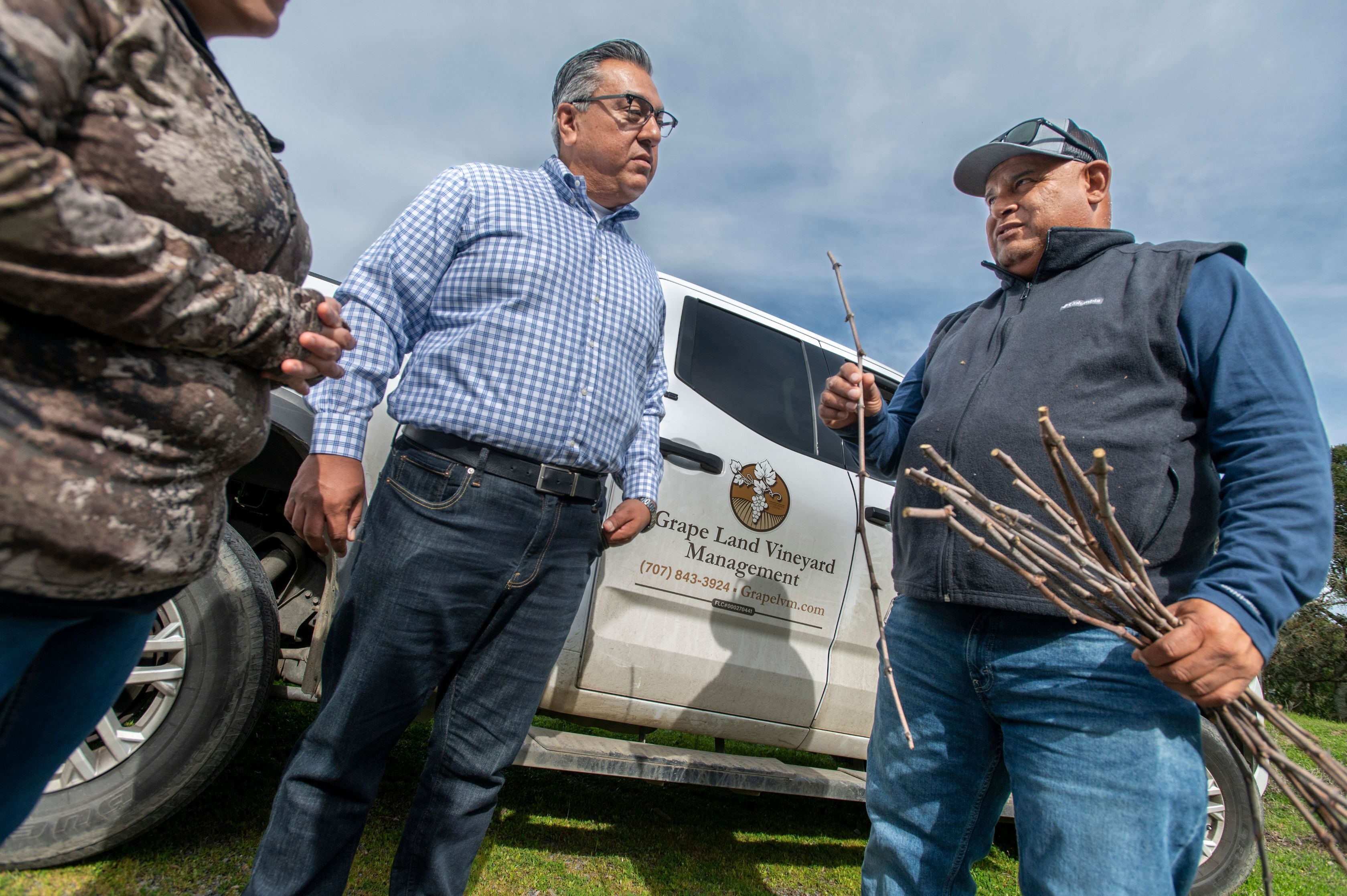
Small and new charities — the least likely groups to have reserves — are among the most at risk. The roots of the Creser Capital Fund date to the 2017 fires in Sonoma County, Calif., when Juan Hernandez was running a social-service charity and began helping small Latino business owners get back on their feet. He started Creser, a community development finance organization, in 2021, and the Chan Zuckerberg Initiative fueled a growth surge starting in 2023 with a two-year, $500,000 grant.
Hernandez says he was in talks with Chan Zuckerberg about another grant worth $500,000 when he learned the program officer he’d dealt with at the foundation had been laid off. In April, he learned his grant would not be renewed.
The loss of the grant — worth a third of the start-up’s budget — means the charity has little capital to make new loans. It is primarily managing existing loans for now; new applicants are being referred to other organizations. Hernandez and the only other employee at Creser each took 30 percent pay cuts.
Other local charities focused on economic mobility have also lost funding from Chan Zuckerberg. The grant maker says the changes are part of a move toward more “science-first philanthropy,” but Hernandez sees another explanation. He thinks Mark Zuckerberg, the founder of Meta, is trying to steer clear of any diversity-related activities that the Trump administration might oppose. The philanthropy had already reassigned employees working on diversity initiatives in February.
“I think it’s pretty obvious that the new administration has laid out: ‘If we’re going to support you, you need to support us,’” Hernandez says. “The administration has pulled back on DEI and BIPOC investments. The Zuckerberg foundation might have seen us as a DEI investment, and so we were cut for that reason.”
In a statement, a Chan Zuckerberg spokesperson said the philanthropy’s overall commitment to Bay Area charities “remains strong.” Its CZI Community Fund has invested $35 million since 2017 in more than 200 local nonprofits providing essential safety-net services such as food, housing, and emergency assistance, the spokesperson said.
Tapping other funders has proven challenging. Hernandez says many are sticking with existing grantees or migrating toward charities meeting basic needs. Without much capital to make new loans, he said he’s spending his time exploring how to combine artificial intelligence with the cultural competencies that Creser has developed. AI could one day allow Creser to do more with its small staff, but Hernandez says he wants to make sure the models don’t bake in historical bias against Latino and other underserved borrowers.
“That’s the mode we’re in for the rest of this year until some of this clears up,” Hernandez says.
Cutting Costs and Collaboration
Many charities are exploring ways to reduce costs, including collaborating with other organizations. ProInspire, a nonprofit consulting firm that works primarily with BIPOC charity leaders, expects to publish in late September “Crises as a Catalyst 2.0” — a follow-up to a report it released in 2020. The original had bold ideas for investments that address racial gaps; the new one will feature strategies for navigating political headwinds and fundraising volatility, including encouraging back-office collaborations in areas such as IT, finance, HR, and marketing services.
New leadership concepts from just a few years ago, when work-life balance was a major focus, are losing some of their sparkle. Co-CEO positions — which grew in popularity during the pandemic — now may seem an expensive luxury, and perhaps not the right model for steering a charity through these challenging times. ProInspire phased out its co-CEO model late last year. “We have seen this as a pattern with some of our peers,” says Bianca Casanova Anderson, the charity’s CEO.

The current threats are prompting some charities to try to go back to what many organizations would view as a nascent state — becoming fiscally sponsored, in which financial accounting, payroll, human resources, and more are handled by a supporting nonprofit entity. Chang says she recently spoke with a gender-advocacy organization in Colorado that was pursuing this strategy as a way to reduce the burden of administrative costs. The charity hopes to align with a sponsoring organization that shares similar goals, charges modest fees, and would perhaps even help with fundraising — an arrangement that would likely help the vulnerable charity save money versus hiring staff for these back-office functions.
Other charities are exploring the possibility of creating 501(c)(4)s — not because they want to go heavy into politics or advocacy but because the strategy could be a way to shield assets if the Trump administration resumes its efforts to revoke the tax-exempt status of certain charities.
“If you create a separate entity, there’s a possibility that those segregated funds might have some additional protection — or buy you some additional time — if the federal government came in to try to revoke your tax status or freeze your assets,” MacDonald at Trepwise says. “For organizations working in immigration, LGBTQ rights, or even the environment, that’s not fantasy. It’s one of the possibilities that leaders are planning for right now.”
Sharing Intel
Strategic advice may be as important as funding. With existential decisions on the table, charities need more engaged board members — including those who can add expertise in law, communications, and even mergers. Sara Gibson, co-founder and CEO of 20 Degrees, a consulting firm focused on the nonprofit sector, says it would be shortsighted today to simply add board members who bring in money but little else.
“A diverse set of skills and perspectives is the best insurance against uncertainty,” Gibson says.
In Philadelphia, 150 nonprofit executives meet regularly to discuss regulatory and legislative actions affecting charities.
Nearly all nonprofits want better insight into what is coming next from the administration. In the Philadelphia metro area, 150 executives at more than 100 organizations of various sizes and missions now meet regularly online to discuss regulatory and legislative actions affecting charities. The effort started in January when JEVS Human Services CEO Cynthia Figueroa says she recognized that Trump’s executive orders were becoming a “political COVID” — a potential catastrophe for the sector.
JEVS, which has a $130 million budget, can afford to hire a lobbying firm to work on both federal and state issues, and the organization’s findings — on issues like Medicare and immigration — are shared with the broader group. In July, the group held an in-person meeting, sponsored by the Philadelphia Foundation and the public radio station WHYY, that featured sessions on policy and advocacy, legal insights, and strategic partnerships.
“It doesn’t mean that there isn’t going to be bad news,” Figueroa says, “but people are trying to be proactive rather than just waiting for something to happen to them.”
Some charities are preparing for a shift in how government contracts are awarded. Strive, a work-force development nonprofit that works in New York and four other states, receives about a quarter of its $17 million in revenue from the government. Phil Weinberg, the charity’s CEO, says the organization is developing the capability to lobby and build relationships at the state and local levels of government.
“The only way forward is through agility and innovation,” Weinberg says. “If there are shifts in how the federal government provides funding — for instance, if there’s block granting that will be delivered through the states — Strive and organizations like it need to be prepared to access public funds that come through this different channel.”
At the San Diego LGBT Community Center, Cardenas worries that $4.4 million in federal funds will go away. There’s little hope to replace that amount through local and state support, but the charity is doing all it can.
In June, members of the charity and three other gender-equality programs packed into a county board meeting to call for support for a housing and homeless-prevention project focused on the LGBTQ community. The project, originally supported by federal pandemic-relief funds, was scheduled to sunset in April, but the advocacy campaign resulted in a one-time $800,000 allocation from the county to keep it afloat.
Says Cardenas: “That was strong testament to how we can look into different ways to generate funds to support our services.”