
The 100-Percenters
With a tax fight behind it, Newman’s Own is looking for other companies to follow its all-profits-to-charity lead.

By Michael Anft
Contributor
June 4, 2019 | Read Time: 17 minutes
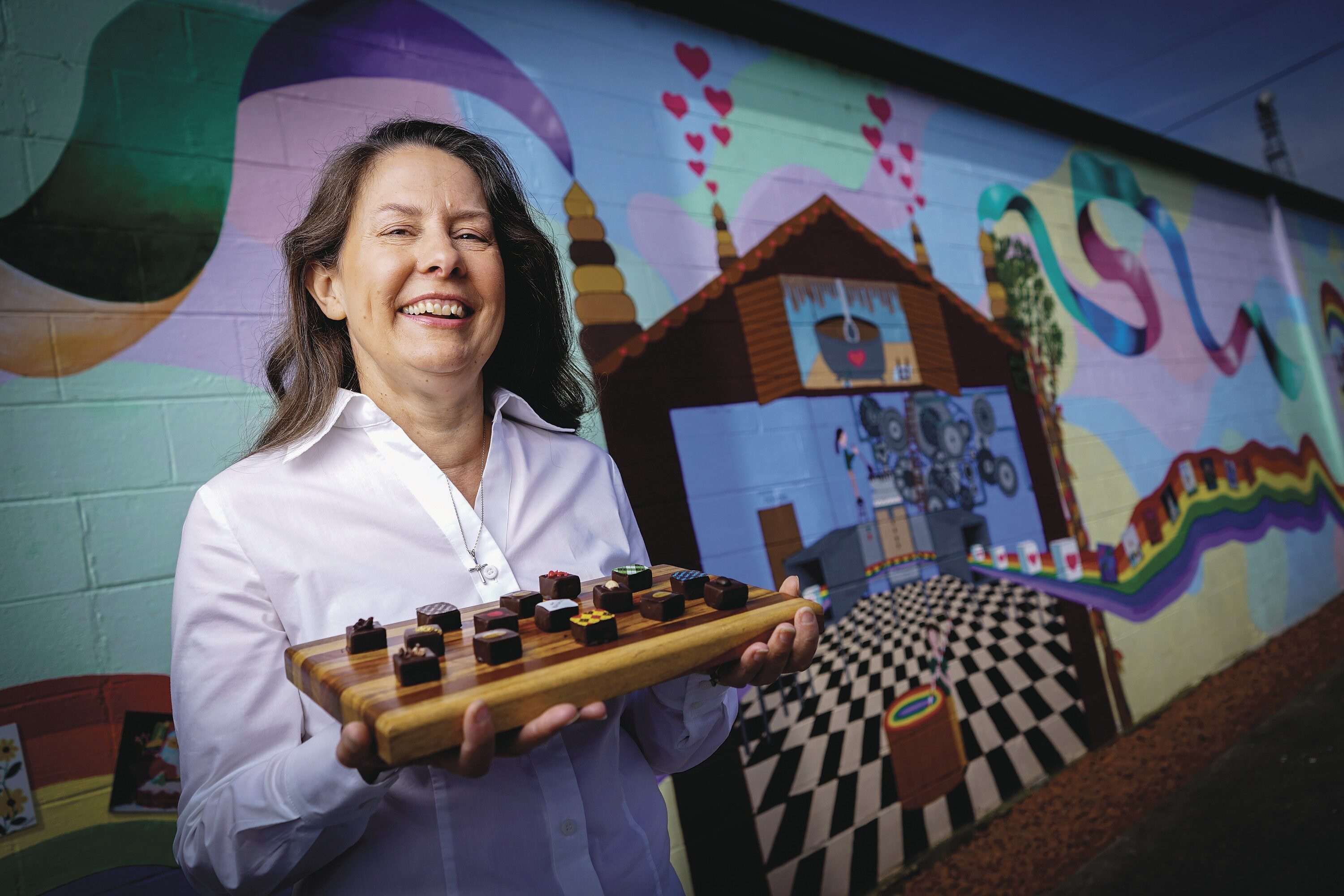
Brenda Barnicki’s talent for making chocolate truffles was well known to her friends and family, who believed she could convert her recipes into real money by setting up her own shop. So when she was laid off from her job as vice president of a chemical company, Barnicki turned chocolates into a full-time business — but with an important twist: She made a commitment to donate all the profits to charity.
Since 2012, Bellafina Chocolates has provided $50,000 or more annually, between 35 to 50 percent of the company’s yearly revenue, to poor children and orphans. Its mission has grown to include hiring local women who are recovering from addiction in opioids-ravaged Kingsport, Tenn., where the chocolatier is based, to make the product.
Though the company’s mission is purely charitable, Barnicki, who does not take a salary, makes it clear that she isn’t running a nonprofit.
“I’ve always been a businesswoman. That’s where my skill set is,” she says. “I’m concerned about children and about these women, but I’m not a social worker. The model that appealed to me was firmly based in business.”
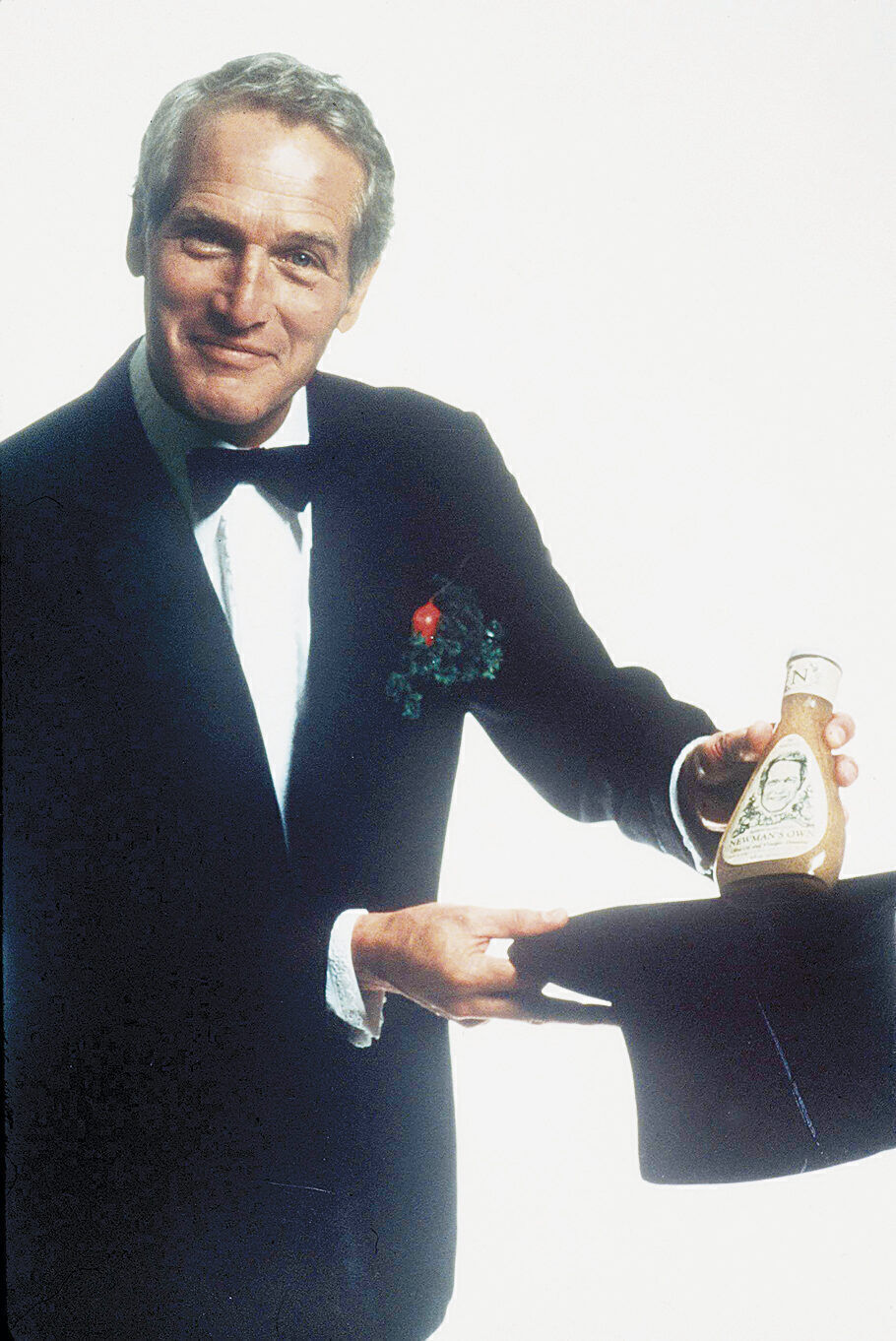
That model is exemplified by Newman’s Own, the multimillion-dollar food business that hands over 100 percent of its profits to charity groups. Now Newman’s Own is working to find more business owners who think like Barnicki does.
Following a victory in Congress last year, when it staved off a looming tax penalty that would have forced it to change its structure or go out of business, Newman’s Own has intensified a plan to increase the number of groups that follow its profits-to-charity model.
It started a few years ago when Newman’s Own canvassed the nation and contacted owners of mostly small companies whose methods mirror the one that actor Paul Newman set in place more than 30 years ago. The most successful practitioner in the United States of the all-profits-to-charity model, Newman’s Own has donated $543 million to nearly 8,000 charities around the world since 1982. Chief among them are education, food, health, and veterans organizations.
A Change in the Law
The company had reached out to charitable entrepreneurs like Barnicki, in part, for purposes of self-preservation.
For years, the charity, which is run by a foundation that Paul Newman launched before his 2008 death, trembled under the sword of Damocles: a federal charity law written in 1969 that said a foundation could not own a sizable part of a for-profit business after the first five years following the death of its founder. Legislators had worried that corporate executives and shareholders might try to shelter their earnings from taxes by placing them in their foundations.
The Newman’s Own Foundation, whose holdings include the company that sells salad dressings and other food products, got a few congressional reprieves, but it knew it would eventually face a 200-percent tax, which would effectively put it out of business.
Newman’s Own spent hundreds of thousands of dollars fighting for a law that would allow it to escape the fatal tax hit. Finding other companies like it — such as Bellafina Chocolates — was one way to show members of Congress that changing the law could result in more dollars going to charity, and not just from Newman’s Own coffers.
The strategy worked. Last year, Congress acted to allow companies like Newman’s Own to continue to funnel profits to private foundations and, eventually, to charities, without the tax penalty.
“We fought for nine years to get the law changed,” says Bob Forrester, president of the Newman’s Own Foundation. “The case I made before Congress is that this kind of operation melds two sides of the American character — small-business entrepreneurship and philanthropic giving. These are the things about America that wow people all over the world.”
High Standards
Now with the tax fight behind it, Newman’s Own has stepped up a program to create or support small entities that think the way it does.
“Part of the Newman’s Own mission is to spur philanthropy,” Forrester says.
To that end, late last year the company held its first official gathering of what it is calling the 100-Percenters — businesses that follow Newman’s model of donating all of their profits, after expenses, salaries, and taxes — to charity. Seven companies made the trip to the company’s headquarters in Westport, Conn., with Newman’s Own covering the cost.
Those companies share Forrester’s belief in converting the fruits of capitalism into aid for the needy — or, according to a cheeky motto coined by Paul Newman, to carry out “shameless exploitation for the common good.”
The two-day meeting offered a chance for the group to learn more about accounting practices, entrepreneurship, finance, grant making, and marketing. Newer outfits were counseled on how to pay their bills through the tough early years, as well as how to enter into business relationships. Newman’s Own leaders also talked about ways to find capital for their businesses, including educating banks about the Newman’s Own business plan.
The Philanthropic Enterprise Program, as Newman’s Own leaders call it, is also designed to help small operations get over the hump. Starting a charity-centered business can be a hassle, says Paul Godfrey, a professor of business strategy at Brigham Young University and a consultant to Newman’s Own.
“Part of the benefit of giving 100 percent to charity is separating your businesses in a very crowded market. But there are obstacles that come with that. The standards for such businesses are often higher. You have to make sure the supply chain is clean. You have to get funding. Yeah, there might be some marketing benefit that comes with being charitable. But the other headaches remain,” he says.
Various Approaches
At the inaugural meeting, companies shared ideas on effective approaches, including ones that involved improving service to charities. Barnicki, for example, advised that Bellafina eschews advertising because it could diminish its charitable giving. “That’s money that could go to the children,” she says.
Impact Makers, a consulting firm in Richmond, touted the regularity with which it and companies like it can make gifts to nonprofits — assuming they can maintain their profitability.
“The cool part for charities is that they can count on the unrestricted gifts we make that go toward general operating support,” says Rodney Willett, vice president for community impact at Impact Makers, which has made $3.5 million in donations of cash and pro bono consulting work, primarily in Virginia, since its inception in 2006. It is the largest company (after Newman’s Own) involved in the 100-Percenters.
The group also discussed whether there should be some sort of certification similar to the type that benefit corporations receive in some states, where “B Corps” companies donate at least some profits or labor to charity.
“We agreed that people can say they give 100 percent to charity. But what does that really mean?” Willett says. “We need a set of standards that companies can follow toward a certificate.”
New Possibilities
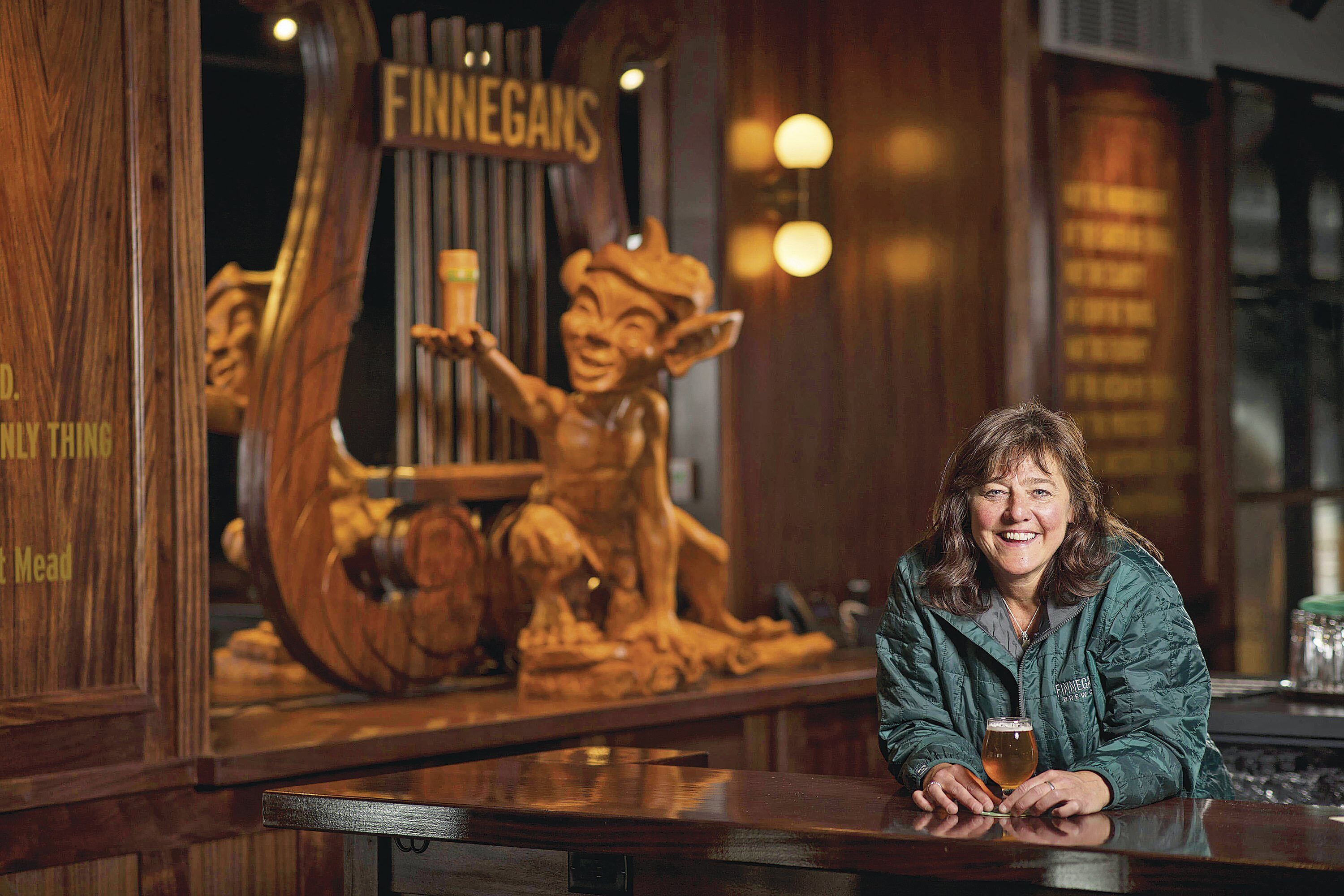
Mostly, though, the gathering functioned to strengthen a relationship between some companies and Newman’s Own that began years earlier, after each company had been founded. In previous years, Newman’s Own helped Bellafina figure out the best way to structure itself. It has provided advice to Finnegans, a brewpub in Minneapolis, on how to run a social-entrepreneurship incubator and grow its business via the use of licensing deals. And Newman’s Own supported Impact Makers when the company sought a rule change from the Internal Revenue Service regarding the deductibility of its business expenses.
By working with these companies, Newman’s Own is hoping to create a model durable and attractive enough to draw in even more businesses. While there has been no groundswell of new groups yet, some companies have begun to emerge that see new possibilities in the law change — known as the “Newman’s Own Exception” — and Newman’s Own support.
The Dohmen Company, a 160-year-old business in Milwaukee focused on preventative health and software services, converted from a corporation to a company wholly owned by a private foundation in February.
“The passage of the law was a game-changer for us,” says Cynthia LaConte, chief executive at Dohmen. “We were a B Corp. But that just didn’t take the commitment we wanted far enough. When we read about the Newman’s Own option in February of 2018, everything fell into place for us.”
Dohmen had already paid back its shareholders and paid its employees well. As the company pivoted from the pharmaceutical business to health care software, LaConte wondered whether the business could focus more on the needs of the community outside its walls. “Could we become an engine for change?” she says.
The company will make a $15 million grant to the foundation this year. The foundation will, in turn, make grants to groups that work to improve the health and well-being of people in distressed neighborhoods.
Though it hadn’t made contact with Newman’s Own before making the switch, Dohmen has benefited from its expertise. “After the transition, [Forrester] reached out and has been extremely gracious with his time and support,” LaConte adds. “It’s been really helpful to have an experienced traveler on the road.”
To date, Newman’s Own has identified about three dozen companies nationwide that fit its profile, though it estimates there may be as many as 100.
“We’re looking to spend two to three years evangelizing the movement,” says Godfrey. “We’re hoping to see what I call bamboo growth. You put a seed in the ground and for the first few years, nothing happens. Then you see phenomenal growth.”
“We’ve been helping these organizations for five, six, seven years,” adds Forrester. “We didn’t want to push the idea too hard until we had the law in place.”
Other Options
The Newman’s Own model is one of many that charity-minded entrepreneurs can adopt. They can make individual gifts, create bequests that will kick in after they die, give through their corporate foundation, or convert their company to a B Corp. But as the Dohmen case shows, the Newman’s Own model might be best for people who have already had success in business to give, Forrester says.
Mostly, the 100-Percenter group consists of “very successful businesspeople who have built and sold businesses and had good careers but left them because they wanted a sense of purpose,” Forrester says. “With the new law, it will also be attractive to the successful businessperson who wants to leave his or her wealth to charity without having to sell a business to do so.”
Still, Forrester admits, there hasn’t exactly been a race to sign up to become the next profits-to-charity success story.
The Newman’s Own schema has drawn skepticism from professionals who work with charities, and it’s unlikely to experience a burst of popularity. Businesses have other ways to donate the money they earn to charities, such as the buy-one, give-one approach popularized by Tom’s Shoes or donating a percentage of profits to charity, as Whole Foods and Marc Benioff’s Salesforce.com do.
Benefit corporations — entities that put profits and a charitable mission on an equal footing — number in the thousands, while the Newman’s Own group contains only a few dozen companies.
Though the foundation-ownership rule was changed to favor future 100-Percenters, as well as Newman’s Own, it isn’t pliable enough to change the minds of most charitably minded chief executives, tax and business experts say.
“The law is limited,” says Marcus Owens, a partner at Loeb & Loeb, a Washington law firm that specializes in nonprofit regulations. The law, dubbed by Congress as the Philanthropic Enterprise Act on the Public Charitable Sector, allows a foundation to wholly own a business that donates all of it profits to charity. Conceivably, a business could be turned over to a foundation during a businessperson’s lifetime as a gift. But that person would have to walk away from the business entirely, according to the law.
“Emotionally, that’s hard,” Owens says. “You don’t see it happen that often. This has been their life. It’s hard to give all that away and go fishing.”
And those who might consider turning their businesses over to a private foundation to handle after their death, as Paul Newman did, may have an essential disincentive not to: blood.
“Most people will want to see their families get the money,” Owens says.
When foundations own part of a corporation or company, it can create tension, others add.
“You have to be strong enough in a market to make profit, even as you look to give money to organizations that deserve it,” says Allen Bromberger, a partner at Perlman & Perlman, a New York law firm. “Those are entirely different activities. That’s why you won’t see a ton of companies do things like Newman’s Own has done.”
Since Congress changed the Newman’s Own law, Bromberger has helped some companies start charities they could funnel their profits to, while others have opened donor-advised funds at community foundations — something Impact Makers did when it was formed as a benefit corporation in 2006.
‘A Special Case’
The Newman’s Own method has been attractive to performing artists, who can use what accountants call a loan-out corporation to keep account of their expenses and to make charitable gifts.
But as a group, those celebrities might be the exception. Newman’s Own may be little more than a unicorn, skeptics say. Paul Newman was a charismatic actor who held the public’s respect and admiration. But he also started his charity life as a supporter of summer camps for needy children, building his bona fides as a charitable person early on, and then growing his company at a time when the public was less dubious about famous people and their charitable work.
“Newman’s Own is a special case,” says CB Bhattacharya, the Zoffer Chair in Sustainability and Ethics at the University of Pittsburgh. “It was started by a highly recognized and respected person who had a drive to help society. There are very few people in the business world who possess all that. Would someone today, like Angelina Jolie, have the same impact if she tried the same thing? I can’t be as enthusiastic as Bob Forrester has been about this.”
Other aspects of running a charitable business may be more important than structure, he adds. Defining qualities in the marketplace these days include a focus on product quality; innovation; the fair treatment of employees; creating a niche in the community; and making sure that the charitable dollars you are creating are making an impact.
Individuals looking for tax and financial-planning breaks likely won’t see much value in doing things Paul Newman’s way, nor will businesses looking for a bounce in sales by allying themselves with a good cause, he adds.
“Consumers are often more skeptical of companies with good intentions,” Bhattacharya says. “You might have to work harder to get people to see the difference you’re making.”
//
Entrepreneurial Millennials
Despite the caveats, those who have taken the 100-Percenter plunge believe that the time is ripe for a new type of corporate philanthropy. Some cite generational reasons.
“Millennials are focused on doing more good while being entrepreneurial. We’re starting to see young people in the movement now,” Barnicki says.
While conceding that it’s not for everyone, and that interest in the idea has been spotty, Forrester remains steadfast in his belief in the scalability of his foundation’s model.
He has followed up on last year’s meeting of the 100-Percenters by facilitating many one-on-one meetings between business owners. And he has been a driving force in an international meeting planned at the Business for the Common Good Conference in Italy this June.
“We’re seeing interest from around the world,” he says. “Already, there’s a company in the Philippines that looks a lot like Newman’s Own.”
Correction: A previous version of this article said that Impact Makers makes $3.5 million in annual donations of cash and pro bono consulting work. It has given that much in total since its inception in 2006.




