Keeping Donor Ties Strong Between Campaigns
Duke University set up a series of events to fill big contributors in on its new president’s plans — and to let them bond about their shared connection to the university.

By Emily Haynes
Senior Editor, Nonprofit Intelligence
November 5, 2019 | Read Time: 3 minutes
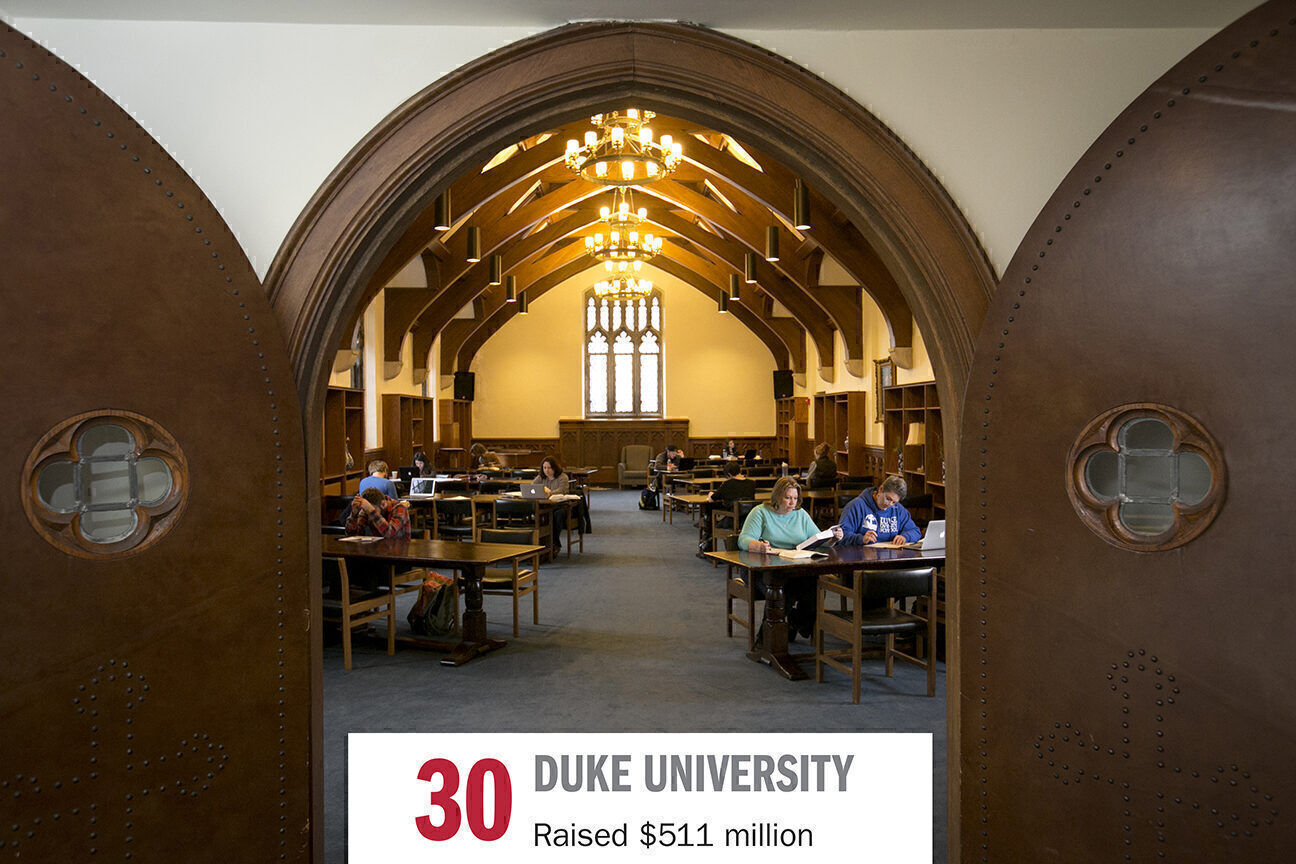
Fundraisers breathe a sigh of relief — and maybe take a well-deserved vacation — when a grueling, yearslong capital drive is over. But big contributors can “feel a little bit left alone when the campaign ends,” says Dave Kennedy, vice president for alumni affairs and development at Duke University (No. 30, down 11 percent). So how can charities keep these generous donors engaged between campaigns?
Duke wrapped up a record-setting campaign in June 2017, raising nearly $4 billion in seven years. That same summer, the university welcomed a new president for the first time in 13 years. But momentum slowed after the campaign.
The leadership change was a big one for donors who had established relationships with the previous president. University fundraisers didn’t want to ignore these donors and exacerbate any trepidation they had about entrusting a new president with their money. What’s more, Kennedy says, “we don’t want to have a cold start a few years out when we’re really in a campaign.”
The solution: Duke Philanthropic Partners, a speaking tour launched last fall to bring new ideas at Duke to its major donors. The goal, Kennedy says, is to make each donor “feel like an insider at Duke.”

The program gathers a Duke administrator, a trustee, and past major donors at homes and hotels in areas that so far have included Chicago, Dallas, the San Francisco Bay Area, and Washington, D.C. Donors in these cities, Kennedy says, may have “felt like they were not getting as much attention coming out of the first year of the new president.”
The university officials speak at the events, updating donors on the strategic plan at Duke, including hiring high-quality faculty members, redeveloping parts of the campus, and expanding engagement with recent alumni.
The events haven’t led directly to any gifts, but Kennedy says that isn’t the goal.
Rather, they are designed to bring supporters “back into the tent” and show that administrators and trustees at Duke have faith in the new president. Making space for donors to bond over their shared connection to the university, says Kennedy, is “magic.”
Emily Haynes has covered fundraising on social media, Giving USA’s annual report on giving trends, and how the ALS Association found success with the ice-bucket challenge. Email Emily or follow her on Twitter.