
9 Innovations That Are Helping Charities Thrive in the Downturn

By Holly Hall
Contributor
September 16, 2012 | Read Time: 14 minutes
Yeshiva University was planning a $1-billion capital campaign when the stock market crashed in 2008 and the worst of the recession began to unfold.
Yeshiva went ahead with the campaign but never announced it to the public. Now it is planning a new and different drive, this one to raise $400-million for scholarships, a growing need as families struggle to pay tuition costs.
The scholarship campaign is seeking a large initial gift in hopes of motivating people to support the drive.
Daniel Forman, the university’s vice president for advancement, says balancing what he calls a “campaign within a campaign” is challenging. But it’s one way organizations need to operate in what he describes as the “elongated recession.”
It’s more difficult to get donors fired up about paying for scholarships than it is to get them excited about splashier projects such as a new research center, says Mr. Forman. He notes that the other campaign for ambitious projects has managed to amass $750-million even during the slow economic recovery.
But the university needs the scholarship money to make ends meet, so instead of gifts that take Yeshiva to the next level, Mr. Forman says, his focus now is on “stabilizing the organization until we get out of this period.”
Such juggling acts are growing increasingly common as nonprofits face the fifth fall fundraising season in a shaky economy that some charity officials think could get even worse.
“We haven’t yet seen the bottom of the dip,” says Mark Medin, senior vice president for financial resources at the UJA-Federation of New York. The federation raised $187-million in its most recently completed fiscal year, far below its peak of $225-million in 2007.
The tough environment is leading many fundraisers to innovate.
At Bryn Mawr College, Donna Frithsen, chief development officer, says, “Some of my staff are more energized” by the experiments the development office has undertaken in recent years, especially in its efforts to reach young alumni.
Her colleagues “were in shock at the beginning of the crash, but it unleashed their creativity,” she says. “You have to live in beta testing in these times. You have to constantly innovate.”
Following are nine approaches Bryn Mawr and other nonprofits have taken to adjust their fundraising operations to stubborn economic challenges.
1 2 3 4 5 6 7 8 9

Companies payi as much as $25,000 to send their executives to a New Jersey Performing Arts Center business roundtable event.
Advance Donors’ Career Interests
At the New Jersey Performing Arts Center, companies are paying as much as $25,000 to send their executives to the cultural organization’s Business Partners Roundtable, a series of breakfast sessions in Newark featuring talks by senior officials of big companies. For example, Ed Gilligan, the vice chairman of American Express, recently made a presentation about his company’s use of social media.
“One corporation dropped their Chamber of Commerce membership, and now they just do our roundtable because they get more out of it,” says Peter Hansen, the center’s vice president for development. “They network and interface with clients, and some of their key suppliers and customers are there.”
Bryn Mawr has also found that events focused on professional development hold more appeal in a soft economy, particularly for young alumnae.
Ms. Frithsen says one sign of how powerful such events are hit home when 65 women pursuing careers in financial services showed up on a sweltering July day for a cocktail party hosted by the college’s investment committee in New York.
“There’s no question that this kind of event is more attractive because of hard times,” Ms. Frithsen says. “In these times, it is a lovely thing to have alumnae say, ‘Bryn Mawr has my back.’ People used to turn up for networking events but not like now.”

Yeshiva University hopes to raise $400-million for scholarships, in part by sharing the stories of young people at the institution.
Cut the Cost of Fundraising
Yeshiva University has reduced the cost of its development operation by at least 20 percent over the past three years by eliminating a senior management position and laying off several other employees who worked in research, donor relations, and technology jobs. It is also asking its remaining fundraising staff to do more.
“We did away with a management layer. Instead of having a No. 2 in my department, we developed a team concept,” says Mr. Forman.
Now, he says, “I have an open-door policy and informal management. Anyone who has a question can talk to anyone.”
Mr. Forman says that because of the staffing changes, he has asked fundraisers to do more, either giving them more donors to contact or asking them to take on other duties of people who lost their jobs.
The new system hasn’t hurt fundraising. In the fiscal year that ended on June 30, Yeshiva raised more than $90-million, a 35-percent increase over the previous year. However, that’s still below its pre-recession high of $140-million.
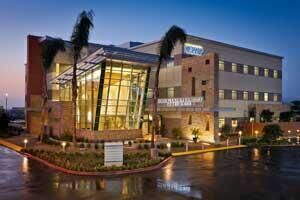
The Sharp HealthCare Foundation is in a $100-million campaign, but it has no campaign chair or end date.
Change How Campaigns Work
The wobbly economy is a key reason the University of Virginia has still not finished a $3-billion capital campaign that was supposed to end in December 2011. The university has so far raised $2.7-billion and extended the drive in hopes of finally reaching its goal in December. “Why not declare victory now?” says Robert Sweeney, senior vice president for development. “Because we put the number out there, and this is the one number that alumni remember.”
Other organizations may have to extend their campaigns too, says Darrow Zeidenstein, vice president for resource development at Rice University. He says that instead of pursuing the standard approach—two years in a quiet phase, when gifts are amassed in a final goal determined before an announcement, followed by five years of public fundraising—institutions are spending three or four years in the quiet phase and more than five years after that.
“If there was anything sacrosanct about seven years, that is now gone.”
As he leads a $1-billion campaign set to end in 2013, Mr. Zeidenstein says that the economy is forcing Rice to contact more people who can make gifts of $50,000 to $1-million because it is unable to land as many multimillion-dollar gifts as in the past.
“We had to put a lot of people in the middle of the pyramid,” he says. “It takes a lot more work now to get $10-million than it did for me to work with one person who can give $10-million. We are just going to have to grind it out by having a much broader portfolio.”
In addition to juggling more prospective donors, fundraisers must also spend a lot more time planning capital campaigns than they used to, says William Krueger of Capital Quest, a consulting company that advises campaigns seeking up to $25-million. Mr. Krueger says he’s now working with an Ohio group that wants to build a new hospital and has raised $8-million of its $15-million goal.
“They planned for almost a year,” he says. “Before, they would have done a two-month feasibility study and launched the campaign. We now have to take clients through a full planning process so you know who the $1-million donors are and you are reasonably certain of them. You can no longer figure that out with a 60-minute interview. And you have to engage the donors with the organization, not just with the consultant.”
Another way campaigns are changing: Organizations are loosening up on how they structure big fundraising drives and approach donors. The Sharp HealthCare Foundation, for example, is now in a $100-million campaign, but it has no campaign chair or end date. It is also not setting any annual goals for the campaign.
“We are doing this to provide flexibility,” says Bill Littlejohn, Sharp’s chief executive. “We are patient and willing to work with donors on gift structures and time frames. This helps weather the storm.”
With donors unwilling to make traditional five-year pledges for outright gifts, Mr. Littlejohn says, Sharp has been promoting a hybrid approach that encourages donors to contribute cash or stock now but allows them to choose at any time to pay off the rest of the pledge by promising a gift in their wills.

Scott Warren
The Nature Conservancy takes donors like these on trips to China and elsewhere in an effort to connect them to the organization’s mission.
Give Donors ‘Concierge Service’
The Nature Conservancy, after ending a campaign last year that raised more than $2-billion, is in the process of hiring a new fundraiser whose sole responsibility will be making sure the organization stays close to donors who gave $100,000 or more, in some cases inviting them on trips to see the charity’s conservation work overseas.
Until now, keeping in touch with donors was always the responsibility of the individual fundraiser who worked with each donor, says Angela Sosdian, the nonprofit’s chief philanthropy officer.
“It’s not that we have done a bad job, it’s just that there is a lack of consistency,” she says. “There is turnover, and things can fall through the cracks.”
Hiring the new fundraiser, who will occupy a senior position, Ms. Sosdian adds, “will pay off, especially coming off a campaign.”
Since 2001, during another albeit milder recession, the UJA-Federation of New York has focused on providing what Mark Medin, its chief fundraiser, calls a “high-end donor concierge service.” With large gifts, he says, “we want to look at the donors as people we can provide services to.”
A good example of how that works, Mr. Medin says, occurred shortly after the 2001 terrorist attacks on the World Trade Center, when the chief executive of the federation called a six-figure donor, a developer with office space in the World Trade Center, and asked the man if his employees needed mental-health services. Since the federation helps provide such services in and around New York, he notes, it was in a good position to extend a helping hand to the donor and his employees. “This is another way to deepen our relationship with major donors,” Mr. Medin says.

A.S. Williams donated his $12-million collection of presidential letters to the University of Alabama. Noncash gifts to the university are setting records.
Accept Cars, Homes, and Even Islands
Nonprofits are increasingly getting art works, antique cars, even gold bars and entire islands as wealthy people feel cash poor. At the University of Alabama, noncash gifts are “at record levels,” says Phillip Adcock, assistant vice president for development.
Among the university’s donations was a gift of historic letters and other documents from American presidents, as well as rare books and other artifacts, from A.S. Williams, a retired insurance-company executive. The collection, valued at more than $12-million, will expand the university’s history and library-science programs and improve its standing as a prime research destination for scholars.
These days, “less wealth is in cash,” says Mr. Littlejohn, of the Sharp HealthCare Foundation. Since the recession started, he says, his organization has received a donated island, vacant homes, and even oil royalties.
Sharp immediately sells such assets, but doing so makes the transactions more time-consuming to deal with than cash gifts, and more costly in some cases because the organization must pay closing costs in real-estate deals, for example. But such gifts will increasingly become part of the philanthropic landscape, Mr. Littlejohn predicts. “We are seeing more of these types of gifts,” he says. “People want to stay liquid.”

Push Bequests Harder Than Ever
Because so many donors are unwilling to make large cash gifts, many nonprofits are emphasizing bequests. Among the groups that are paying more attention to bequests now: ChildFund International, which this year hired a planned-giving expert to train seven fundraisers who work to secure outright gifts of $5,000 or more from individuals.
But some nonprofits are now going back to donors who promised a bequest during the worst years of the recession and asking them if they’d be willing to fulfill some or all of that pledge now with a gift of cash or stock, says Alan Korthals, an executive at Kaspick & Company, which manages gift annuities and charitable trusts for 100 large charities.
Aside from bequests, he says, gift annuities are attractive now because they provide a tax break and guaranteed income for donors during their lifetimes. Donors in times of uncertainty want fixed payments,” Mr. Korthals says. Charities invest the money in the annuity, distribute payments from the earnings, and get what’s left after a donor dies.

Donors to the University of Rochester celebrated a giving club called the George Eastman Circle by paying for this statue of the businessman who founded Eastman Kodak.
Get a Payoff From the Annual Fund
The University of Rochester has started a group for donors who agree to give $1,500 to $50,000 each year for five years in a row to its annual fund. In five years, the George Eastman Circle, named for the founder of the Eastman Kodak Company, who was a major benefactor to the university, has attracted 2,300 members. Many are alumni from cities as far away as Hong Kong and London.
Jim Thompson, the university’s chief advancement officer, said he started the donors group because studies of giving habits show “if they give frequently, they are more likely to make a significant gift later.”
Martha Krohn, the university’s executive director of annual giving, says that she has given presentations about the George Eastman Circle to other institutions, but many have been reluctant to adopt the idea. They’re afraid that donors who agree to a five-year pledge will be unwilling to increase their giving, Ms. Krohn says. But among charter donors now completing their initial five-year commitment, almost half have agreed to give more in a second five-year pledge.
Two of the circle’s charter members, Laurence Bloch, a university trustee, and his wife, Cindy, have already made a gift exceeding their initial five-year pledge. In celebration of the new group and the philanthropist it’s named after, the couple made a large additional donation in 2009 to pay for an eight-foot-tall bronze statue of George Eastman on the campus.

As one of Rice University’s corporate donors, IBM started building a supercomputer for the campus.
Collaborate to Seek Corporate Money
With research grants from government and foundations in decline, fundraisers and faculty members at Rice University knew they had to do a better job of appealing to companies interested in advancing scientific developments.
Even though Rice’s campus, in Houston, is surrounded by many companies, the university had not pursued corporate support in a well-organized fashion, says Mr. Zeidenstein. The university formed a corporate council of more than 20 university researchers, fundraisers, deans, and others who now meet monthly to plan ways to engage companies. Council members share information about potential and existing corporate donors by customizing a database tool and e-mail system that for-profit companies use to keep track of business prospects.
“Now we can tell energy companies, ‘Here are the faculty organized around energy,’” Mr. Zeidenstein says. “We were not doing this before. We could just get a donor in Silicon Valley to give us stock.”
While corporate overtures are “still a work in progress,” he says, the university now gets $20-million annually from companies, double the amount it was raising before the recession started.
One of the most valuable donations came from IBM, which this year started building a supercomputer for the university’s campus. It will enable Rice faculty members to study complex problems in energy, geophysics, cancer research, outer space, and other areas simultaneously.

A donor to Bryn Mawr nearly tripled her annual gift when the college sought money to pay for shuttle service. She met her husband on the bus.
Make Giving Like Groupon
Bryn Mawr College got a better-than-expected response this year when it sent young alumnae e-mail solicitations with the look and feel of Groupons, the popular online discount coupons.
The college sent four e-mail solicitations called “The Daily Difference” to ask for contributions to help meet campus needs, such as $40 to pay for one hour of what it costs to operate the Blue Bus, a cross-campus shuttle serving Bryn Mawr and nearby Haverford College.
More than 400 alumnae made gifts in response to the online coupons, including one woman who confided that she met her husband on the Blue Bus 20 years ago when she was a Bryn Mawr freshman and he was at Haverford.
The woman, who said the Blue Bus was the only way the couple could get together while they were students, nearly tripled her annual gift to $710, enough to pay for an entire day of the shuttle service.
Increasingly donors are giving online, and “they are not small gifts,” says Ms. Frithsen, the college’s chief advancement officer. “We are getting four- and five-figure gifts online, and online giving has tripled in three years” to nearly 13 percent of all annual-fund contributions.
Younger graduates, she adds, “live in an online world. The sooner we were able to adapt to that, the more responsive they have become.”
1 2 3 4 5 6 7 8 9




