
Nonprofit Arts & Culture Industry Generates $166.3 Billion
New research on the economic impact of the arts
Paid for and created by
June 8, 2017 | Read Time: 3 minutes
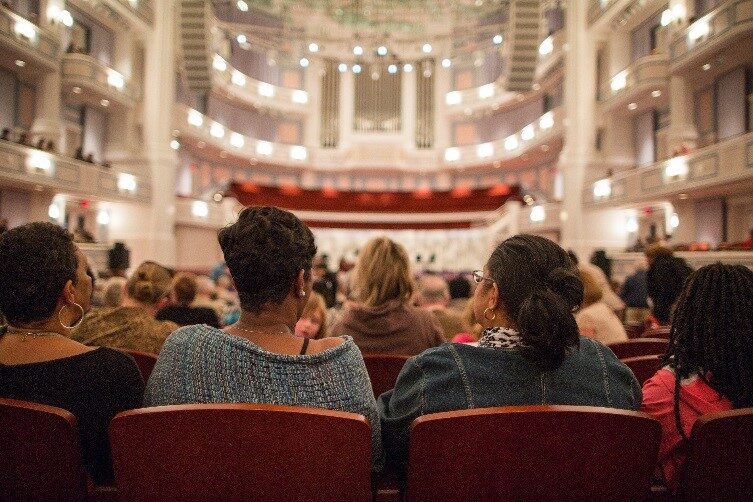
There are thousands of nonprofit organizations across America that bring arts and culture to their communities. While not every community boasts a multimillion dollar Broadway, each and every community in the country with nonprofit arts and culture organizations sees an economic benefit.
Picture all the local economic activity when someone attends a performance, goes to a museum, or heads downtown for a music festival. The parking garages are full, the restaurants and servers are busy, the shops are bustling. All that money is changing hands locally and staying in that community, creating a vibrant local community. That is the picture of the economic impact of the nonprofit arts & culture in America.
An economic impact study published by Americans for the Arts, titled Arts & Economic Prosperity 5 (AEP 5), is the most comprehensive study of its kind ever conducted. It takes the data from 341 study regions, ranging in population from 1,500 to 4 million and representing all 50 states and the District of Columbia, to quantify not only local economic impact, but national impact as well.
By all measures, the results are impressive. In 2015, the nation’s nonprofit arts and culture industry generated $166.3 billion in economic activity—$63.8 billion in spending by the organizations themselves, which leveraged an additional $102.5 billion in event-related spending by their audiences. The impact of this economic activity is significant, supporting 4.6 million jobs and generating $27.5 billion in government revenue (a yield well beyond their collective $5 billion in government arts allocations).
[video url="https://www.youtube.com/watch?v=pbCVvklKCgQ&index=16&list=PL58UAdq7rpI9Ps-X0JXfpaTSXSLTxaZSh” align="center” size="full-width” class="" starttime="" caption="" credits=""]
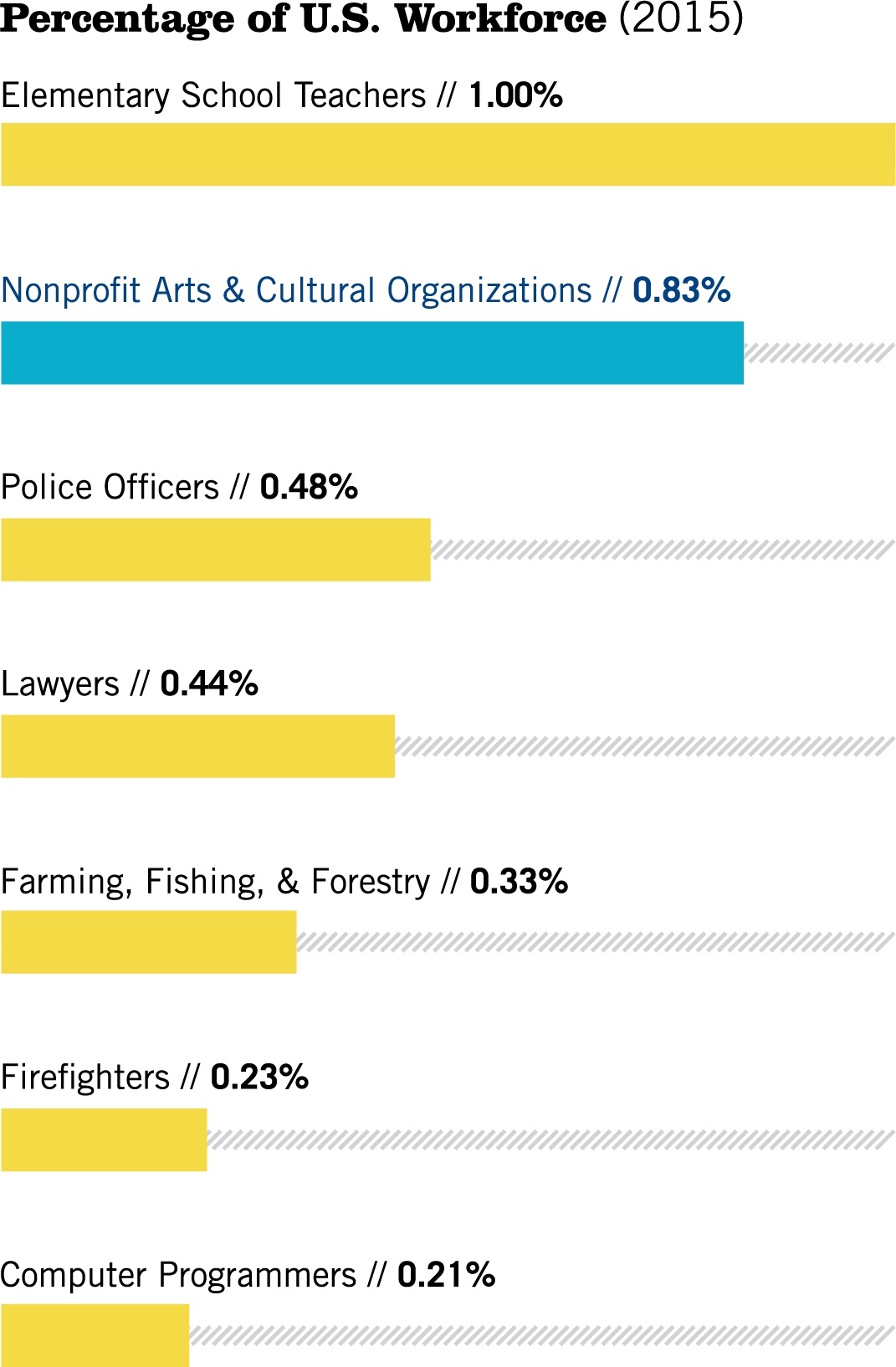
Arts and culture organizations—performing and visual arts organizations, festivals, public art programs, municipally-owned museums and arts centers, and more—are valued members of the business community. They employ people locally, purchase goods and services from within the community, are members of their Chambers of Commerce, and promote their regions. The organizations directly employ 2.3 million people and support another 2.3 million jobs in other industries, like construction, accounting, food service, and printing.
SPENDING BY ARTS AUDIENCES: DRIVING TOURISM
Part of the data collected for AEP 5 came from more than 200,000 surveys completed by arts audience members. One of the key questions was, “If this arts and culture experience wasn’t available in your community, what would you do?” A substantial 41 percent of respondents said they would travel to another community for a similar experience.
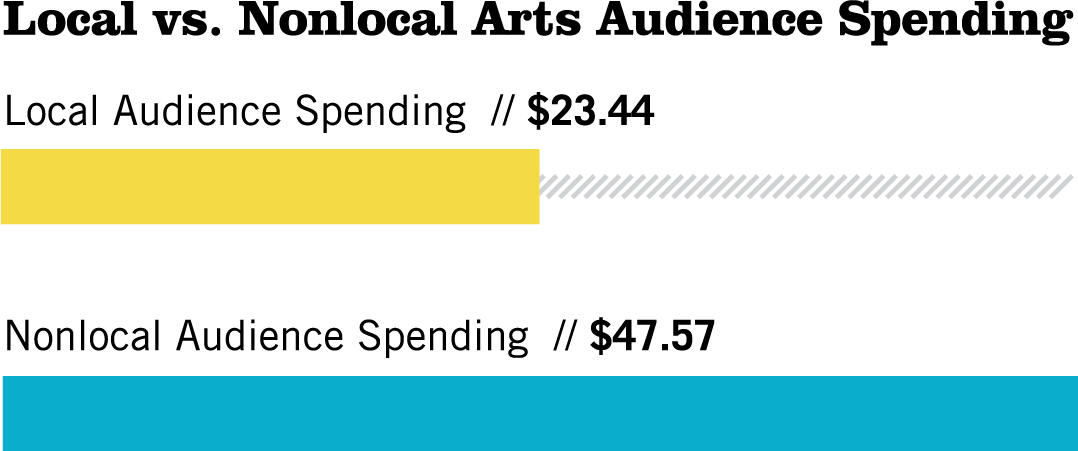
These arts and culture experiences that draw audiences from surrounding communities show even a more impressive economic impact. The typical arts attendee spends $31.47 per person, per event, beyond the cost of admission, on things like food, child care, parking, and more. Those attendees who traveled from outside their ZIP code spent $47.57—almost double their local counterparts who spend about $23.44 beyond the price of admission.

While 87 percent of Americans believe that the arts are important to quality of life, 82 percent also believe the arts are important to local businesses and the economy.
Governments, grant-makers and fundraisers at all levels are making tough choices and face increasing demands with shrinking resources. The findings from Arts & Economic Prosperity 5 send a clear message: leaders who care about quality of life and economic vitality can feel good about investing in the arts. The arts bring joy, inspiration, and vitality to our communities. They are also an industry that provides a direct economic benefit through local jobs, government revenue, and increased tourism.
Read more on the impact of the arts.