
How I Learned to Think of Myself as One of “The Grown-Ups”
September 27, 2018 | Read Time: 4 minutes
Full disclosure: I’m afraid of talking to adults sometimes.
When I worked at a nonprofit in Boston, where I was an adviser to fifth- and sixth-grade students and their families, my work felt important, but I never quite saw myself as a leader in my organization or in my community. Being just a few years out of college and among the millennial crowd at work, I didn’t see myself as one of the “grown-ups”—the senior leadership of my organization, the people who made the decisions. To be candid, I didn’t see myself, other Asian-American and Pacific-Islander (AAPI) folks, or even other people of color represented among those “grown-ups,” who make key decisions on how our programming can best serve communities of color.
So when I applied for the Emerging Leaders Program at LEAP (Leadership Education for Asian Pacifics), I was excited for the opportunity to not only think deeply about where I want to go in my career but also to develop my confidence and become someone who can hold her own among the adults.

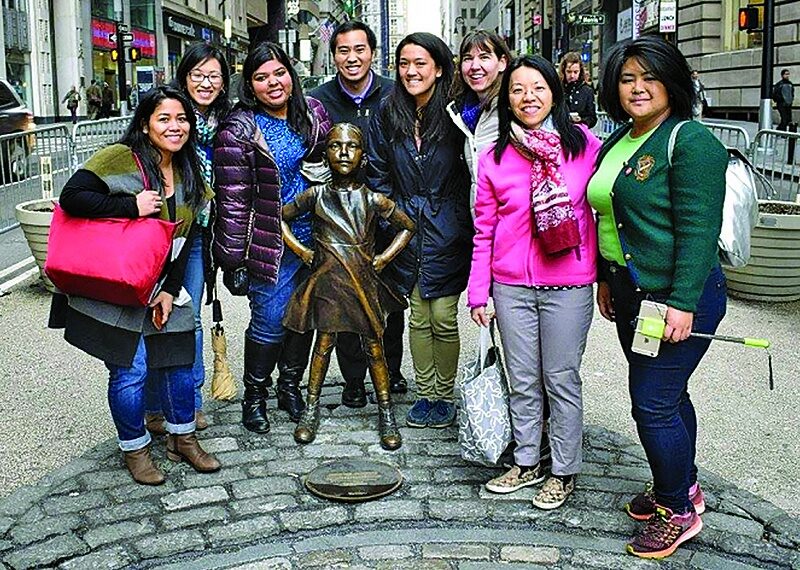
The Emerging Leaders Program at LEAP is a six-month program to develop Asian-American and Pacific-Islander staff who are in or entering leadership roles in nonprofit organizations. When our cohort met in Pomona, Calif., to kick off our program, I found myself in a powerful and important space to connect with other leaders in the AAPI community.
I had never before had a space to explore my cultural identity and publicly discuss how it relates to the outcomes in my professional life. I explored how I could harness the assets of my cultural background, how I could embrace the strengths that come from being an Asian American. I even got honest about how those strengths had sometimes been undervalued by the “grown-ups” in my life. I found that others had similar experiences, and felt that, as Asian Americans, they too were perhaps not perceived as fitting the prototypical image of a leader.
The next stage of the program was an intensive executive coaching relationship. As I started, I had the tools from the workshops and the connections among my new cohort, which put me in the mindset where I felt ready to ask myself the tougher questions. I was able to identify and tackle the struggles I was having at work. I was fortunate to have the opportunity to work with my coach and figure out what I wanted to do for myself.
I eventually came to the realization that I already have all the tools and traits that I need to be successful and reach my goals — I just need to tap into them. Whether it meant stepping outside of my comfort zone to speak up about an issue, or taking action on an initiative that matters to me, the “grown-ups” started to feel less intimidating and more approachable than I previously thought.
The program has given me a powerful network of support. I can’t stress enough how valuable it was for me to reconnect and strengthen my relationships with people I can look up to outside of my organization. I now feel like I’m part of a community of AAPI folks who are farther along in their careers and doing inspiring work in the fields of health care, education, the arts, and more.
I’m truly humbled to know that so many talented, accomplished folks care about LEAP’s mission of empowering AAPI leaders in the nonprofit field. I hope that in the future, I will be in a position where I can inspire a generation of AAPI leaders who look at me as a “grown-up,” and know that a seat at the table will be open for them as well.
To learn more, visit LeaderStories.org