
Give Fast and Make a lot of Noise: A 2026 Playbook for Big Donors
Predictions for the Year Ahead

November 12, 2025 | Read Time: 6 minutes
This collection of essays is part of a special package of predictions from sector leaders and thinkers about what lies ahead in 2026 and how to respond to what will likely be another unprecedented year for the nonprofit world. Read more predictions about Major Donor Giving | Foundation Giving | Democracy and Threats to the Sector | Fundraising and AI | Equity Efforts | Nonprofit Operations | Policy Changes | Bridge Building, and Predictions for 2030.
Abigail Disney Calls for the End of Quiet and Polite Philanthropy
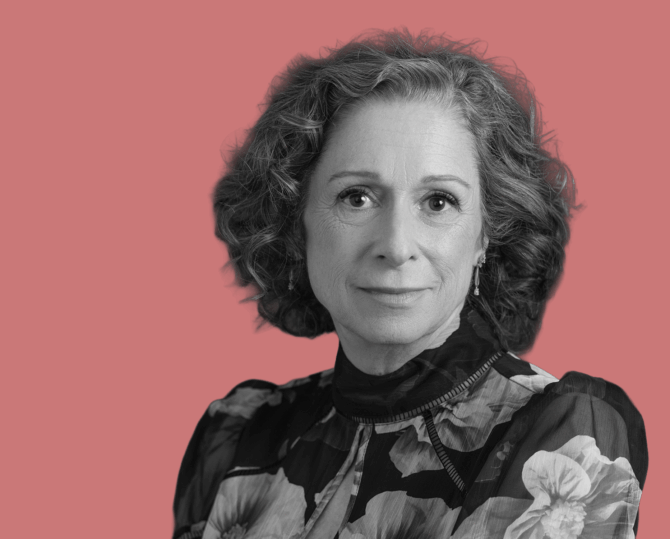
Abigail Disney
Americans are facing unprecedented precarity as we enter a new year. If donors aren’t pushed to think differently, to invest assets with a “first do no harm” ethos, to stop funding programs over people and evaluation over meaning, how can we survive the tidal wave of political crisis now overwhelming our country?
Philanthropists have occupied a gentle, quiet, and, dare I say, polite corner of the world, even as we confront a society that is none of those things. We’ve embraced the notion that philanthropy is a decent and humane response to the world’s problems. But we no longer have the luxury of living as though these two realities don’t intersect.
I first began to think of grant making as a strategic and important enterprise 35 years ago. Since then, much — and nothing — has changed. We may use different vocabulary, but we still speak of the poor and our obligations to invest in them. The homeless are now the unhoused. Domestic abuse is now intimate partner or gender-based violence. But the problem of people who can’t afford a roof over their heads is no less dire, and rates of violence against women have only worsened. At the same time, the wealthiest donors have so dramatically enriched themselves that they barely inhabit the same planet as everyone else.
It took me 30 of my 35 years as a philanthropist to look in the mirror for the root causes that explained our nation’s social predicament — far more accurately , I might add, than any sociologist, political scientist, or economist.
What were we philanthropists doing all those years? Our work wasn’t bad, and the world might have been worse without it. But we haven’t meaningfully changed the social trajectory.
We exist in an exquisitely intimate state of interconnectedness with the drivers and beneficiaries of a cruel fundamentalist version of capitalism. Without question or challenge, we’ve been content to distribute the froth that capitalism has produced. But that was never enough.
It’s time to shed our fear and acknowledge that those who want change will fail if the people closest to the money lack the courage to bear the most risk. Philanthropy in 2026 must exercise its power without any expectation of gratified self-interest or reward.
Abigail Disney is a film producer, activist, and heiress to the Disney fortune.
A 2026 Playbook for Big Donors: Move Fast, Give More
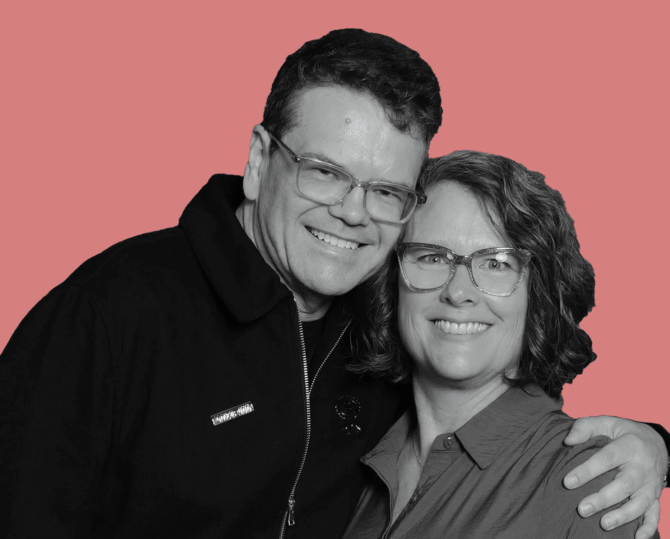
Jeff Atwood and Betsy Burton
In 2026, we expect to see a growing number of wealthy donors move more briskly and with fewer strings attached to their giving. They will prioritize speed, trust, and evidence — leading with a full heart to match the tempo of a rapidly changing world.
We publicly committed this past year to share half our family wealth within five years,starting immediately with eight $1 million no‑strings gifts to frontline nonprofits, followed by $9 million toward essential digital infrastructure and pioneering internet journalism. Dollars deployed now matter more than promises deferred.
But systemic problems require longer-term approaches. We see others in our position following what we learned in 2025:
- Unrestricted, trust‑based checks help grantees move faster.
- The most stubborn poverty problems need direct cash plus rigorous measurement.
- Rural America has been overlooked for too long.
That’s why we’re backing a $50 million guaranteed minimum income effort in rural counties experiencing generational poverty — empowering local networks, including veterans’ groups and interfaith alliances, to build evidence and momentum for change.
Jeff’s perspective is shaped by his lived experience. He grew up poor, paid for college with Pell grants and minimum‑wage work, then helped build two online platforms for community interaction, Stack Overflow and Discourse, both founded on trust, iteration, and shared ownership. These same principles should guide modern philanthropy.
MacKenzie Scott has demonstrated the power of trusting grantees. Here in the Second Gilded Age, we need to model her sense of urgency and transparency. What is the point of so much concentrated wealth if it isn’t improving the world? Wealth can be part of the solution, but it must move quickly, with humility and compassion.
Dollars that have been pledged need to be deployed in the form of unrestricted trust-based grants for well-designed programs with a proven record of success. We expect more wealthy donors to adopt this playbook, and to join us in making the American Dream attainable for so many more.
Philanthropist Jeff Atwood is a co-founder of two online platforms for community interaction, Stack Overflow and Discourse. He is married to philanthropist Betsy Burton.

The Billion-Dollar Gift: How Many Next Year?
Eric B. Javier
Based on historical trends, I predict there will be two or three gifts of $1 billion or more in 2026.
While only one gift of that size has been announced in 2025 so far — $2 billion from Phil and Penny Knight to Oregon Health & Science University — three were made in 2024. Rather than growing steadily, mega-giving tends to cluster, which means next year will likely resemble 2024 when it comes to ten-figure donations.
As a fundraising strategist for nonprofits, I’ve seen how much peer influence drives major giving. A surge in nine-figure donations in 2016, for example, sparked a wave of similar gifts in 2017 and beyond. Likewise, the jump in billion-dollar gifts in 2024 from zero in 2023 could inspire others to follow suit. I’ve also seen dozens of multibillion-dollar fundraising campaigns this year for higher education, academic medicine, and national nonprofits that will likely attract gifts of more than $1 billion.
More people can also afford such gifts than ever before. The number of U.S. billionaires has grown from 614 in 2020 to more than 900 today. A strong stock market could further fuel giving, although political and economic uncertainty may temper momentum.
Not all big gifts, of course, are public. Increasingly, donors give through limited liability corporations or donor-advised funds, which allow them to maintain privacy while advancing their philanthropic goals.
While the exact number of billion-dollar gifts in 2026 is unknowable, one thing is clear: When mega-donors lead with generosity, nonprofits can better meet complex challenges.
Eric B. Javier is a principal and managing director of CCS Fundraising.
Photos: Rashmi Gill; Courtesy of Jeff Atwood; Courtesy CCS Fundraising




