How Unlikely Allies Help One Nonprofit Get Results in a Deep Red State
By staying disciplined and creating broad coalitions, a small criminal justice group has carved out improbable victories in Republican-dominated Alabama

By Eden Stiffman
Senior Editor
February 5, 2026 | Read Time: 14 minutes
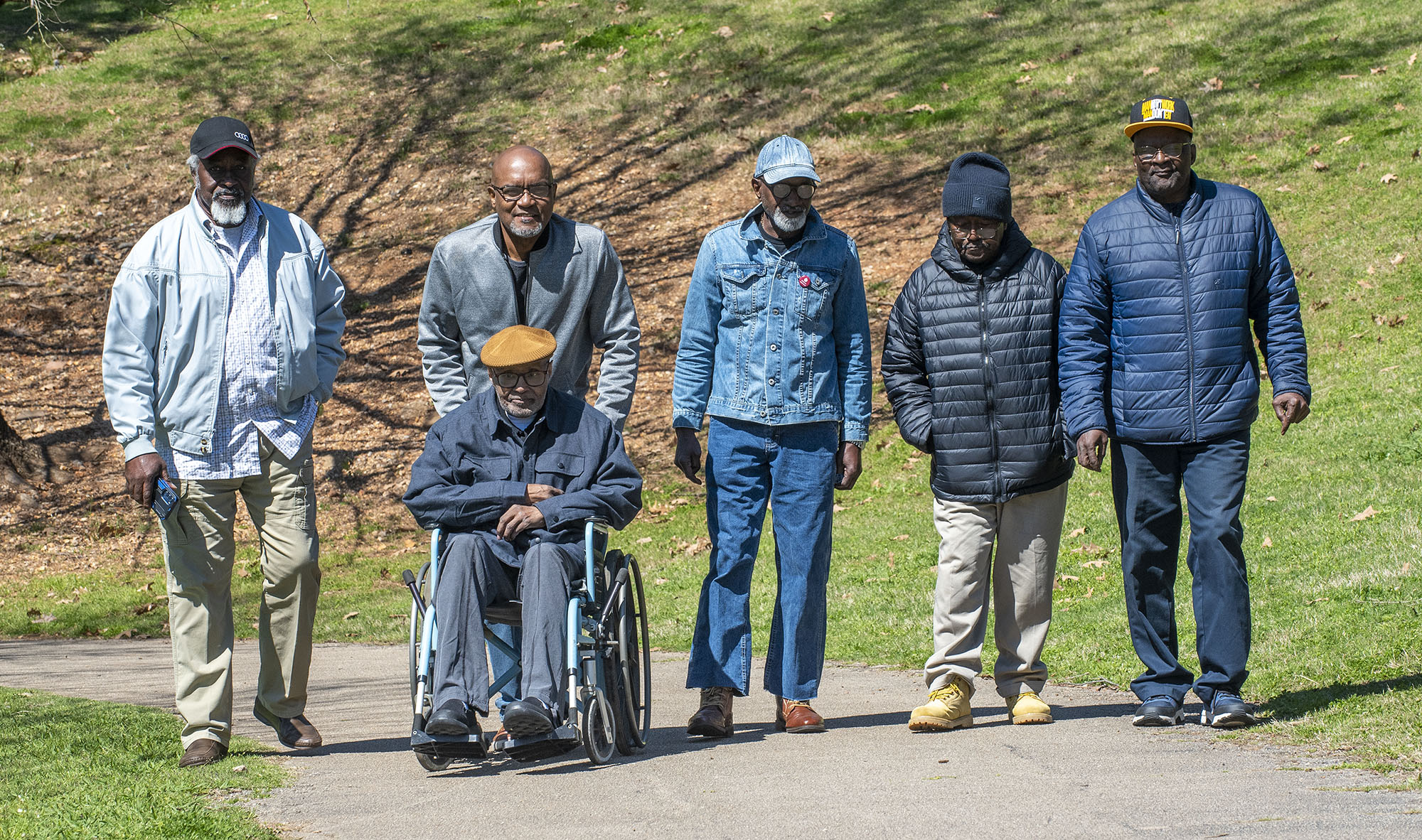
When Carla Crowder walked into a Jefferson County courtroom in August 2019, she didn’t expect to change the direction of her small nonprofit, the Alabama Appleseed Center for Law and Justice. She was there for one man: 58-year-old Alvin Kennard, who had spent 36 years behind bars for stealing $50.75 from a bakery in 1983 at age 22. His three earlier felonies — burglaries he committed at age 18 — meant he was sentenced under Alabama’s notoriously harsh “three-strikes” law, which mandates life without parole even for a low-level offense in which no one is physically harmed.
Crowder’s group hadn’t taken on individual clients before. The tiny policy and advocacy shop she had joined just months earlier was built to study and reform the state’s criminal-justice system, often through data-driven reports. But when a judge asked her to represent Kennard, she agreed — and when he was released, the story ricocheted nationally. That moment reshaped the organization’s sense of what was possible.
In a state dominated by a Republican supermajority and long resistant to criminal-justice reform, Alabama Appleseed has become one of the South’s most unexpectedly effective advocacy groups. While expanding its programs, it has kept its focus narrow, zeroing in on freeing older inmates who received harsh sentences for nonviolent crimes committed decades earlier. After Kennard’s story received so much attention, the group realized it could use his and other personal stories to help engage lawmakers and supporters. That humanized its valuable data. And it learned to build coalitions in unlikely places, persuading conservative lawmakers, faith leaders, and national funders that a small, locally rooted organization could have outsize impact.
Those choices transformed the group from a four-person research shop barely scraping by into a 10-person, $1.4 million organization supported by national grant makers like the NFL. Part of the broader Appleseed Network, a group of 20 justice centers across the United States and Mexico, Alabama Appleseed was among the first to directly represent incarcerated people. It also runs re-entry services, has won bipartisan policy changes, and has come within a few votes of passing sweeping sentencing reform — an approach designed to improve individual lives while also offering a model for how small nonprofits can influence large public systems.
“Alabama Appleseed is doing hard work in a hard system in a state where not everyone is pumped up about rehabilitation,” says Rachel Estes, director of outreach at Canterbury United Methodist Church, which partners with Appleseed clients through its Books to Prisons program. “This is an organization where the left meets the right,” she said. “In a state where it’s just not top of mind, they’ve done an excellent job of educating people, of advocating for people, and helping be a liaison of this really weird thing called incarceration and prison.”
A Journalist Who Couldn’t Stay on the Sidelines
Crowder’s path into advocacy began decades earlier. She started her career as a journalist in the 1990s covering crime in Montgomery, Ala., and by the early 2000s was reporting extensively on Alabama’s prisons. As the system spiraled through overcrowding, underfunding, and federal lawsuits, she spent time inside facilities, meeting with incarcerated people and documenting problems on death row. “I realized I just couldn’t sit on the sidelines anymore,” she says.
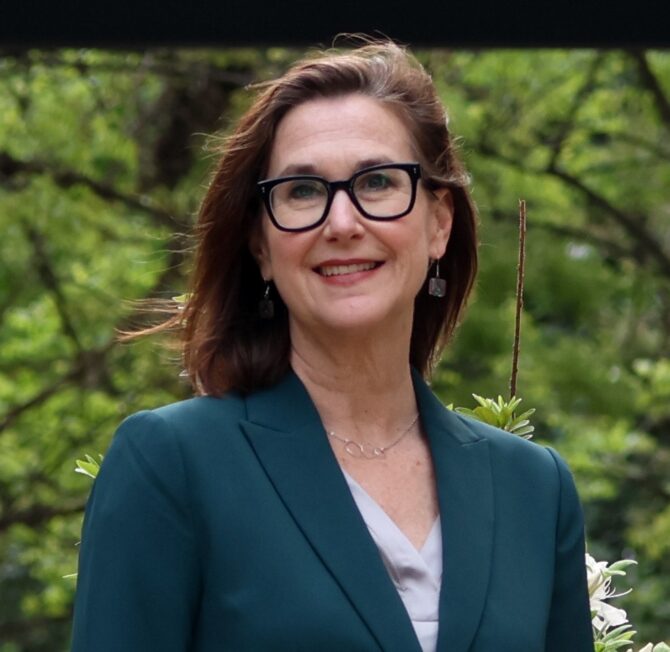
Many of the relationships she formed as a beat reporter — with lawyers, judges and district attorneys, community groups, and even some lawmakers — would later become helpful entry points as she shifted into advocacy.
She went to law school at age 36 and later joined the Montgomery-based Equal Justice Initiative, representing people sentenced to life without parole as children, clients on death row, and individuals who were wrongfully convicted and later exonerated.
By the time she arrived at Alabama Appleseed in early 2019, the organization was “barely stable” financially, she said. The annual budget was under $400,000, and staff worked out of a charming but rickety historic house in Montgomery. “There were opossums in the roof,” she said.
At the time, the group’s research and advocacy focused on issues like fines and fees, civil legal aid, and racial disparities in low-level marijuana enforcement. The group had helped end a practice in which judges could override a jury’s decision in death penalty cases. Appleseed had built a reputation for producing data that led to tangible reform. One of the group’s reports showed that more than 22,000 Alabama residents had lost their driver’s licenses in a single year because they couldn’t pay court debt. In 2023 the state changed the law to allow drivers to miss a court date or a few payments before suspending their license.
Even in a state that leans more tough on crime, Appleseed is always smart about what resonates with decision makers, said Peter Jones, a professor of public administration at the University of Alabama at Birmingham who collaborated with Appleseed on its fines and fees research.
“They understand who holds the levers of power and how they think about things,” he said. “They understand how to frame these issues to build the biggest and strongest coalition.”
Part of what makes the group so effective is its ability to bring together individuals and organizations from across the political spectrum — particularly important in deep red Alabama says Estes, whose Canterbury United Methodist Church is a part of the Birmingham Re-entry Alliance, a group convened by Appleseed and the city government to help facilitate a smoother re-entry process.
A Crisis and a Pivot
Despite its respected data and coalition building, the organization had little presence in the legislature, and its policy victories depended on partnerships with larger nonprofits that could carry heavier advocacy loads.
Then came the results of an investigation by the U.S. Department of Justice. In 2019 it released a scathing report outlining unconstitutional violence, corruption, and homicides inside Alabama’s men’s prisons. Its findings — “horrific violence, excessive force, deplorable conditions,” as Crowder described them — briefly galvanized state leaders. Appleseed helped secure bipartisan passage of several reforms in the following legislative session. For a moment, it seemed as if sweeping progress was within reach.
Yet even lawmakers who had expressed outrage over the DOJ findings balked at supporting the most meaningful sentencing reforms. Alabama’s prisons grew even more crowded and dangerous. The limits of a data-driven approach to policy change became clear.
Crowder began asking people she trusted what levers a tiny policy shop could pull. “I shifted our focus almost exclusively to how we can do the research and policy work to have fewer people ever go into prison,” she said, and to “how we can do some sentencing reform to get some people out of there.”
In the past, Appleseed had often relied on other organizations to provide stories of people impacted by the criminal justice system. “We offered little more than putting their face and their terrible plight on the pages of a report,” Crowder said. “That always seemed exploitative to me.”
Where possible, Appleseed now provides legal assistance and parole representation to incarcerated people who share their stories.
As Appleseed began to expand its direct client and re-entry work, some staff worried that the immediate demands of helping people rebuild their lives could overwhelm the small team and pull attention away from long-term policy and systems reform.
But the staff began to see that the lessons they were learning from clients and the communications they received from incarcerated people and their families were the best tools for systemic change.
Direct representation didn’t replace Alabama Appleseed’s research — it sharpened it. Kennard’s case and the attention it attracted without Appleseed seeking any publicity became the proof of concept.
Observers of Appleseed’s work say the organization under Crowder has been able to leverage storytelling masterfully.
After his release, Crowder began hearing about others whose cases seemed ripe for reconsideration. While Alabama had made some progress on sentencing reforms in the early 2000s through early 2010s, none of those changes were retroactive. This created stark disparities for aging offenders who would not have faced life without parole under current laws.
Advocates, professors who taught inside the prisons, chaplains, and a journalist began pointing her to other cases to review. Then came an unexpected email.
Pivotal Boost From the NFL
In late 2019, the National Football League got in touch with Crowder and invited Appleseed to apply for a grant. At first, she thought the outreach might be a joke.
But early the next year, the NFL announced Alabama Appleseed as one of its new Inspire Change grant partners, and a $100,000 grant arrived in 2020 to support the group as it launched a new program to help those released from prison re-enter society.

In 2017 the NFL started Inspire Change as the league’s social-justice platform, developed with a group of current and former players. Since then, the league, along with team owners and the NFL Foundation, has helped steer more than $460 million in grants to both large national nonprofits and small, locally rooted groups such as Appleseed, giving them new resources and visibility.
Crowder used the funds to hire a newly minted lawyer, and together they began combing through spreadsheets and legal files. Their next case was Ronald McKeithen, who had served 37 years for a robbery he committed at age 21. After his release, he joined Appleseed’s staff and remains a core part of its re-entry team.
As more people were freed, more letters poured in from others seeking help. “Nobody else was doing these kinds of cases anymore,” Crowder said. “By taking individual cases, we’re both filling such a huge gap in legal services and learning about the brokenness of the system from their stories.”
Today Alabama Appleseed has a full-time staff attorney, a part-time attorney, a case manager, a social worker, and a re-entry team serving more than 30 formerly incarcerated people. A former journalist works as Appleseed’s researcher, helping document conditions in Alabama prisons that news outlets aren’t covering, work that both informs the nonprofit’s own reports and surfaces stories that resonate more broadly.
Lessons in Storytelling — and Restraint
By working directly with incarcerated people as legal clients and helping them re-enter society, the group’s staff learned much about both the prison system and the lives of those in it. And the more they learned about these people as whole individuals with rich and relatable post-prison lives, the more they found that their stories could help advance the work. “You can’t just write about the grimmest, saddest, worst problems and persuade a difficult audience of anything,” Crowder said. “Positive stories move the needle.”
Lawmakers and everyday people respond to the human face of the issue: the 70-year-old man who works, pays rent, loves his dog, chats about Alabama football like any other guy, and happens to have spent decades in prison despite physically harming no one.
But Crowder also warns that nonprofits should not let a narrative strategy consume their focus. “At some point, the stories are there,” she said. “More people just need lawyers or re-entry services. There needs to be a moment where the services available catch up to the stories.”
She has also learned when not to be the messenger. Sometimes a pastor, a victim’s advocate, or a conservative lawmaker is a more effective face for the cause.
A new Oscar-nominated HBO documentary on Alabama’s prisons has been “an incredible tool for reform,” Crowder said. Alabama Appleseed has helped bring audiences together for screenings and is providing materials for individuals who want to get involved after watching the film.
Staying Focused — and Building Credibility
Alabama Appleseed is deeply aware that it faces an uphill battle on many of its issues in a deeply Republican state. But it has also learned that its issue can resonate with those conservatives when the group stays tightly focused on its mission.
In the spring of 2024, Crowder was invited to give a talk to a women’s study group at the Mountain Brook Club, a country club in an affluent Birmingham suburb. The 40 or so women there were very engaged, asking lots of questions as Crowder shared photos and stories of Appleseed’s elderly clients who are now free. One woman shared that her son-in-law was incarcerated so she “knew how rotten the system was,” Crowder said.
Crowder didn’t make a fundraising pitch. “I would rather have wealthy, well-connected citizens use their privilege to contact their legislators to support our bills,” she said. But one woman in attendance had a family foundation and felt moved to give.
“A couple months later,” Crowder said, “I had $40,000 for my re-entry work that I didn’t have before.”
Appleseed has also found that knowing what not to take on can help maintain relationships with lawmakers in a deeply conservative state. The group has avoided polarizing culture-war issues like voter engagement and library book bans that could turn off allies essential to passing criminal-justice reform. “If everybody does everything, you’re going to alienate some of the lawmakers,” she said. “Criminal justice reform can very much be a bipartisan issue.”
That discipline has helped the group win support from both parties and from Republican Governor Kay Ivey. Twice, Alabama Appleseed’s Second Chance Act, which would create a process for judges to review certain life-without-parole sentences, came within a few votes of passing.
The losses were painful but instructive. Crowder said those near-wins happened “because we did it by ourselves,” building relationships carefully and keeping the message focused.
Evangelical leaders have also become key allies, she said. “They are great messengers.”
Pragmatism has been central to the group’s effectiveness, said Kevin Ring of Arnold Ventures, which has supported Alabama Appleseed’s policy work. The organization works with anyone who can help move reform forward — prosecutors, victims’ advocates, faith leaders, and lawmakers from both parties — and continues to seek bold change while embracing incremental steps. “They only want to see lives changed and saved,” he said.
Other major funders, including the Annie E. Casey Foundation and the Just Trust, have also supported Alabama Appleseed’s policy and sentencing-reform work.
Clare Graff, the NFL’s vice president of social responsibility, said the league relies heavily on metrics, but Alabama Appleseed’s impact goes beyond what can be measured. “It doesn’t much matter what the number is when the number is literally one individual’s freedom,” she said. Their small scale — 23 people released who were once sentenced to die in prison — “never dissuaded us.”
A Model Spreading Beyond Alabama
The group’s decision to represent individuals, its deft use of client stories and ability to effect change has made it a leader in the broader Appleseed Network. “They were one of the first ones to especially do the sort of client work that they do,” said Benet Magnuson, the Appleseed Foundation’s executive director. Alabama’s approach, he said, has “inspired” newer centers in states including Oklahoma and Georgia to take on individual clients.
Within Alabama, Crowder is now focused on the next phase: prison-conditions oversight, documenting deaths in custody, expanding re-entry support, and preparing to revisit second-chance legislation in a couple years.
With new support from the NFL, it’s also collaborating with Appleseed centers in Oklahoma and Missouri on a project to support women serving long sentences that are a result of abusive or coercive relationships.
Crowder says she’s learned to remain hopeful while focused on an issue littered with failures. “I’ve learned a lot about how to attract supporters and allies in unlikely places,” she said. “Dream big about who might be an ally and who might care.”
In a media environment filled with so much negative noise, people crave solutions, she says.
“There are too many people talking about what’s wrong, what’s broken, what’s unjust. What sets Alabama Appleseed apart is: Yes, we identify all of those things — but then we step up and say, here’s how to make it better.”
Reporting for this article was underwritten by a Lilly Endowment grant to enhance public understanding of philanthropy. The Chronicle is solely responsible for the content. See more about the Chronicle, the grant, how our foundation-supported journalism works, and our gift-acceptance policy.