45 Arts Nonprofits Join Forces to Buck National Giving Trends
An arts collaborative went from raising $3.8 million in 2021 to $9 million in the 2025 campaign.

By Rasheeda Childress
Senior Editor, Fundraising
February 5, 2026 | Read Time: 7 minutes
From the Avengers to the Justice League, it’s clear from comics that teams can accomplish more together than individuals can on their own. A group of Central Florida arts organizations has found this to be true for fundraising, too. The Collaborative Campaign for the Arts, now in its 33rd year, brings together nonprofits big and small to strengthen funding for local arts groups.
Working together in a community that values the arts helped the collaborative buck the national trend of declining funding. The collaborative went from raising $3.8 million in 2021 to $9 million in the 2025 campaign.
The collaborative is spearheaded by United Arts of Central Florida, a nonprofit that supports local arts. The annual campaign seeks to boost awareness about the arts and increase general operating support for the groups involved, says Jennifer Evins, CEO of United Arts.
“It’s 45 nonprofits shouting from the rooftops that now’s the time to give to the arts,” she says. “It’s not just the performing arts, it’s the visual arts, it’s literary arts, it is the science center, the history organizations and the humanities organizations. It’s really a broad group of nonprofits.”
Page 15, a small literary-arts nonprofit with a staff of four and a half million-dollar budget, has participated in the campaign for several years and finds that the extra publicity boosts its tiny fundraising operation.
“A really amazing benefit that we’ve seen is just new donors coming in,” says Julia Young, executive director of Page 15. “It’s really nice to find donors that wouldn’t have known about us because our reach is pretty small.”
Raising More Amid Challenging Times
Nationally, funding for arts organizations is down, according to SMU DataArts, a research center at Southern Methodist University that collects arts-revenue information. Contributed revenue fell 30 percent from 2023 to 2024, the most recent years the organization has collected data. Earned revenue also declined 18 percent. In Florida, Young notes, state funding for the arts has also been cut.
The campaign tries to counter this trend and requires all gifts to be unrestricted.
“We don’t fund any capital projects, no endowments,” Evins says. “It has to be for that fiscal year’s operating budget.”
Such funding is “transformative,” says Bradley Renner, executive director of the Orlando Ballet. “It’s a real gift to all of these organizations that they have the flexibility to use the funds as they need for their operations.”
Renner has been with the Orlando Ballet a little over a year, after working at performing arts groups around the country. Having all the arts come together to raise money isn’t something he’d seen elsewhere. The campaign for general operating expenses runs from December to April: The rest of the year the ballet can focus on fundraising for special projects and programs.
“It’s great to have individuals who are very passionate about specific programs,” Renner says. “We just go to them at different periods of the year to talk about what that giving looks like.”
The goal for the Collaborative Campaign for the Arts this year is $10 million. Donors see all 45 organizations listed and choose which ones will receive their gifts.
“People can pick to write one check and give to all 45 or 20 or 10 or three,” Evins says. “We just make it a lot easier for the donor to give to all the organizations that they love.”
Participating organizations say that the exposure they receive from being listed alongside other arts organizations gives them a boost. “Donors are just looking for their one organization, but they see something else they’re interested in,” Evins says.
Collaborative Boosts Communications, Marketing Support
Large arts organizations often have strong fundraising and marketing departments that help them develop and maintain relationships with big donors and bring in new ones, while small groups lack that infrastructure. The Orlando Ballet, for example, raises about a third of its $12 million budget from donors. United Arts helps to level the playing field for smaller groups by funding campaign advertising.
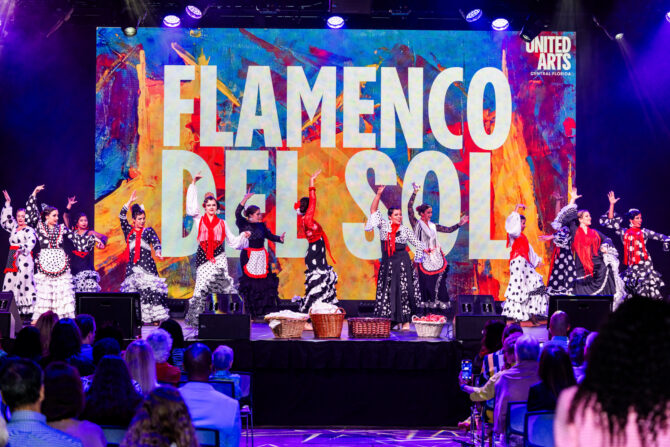
“We do two direct mailings, and we also market the campaign for them,” Evins says. “Some of the groups are small, emerging arts organizations that don’t have development staff or a marketing staff. We do that for them, and they are able to raise money without the cost.”
Renner says most arts organizations he’s seen don’t spend a lot of money advertising for their annual campaign, but the collaboration is allowing participants to get targeted “digital ads and a lot of earned media,” such as news articles, social media posts, and positive reviews. Additionally, Evins says, United Arts has paid for billboards and ads on the sides of buses.
Because all funds are designated and participating groups are different sizes, the amount raised by each varies. Page 15 has a mailing list of fewer than 1,000 donors and a goal this year to raise $10,000, while the ballet, says Renner, typically raises around $1.6 million, and has a goal of $1.7 million this year.
Donors Love the Team Work
Evins notes that some people think the campaign is simply retargeting all the same donors. They have a retention rate of 45 percent, and the campaign succeeds in outreach to additional donors, pulling in 1,400 new donors last year.
The campaign has also been an important way that groups can get existing donors involved in boosting fundraising. Many groups ask donors they have a close relationship with to match gifts coming in from the campaign. And Orange County, where many of the groups are located, offers a matching grant for new donors.
Renner notes that Orlando Ballet’s board chair, Jonathan Ledden, always asks Renner to talk up the match Ledden supplies when chatting with donors.
“He’s like, ‘Tell them they’ll get the money out of my pocket if they give that gift,’” Renner says.
Others Can Employ This Strategy, Too
Having seen the strategy work so well for these nonprofits, Evins encourages other community arts organizations to work together. It doesn’t have to be as elaborate, she says.
“You could just say, hey, we’re all going to have a single marketing campaign to give to the arts during a certain time period,” Evins says.
The key is having enough time to think it through. She recommends planning a year or two ahead. “Take the time to sit down and understand how much you’re already raising collectively,” Evins says.
The collaborative has task forces that meet and discuss aspects of the campaign, Evins says — from messaging to improving donor stewardship.
Also, it’s important to be responsive to members of the collaboration. Young, with Page 15, notes that the campaign used to start in January instead of December. This was driven by the fact that many of the larger arts organizations had their galas early in the year. It was a good time to talk to their donors. But Young notes that timing was challenging for smaller organizations that had just wrapped up year-end campaigns.
“We don’t have a giant pool of donors, so we were worried about donor fatigue,” Young says. “But they adjusted that. They expanded the campaign calendar a couple of years ago to incorporate our year-end donors.”
The organization is hoping the new tax law change that gives those who take the standard deduction an additional charitable deduction of $1,000 per person will increase giving this year. They’re planning to mention the change in upcoming campaign mailings. But already “the collaborative is a million dollars ahead of where we were last year,” Evins says.
Finally, one of the powerful features of a collaborative, says Young, is it can help all organizations push themselves to achieve more.
“Every year we set a goal for ourselves, and they’re really good at pushing us,” Young says. “Even if you don’t necessarily meet it, there’s no punishment for that. We’ve really seen success in the last couple of years with setting those goals higher and higher. We’ve been able to meet our goal, and actually, I think, we exceed our goal every year.”