How High-Touch Expeditions Build a Pipeline of Major Supporters
Experiential philanthropy trips are a growing strategy used by organizations that want to make inroads with midlevel and major donors, who often have the time, money, and interest in participating.

By Rasheeda Childress
Senior Editor, Fundraising
February 25, 2026 | Read Time: 7 minutes
In 2023 Nick Espinosa, chief advancement officer at the Houston Zoo, went to the Galapagos Islands with donors, where they got to see penguins, sea lions, and other animals native to the famed islands. It was an unforgettable adventure. Now whenever he sees those donors, they grin and say, “How about those penguins!” The trip was an extension of an approach called experiential philanthropy, in which supporters get firsthand views of organizational work.
“It’s one thing to hear about the work that we’re doing in the wild to save these beautiful animals, but it’s another thing to see it firsthand,” says Espinosa, who has accompanied donors on trips to places like Kenya, Rwanda, and Mexico, where the zoo is doing conservation work. “When you are swimming with a sea lion that is right next to you, the empathy that you can build for that animal — it just makes the emotional connection so much deeper.”
Experiential philanthropy trips are a growing strategy used by organizations that want to make inroads with midlevel and major donors, who often have the time, money, and interest in participating. Organizations that host such trips are using them to build a pipeline of highly engaged supporters.
These trips are not just for conservation groups. Espinosa says he’s seen experiential philanthropy work for museums, universities, performing arts groups, and more. “The performing arts organization will lead trips to Europe or to Santa Fe to see the Santa Fe Opera and do donor stewardship and cultivation on those trips,” he says.
Building Closer Ties
Even with the long windup, the trips provide invaluable time with donors, says James Ward, chief exploration officer at the travel company Rewild Safaris. He notes that nonprofit team members get hours of unstructured time with donors, such as riding to or from locations, waiting for specific animals to show, or spending quiet time together after the day’s main activities.
“While we’re there, we talk a lot about what is happening at the zoo, the future of the zoo, any capital campaigns that are coming up, and any expansion of conservation projects that are going on,” Espinosa says.
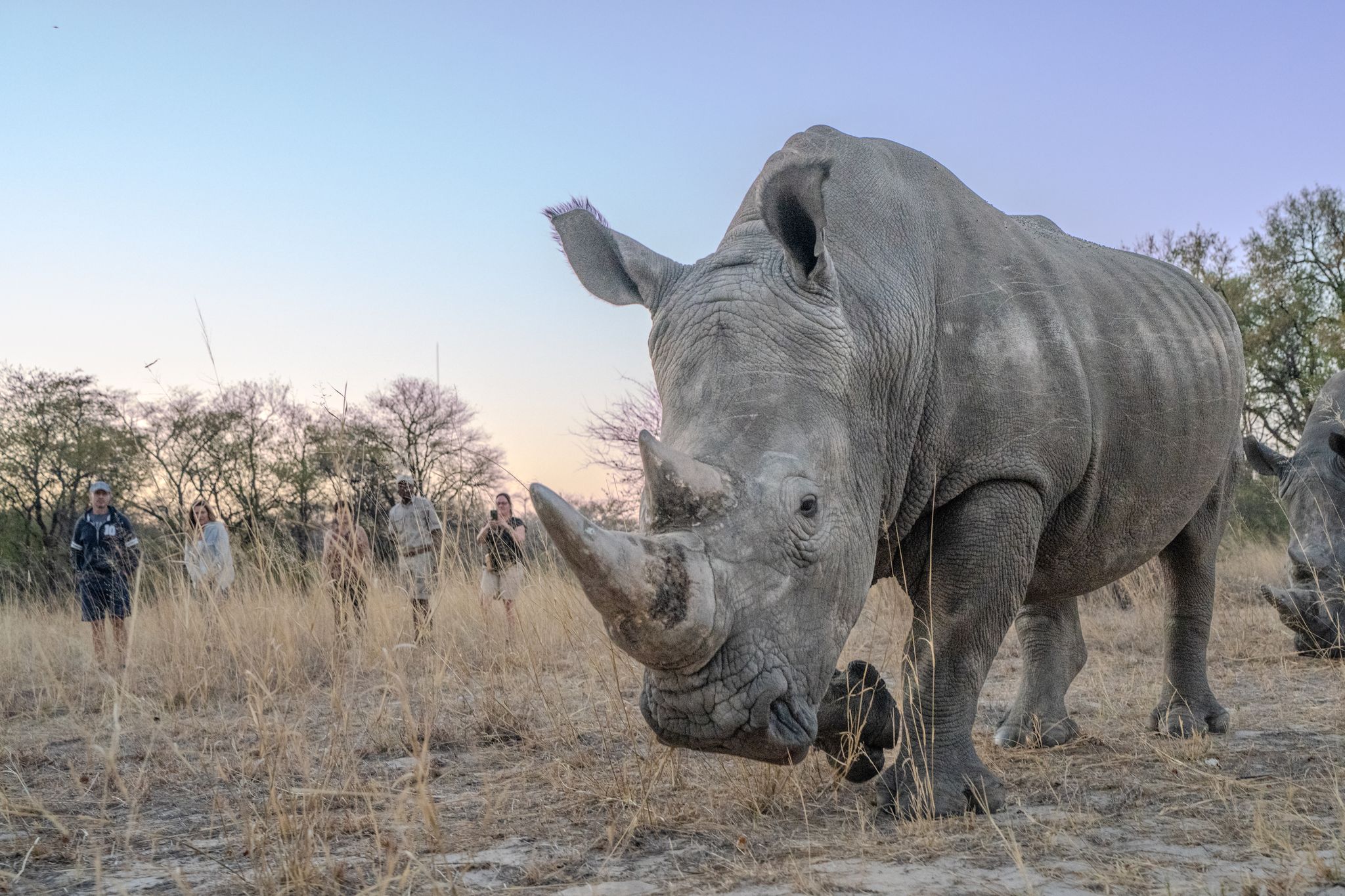
And sometimes donors witness activities that give them a better understanding of what they’re funding, says Nina Fascione, executive director of the International Rhino Foundation.
“One of our donors funded some technology, and they literally saw this technology in action to stop rhino poaching,” she says. “You can’t — no matter how well you write — you can’t accurately describe it. Seeing it in action is priceless.”
Similarly, visiting a particular place with donors can help them better understand your vision for important projects. On one such visit to the Galapagos Islands, Espinosa shared an idea for a new project. “We were saying, Imagine an exhibit like this at the Houston Zoo. We will feature formations like this,” he says. “You’re able to really tell the story of what you’re trying to build a lot easier.”
On trips like these, fundraising staff, which could include an executive director or major gifts officers, have specific goals.
“We look at the attendee list before and come up with cultivation or stewardship plans depending on where they are in the cycle for each person on the trip,” Espinosa says. “There are actionable items on the trip. Sometimes the item is just to get to know the person better. Other times it’s to engage them for future capital giving or get to know how interested they are in lion conservation versus armadillo conservation.”
Making sure staff are well-informed about the group, its projects, and the trip itself is crucial, adds Ward, who’s seen when things go poorly. On one trip, a donor asked a question about how much the conservation work costs, and the fundraiser didn’t have an answer or a good understanding of what was happening in the field. Those are missed opportunities, Ward says, to help the donor better understand the mission and feel closer to it.
Engaging New Donors
Trips aimed at showing off the work of an organization take time to plan — often a year or more, say Espinosa and others. Typically a nonprofit will work with a travel company to ensure proper logistics.
It’s easy to think these expensive international junkets are strictly for the largest donors. But that’s not always the case. Trips can be shorter, and to less exotic locations, to pull in midlevel donors as well.
Espinosa notes the zoo has trips that start at $3,000 that are targeted to volunteers, while more expensive and exotic trips aimed at bigger donors can cost $20,000. Because donors pay for the trips, it’s key that there be a range of prices that are affordable to midlevel donors and volunteers. Fascione notes that the trips are priced right around costs, as proceeds of the trips aren’t funding donations.
For a trip to the Galapagos, the zoo also invited midlevel donors. Two who joined in loved it.

“Since returning from that trip, one of them has joined our board, one of them has chaired our Zoo Ball, and they have both become major gift donors to the zoo,” Espinosa says. “It really brought them so much closer to the zoo.”
Some travel companies offer micro excursions aimed at reaching younger donors who have less time and money but want to be involved. Those targeted excursions help bring in more potential donors.
Fascione notes that opening up the trips to people who seem engaged can help draw out donors who don’t appear, based on past giving, to be heavy hitters but actually could be. “You get to further engage people who maybe donate in modest amounts, but once they see rhinos in the wild, they’re going to suddenly make greater contributions and become more involved,” she says.
When donors have those meaningful experiences, they might go back and share with others and invite friends to come on trips.
“That’s what you want,” Fascione says. “You don’t want people to just be sending you checks. You want them to know about your cause so they can tell other people about it. Our donors become fantastic spokespeople for the organization, for our issues, for our cause.”
The Philanthropist’s Turn
With years of experience as a director of the Marks Family Foundation, Amy Marks Dornbusch understands the power of seeing philanthropic work in action while traveling. It’s part of the reason she founded her philanthropic initiative, AtlasDaughters, which helps philanthropists see nonprofits in action across the world so they can fund their greatest needs.
“We create and curate these exceptional journeys for grandmothers and mothers and their children,” Marks Dornbusch says. “We partner with NGOs that are working on really innovative projects that are ripe for scale.”
Dornbusch has seen other nonprofits create travel experiences for donors, the way the Houston Zoo and International Rhino Foundation do, but she thought the process overly taxing for small nonprofits trying to expand.
So with Atlas Daughters, her thought is, “Let us do all of the travel curation and deal with all of the details of hosting the families,” so the nonprofits can just focus on sharing their mission with philanthropists when they arrive. The donors pay for their own travel and accommodations.
The initiative hosted its first trip last year, taking a group of women and their daughters to Samoa, where they saw the work of the Greater Good Diaper Project, which delivers and collects compostable diapers. Plastic diaper waste makes up a third of all plastic waste in the South Pacific, and the project wants to reduce that waste.
The trip raised $1.5 million for the project, Marks Dornbusch says. “We’re playing big here.”
Her strategy for experiential philanthropy is focused on women with young children, as she believes in the power of creating new philanthropists.
“We’re really trying to educate the next generation, what I consider to be the next changemakers, into what global impact is all about,” Dornbusch says. “So we give them firsthand experience and understanding what the role of the philanthropist is, the role of the family.”
Dornbusch notes there isn’t a formal process for nonprofits to apply for consideration, but she’s looking to host more trips that can provide nonprofits with funding from $500,000 to $1 million.
“I’m focusing on how I can bring other families to come along and invest in those projects alongside us, create a cohort of lifelong friendships amongst women that are getting to know each other,” Marks Dornbusch says. “And also relieve a lot of that burden on the organization so they can just focus on what they do best, which is the work.”