March 21, 2017 | Read Time: 6 minutes
Thrust into the national spotlight during a White House news conference last week, the national Meals on Wheels organization and its 5,000 member groups across the country are stepping up advocacy amid uncertainty about what the Trump administration’s preliminary budget could mean for its funding.
The budget proposal would eliminate tens of billions of dollars in domestic spending, including zeroing out two block-grant programs that Meals on Wheels relies on.
Office of Management and Budget Director Mick Mulvaney called out the Community Development Block-Grant program as a failure and repeatedly referred to Meals on Wheels as a recipient of the grant dollars, which are awarded by states.
The sudden attention spurred a boom in donations — the Meals on Wheels national operation took in more than $170,000 in new contributions by Monday morning.
As happy as they are to get such a big boost in giving, leaders of the anti-hunger organization say their focus is on educating the public about the nature of this public-private partnership and the group’s effectiveness.
“While we are extremely appreciative of support from private donations, we really want to emphasize that it’s not enough,” said Kristine Templin, chief development officer. “We need [our supporters] now more than ever to continue to speak up and out to their member of Congress to talk about why this has to remain a funding priority.”
Local member groups get 35 percent of their budgets from the federal government.
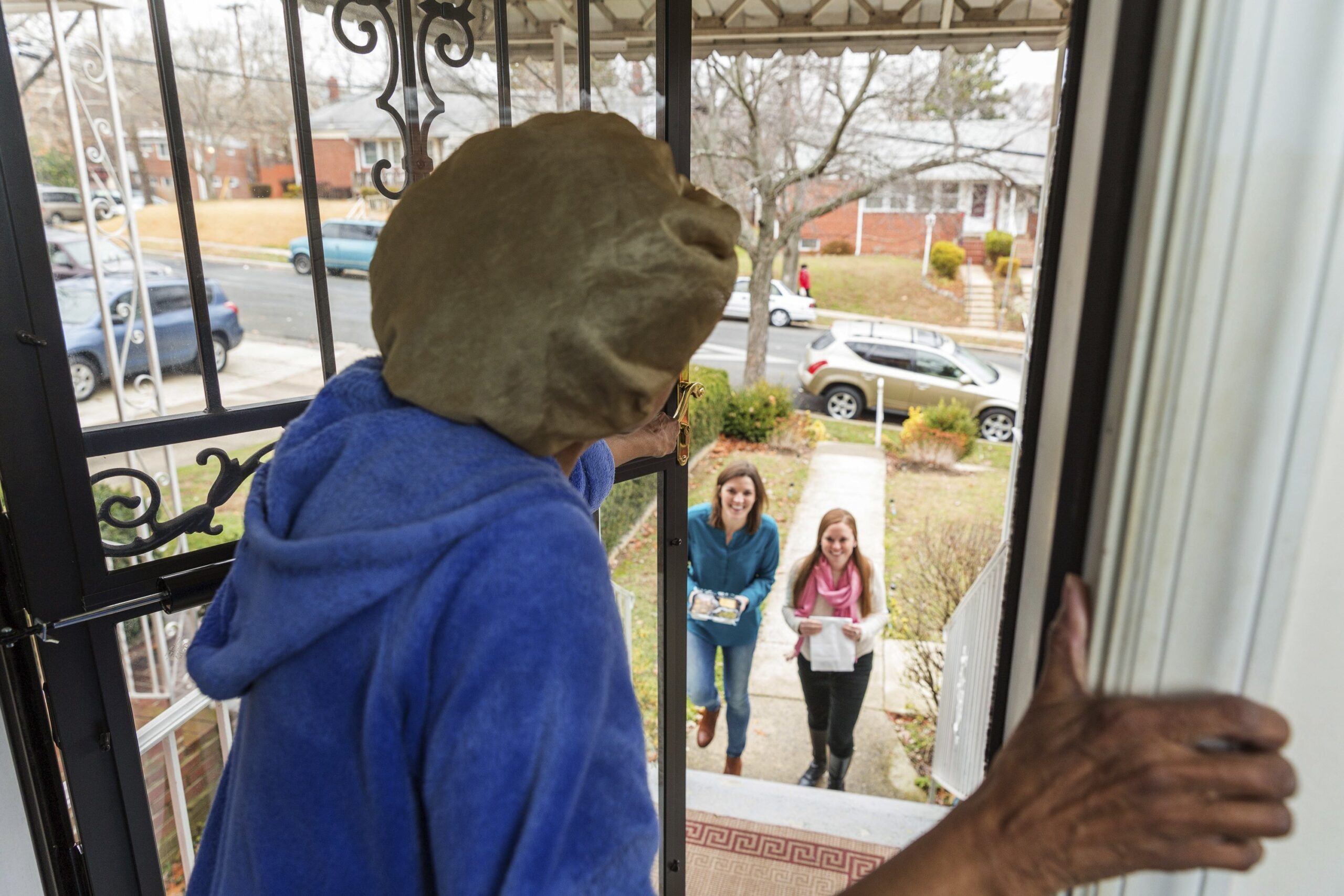
The local Meals on Wheels groups deliver nearly a million nutritious meals a day to people who are homebound, according to the national organization. Besides providing companionship for people who would otherwise be isolated, the service saves many of the recipients from being hospitalized or institutionalized and reduces the country’s health-care costs by millions each year.
Meals on Wheels operating dollars come from a combination of government money and private donations. The national membership organization receives just 3 percent of its funding from the federal government. But local member groups get 35 percent of their budgets from the federal government through the Older Americans Act’s Senior Nutrition Program, which falls under the Department of Health and Human Services. Some get additional government money — funneled through the states — from the Community Development Block Grant and the Community Services Block Grant programs.
Though the preliminary White House budget doesn’t say specifically what would happen to spending on the Older Americans Act’s Senior Nutrition Program, many Meals and Wheels groups are up in arms following Mr. Mulvaney’s comments.
“It really is all of these resources coming together that are needed, and need to be invested and boosted further, in order to meet the growing need we see today,” said Ms. Templin. “It really is severe and continues to grow every single year.”
The $170,000 in new online donations represented a big spike for the anti-hunger organization. Typically, it gets about $1,000 a day. Those dollars will support advocacy efforts in Washington and at the state level, according to Ms. Templin, and go toward marketing materials and fact sheets to aid member organizations in their advocacy work.
Already Struggling
On Sunday, Mr. Mulvaney disputed that the cuts would gut Meals on Wheels. Leaders of the local programs remain skeptical.
“Meals on Wheels programs no matter what their size or scale are very dependent on multiple sources of revenue and all are really struggling to meet the need,” said Ashley McCumber, who leads Meals on Wheels of San Francisco. “Any time you pull any single strand out of that funding picture, you create a lot of risk not only for the client but for the programs.”
His organization’s program has been growing around 10 percent each year for the past decade. Last year, it served 3,600 people. Its more than $11.6 million in revenue comes about equally from government grants and private contributions.
It would have trouble providing basic services if it had to rely on individual donations alone. That could mean turning people away or cutting back from providing two meals a day to just one.
The organization typically gets a handful of online donations each day, but by Friday afternoon, it had raised about $6,000 and had seen a 250 percent increase in social-media engagement.
While that $6,000 wouldn’t come close to filling the gap if the federal budget cuts were made, it’s good that people are taking an interest, Mr. McCumber said. “It’s really good because that means there are small donors connecting to our program.”
Other local programs were also seeing a spike in gifts late last week.
Immediate Response
Even before the news conference on Thursday, the national organization was responding to social-media messages about news reports of the proposed cuts.
“We started to hear pretty quickly from supporters through social media that they were looking for a way to support the Meals on Wheels Network,” said Ms. Templin.
Early Thursday morning, staff tried to make sense of what the proposal would mean for the nationwide network. Then their work turned to educating the local Meals on Wheels programs about what the future might hold, responding to press inquiries, and responding to supporters who wanted to help.
If federal funds are cut, Meals on Wheels might have to turn people away or provide just one meal a day instead of two.
The group quickly put a pop-up donation ad on its website featuring an elderly man in an Army veteran’s hat. “Seniors in your communities need Meals on Wheels. And we need you,” the ad reads. “Federal funding is at risk. Help us defend these vital services today. Give now.”
The group also encouraged people to sign up to volunteer and to call their members of Congress.
Since the budget proposal was released, the national organization has seen a 750 percent increase in volunteer sign-ups through its AmericaLetsDoLunch.org site, which supports its volunteer recruitment campaign.
When the burst of national attention came, member organizations were already in the midst of a monthlong campaign called March for Meals. It involves urging people to contact members of Congress, local elected officials like mayors, and celebrities and athletes to generate awareness for their programs.
“It’s less of a fundraising campaign and more of an advocacy effort where some people are donating as well,” said Erika Kelly, chief advocacy and government affairs officer of Meals on Wheels America.
National staff members are still working to define the strategy, putting plans together to keep new and old supporters connected with their local programs. They want people to know that they need both their contributions and their advocacy.
And public dollars alone won’t cut it, says Ms. Templin: “We’re stressing the message that “this is not a story of either/or.”