
Propelled by Strong Growth, Giving Circles Start to Realize Their Own Clout

By Alex Daniels
Contributor
November 14, 2017 | Read Time: 7 minutes
Nonprofit leaders have observed for years that giving circles are an increasingly important catalyst for charitable giving among small and midlevel donors, particularly women. But because the groups are often informally organized and managed, their popularity and collective giving power have gone mostly unquantified.
Now, with financial backing from the Bill & Melinda Gates Foundation and others, giving-circle leaders are getting a clearer picture of their clout. At a meeting in Grand Rapids, Mich., this week, billed as the first summit of giving-circle networks, researchers released a study that showed that the number of giving circles had more than tripled in the past decade and their giving had increased by more than $1 billion.
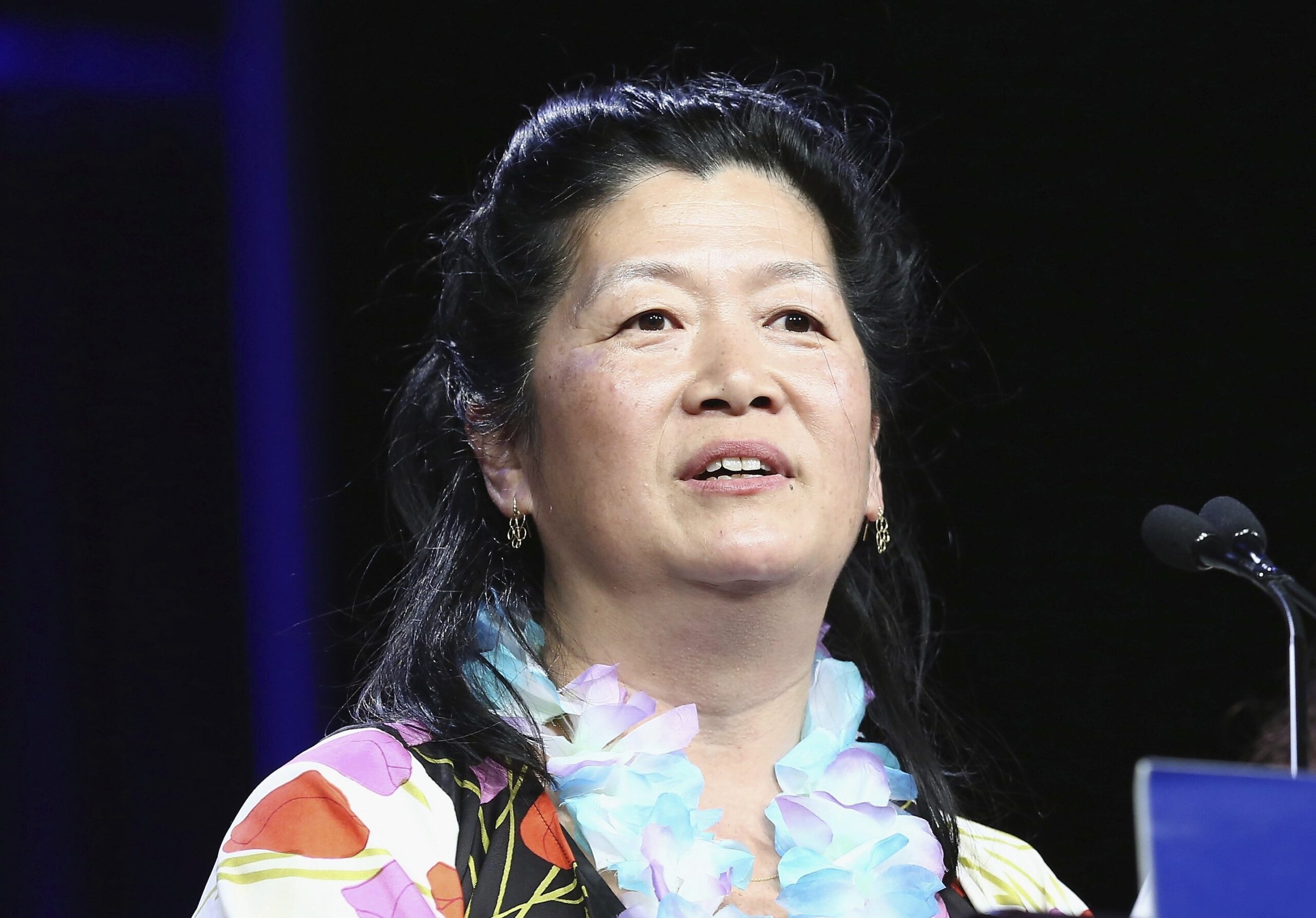
“We can’t stand silently and let things happen to us,” says Hali Lee, co-founder of the Asian Women Giving Circle in New York. “I don’t think giving circles are the answer for everyone, but it’s been important for me and my giving-circle sisters. I know for certain each of us is giving more because we’re doing it with people we respect and share values with.”
The gathering is an attempt to understand a part of philanthropy that is often viewed as the minor leagues. Participation has gone without a headcount for nearly a decade, according to one of the meeting’s organizers, Joelle Berman, executive director of Amplifier, a network of more than 100 Jewish giving circles.
To start, Ms. Berman says, there’s not even a consensus about what to call the groups. While some stick to the folksy “giving circle,” she says, others prefer names that sound more official, like “philanthropy fund” or “collective grant-making network.”
Ms. Berman says the summit will allow networks, including those based on faith or gender, to learn how other groups operate. Once giving-circle networks begin to share this information, she says, they may be able to develop suggestions for how the groups can be more effective and adopt common practices.
“It’s an unknown universe to us,” she says. “We’re at the beginning of establishing a field.”
Foundation Backing
The summit taking place this week was paid for with a $95,000 grant from the Bill & Melinda Gates Foundation as well as support from the Schusterman Family Foundation. The Gates and Charles Stewart Mott foundations also chipped in for a survey of the current state of giving-circle activity.
Established foundations are interested in the groups because they see them as “on-ramps” for philanthropy, according to Jason Franklin, a researcher at the Dorothy A. Johnson Center for Philanthropy at Grand Valley State University who was part of the team that conducted the survey.
The study, he says, was an outgrowth of the Gateses’ involvement in creating the Giving Pledge, an effort to get the ultrarich to commit giving away the majority of their fortunes.
“They want to encourage other billionaires to commit to giving,” he says. “But they know it’s not enough for just billionaires to give. We need everybody to step up.
Mr. Franklin and his fellow researchers found that in 2016 there were 1,087 active giving circles, up from 400 a decade earlier. In addition to independently run donor groups, researchers identified 525 giving circles that operate as chapters of giving networks, like Amplifier, Asian Americans/Pacific Islanders in Philanthropy, and the Community Investment Network.
A survey of about a third of the giving circles identified found that the groups raised $30.1 million in 2016 and donated nearly all of it. Extrapolating from that, the researchers calculated that existing giving circles have contributed nearly $1.3 billion since their inception. An earlier study, in 2006, estimated there were 145 of the groups, which had made grants totaling nearly $65 million.
The survey also found:
- Women are the biggest force in giving circles. More than half of the groups consist of all women, and an additional 20 percent are majority women.
- A large portion of giving circles provide members with activities beyond making donations, including social functions (64 percent), discussions about grant recipients (58 percent), and site visits (41 percent).
- The minimum dollar amounts for participation varies widely, from just $4 to $2 million. The average amount contributed was $1,312; the most frequent donation level was $400.
- More than half of giving circles were involved in volunteer activities with grantees. Nearly half reported that members gave to grantees outside of the group, 45 percent said members served on grantee boards, and 38 percent said they introduced grantees to other donors.
- More than half of the giving circles gave to human-service efforts and groups that support women and girls and education.
- Outsiders, including individual donors, foundations, and corporations, provided support to more than half of the groups.
Appealing to Smaller Donors
The groups vary greatly in size and composition, and each operates according to its own rules. For instance, Natan, a giving circle that started in 2002 (and spun Amplifier off as a separate organization in 2014), this year plans to give nearly $1 million to Jewish nonprofits and social enterprises in Israel and throughout the world. Grants this year have included a new focus on confronting anti-Semitism. The giving circle has a professional staff, and grants are decided by a committee of 69 people.
Ms. Berman’s own giving circle consists of her and seven friends. They meet in their living rooms and kitchens to introduce each other to nonprofits in their community. This year, they combined their money and gave their biggest grant: $2,400 to Ancient Song Doula, which provides prenatal and postnatal care to low-income people in Brooklyn.
While giving circles are tiny compared with huge donors and foundations, some think they are the future of philanthropy. Many don’t require large sums to participate and can allow donors to feel their money is making a difference.
In 2015, less than 24 percent of Americans reported a charitable gift on their taxes, down from a period from 2000 to 2006, when it routinely hit at least 30 percent, according to a Chronicle analysis of Internal Revenue Service tax data.
One reason for the decline, says Elizabeth Roma, assistant director of research at the Helen Brown Group, a prospect-research consultancy, is that smaller donors don’t feel their gifts make much of a difference when they hear about the billions being given away by Bill Gates, Warren Buffett, and other megadonors. Giving circles, she says, provide people with more of a sense of purpose.
“Everyone is struggling with participation rates,” she says. “Part of that is because it is very hard for people at the lower end of the spectrum to feel like their gift matters. If you could feel that instead of throwing your check into the void of an annual fund, if it were tied to a specific effort, or if you had a vote to choose projects, people would feel a closer connection with those smaller gifts.”
Not a Donor-Advised Fund
The growth of giving circles, and the communal participation they engender, runs counter to the popularity of donor-advised funds, which are often viewed as an option for people to make an individual gift in the absence of input from others, according to Nicholas Deychakiwsky, civil-society program officer at the Mott Foundation.
Community foundations have often overlooked the work of giving circles, he says. The reason: Often the small groups support grass-roots projects that have not been audited — a requirement for many community foundations — and that are unaccustomed to dealing with the bureaucracy of an institutional grant maker. But, he says, more foundations have recognized that the circles are a good way to connect with grass-roots groups in communities where they haven’t made inroads, including neighborhoods with large poor and immigrant populations.
“They’re dipping into the retail market,” he says. “It’s a great feeder system.”
After receiving small grants from the Asian Women Giving Circle, some New York nonprofits attracted more foundation support. For instance, in 2014, the group contributed $9,000 to support the development of Priya’s Shakti, a graphic novel and multimedia project that reworked Hindu myth and addressed modern Indian culture to draw attention to sexual violence. Within a year, the project gained support from the Ms. Foundation and the Tribeca Film Institute’s New Media Fund.
Before she co-founded the Asian Women Giving Circle, Ms. Lee says, her philanthropy was “scattershot.” Sometimes she’d donate after a disaster, and sometimes she’d write a check when her friends invited her to a gala. With the circle, she says, her giving is more carefully thought out and close to the heart. The group has given nearly $800,000 to projects in New York managed by Asian women that improve the lives of women and girls.
Deciding where to give doesn’t always come easy, says Ms. Lee, who serves on Amplifier’s Board of Advisors. When the group’s steering committee meets for its annual four-hour brainstorm to decide where to give the money, the discussion can be heated, she says. But the attacks are impassioned and never personal.
“I consider these ladies my New York City sisters,” she says. “The money and the grant making is almost gravy. The core of it is our friendship.”







