Top IRS Official Defends Actions but Doesn’t Take Questions

By Doug Donovan
Contributor
May 22, 2013 | Read Time: 6 minutes
Washington
The Internal Revenue Service official who oversees applications for tax exemption defended her actions to a Congressional committee on Wednesday before refusing to answer questions about the agency’s practice of singling out conservative nonprofits for increased scrutiny.
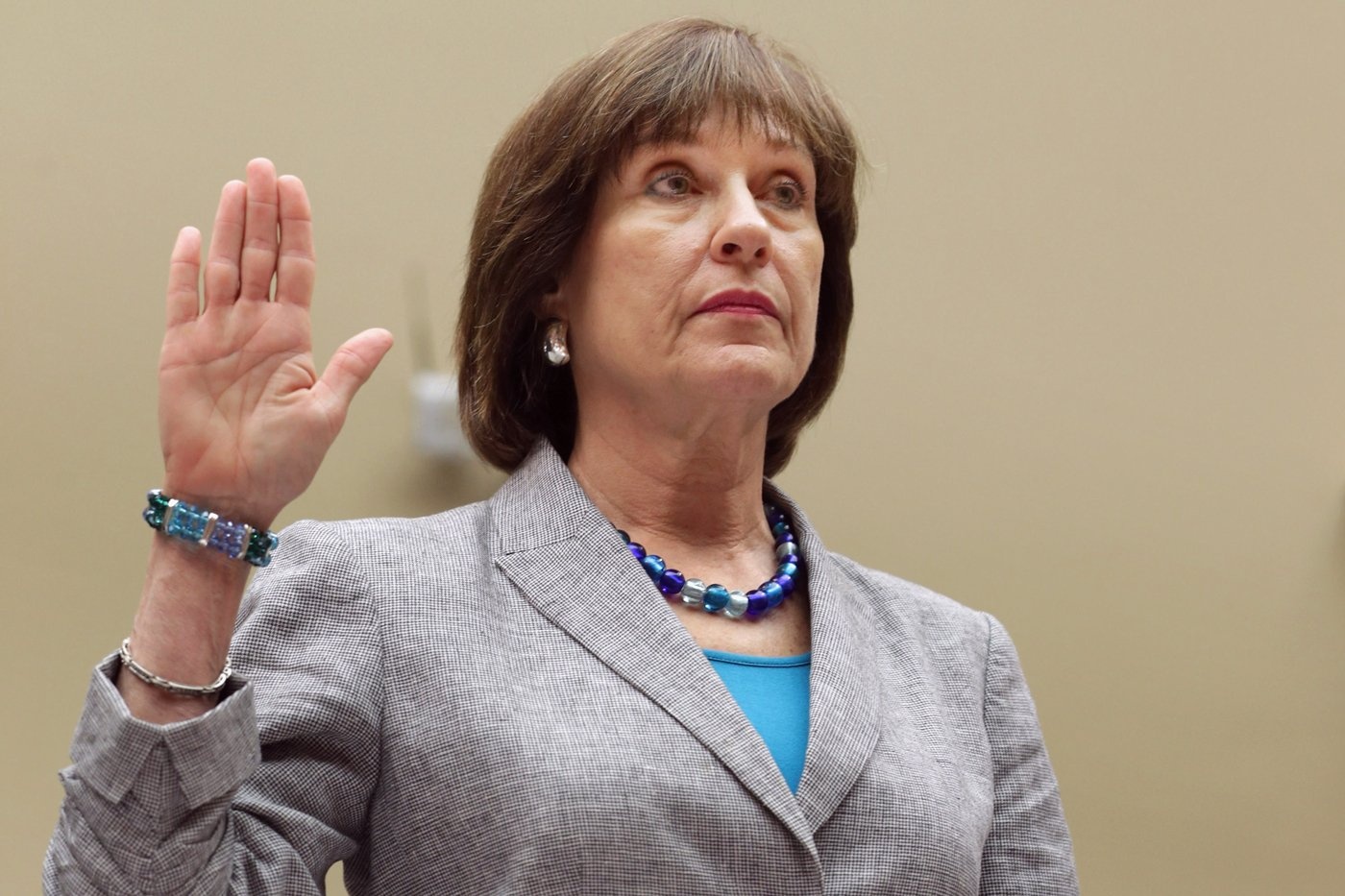
Lois Lerner, director of the IRS division that oversees tax-exempt organizations, delivered an opening statement to refute accusations that she had misinformed Congress in the past, but then told the Republican-controlled House Committee on Oversight and Government Reform that she would not testify about the hearing’s stated topic: “The IRS: Targeting Americans for Their Political Beliefs.”
“Members of this committee have accused me of providing false information when I responded to questions about the IRS processing of applications for tax exemption. I have not done anything wrong. I have not broken any laws. I have not violated any IRS rules or regulations,” said Ms. Lerner, after being sworn in to testify. “And I have not provided false information to this or any other Congressional committee.”
Before Ms. Lerner’s comments, Rep. Jim Jordan, Republican of Ohio, said Ms. Lerner had 14 opportunities since 2010 to “set the record straight” when asked by the oversight committee and the House Ways and Means Committee about accusations that applications for tax-exempt status from conservative groups had been singled out for increased scrutiny.
“She failed to do it,” Mr. Jordan said.
Asserting Right to Avoid Self-Incrimination
Ms. Lerner appeared before the oversight committee Wednesday morning with Neil Wolin, the Treasury Department deputy secretary; Russell George, the Treasury inspector general; and Douglas Shulman, the former IRS commissioner.
But it was clear that Rep. Darrell Issa, the California Republican who chairs the committee, and other lawmakers had anticipated Ms. Lerner’s testimony would provide the most illumination about how the IRS began to flag groups based on what Mr. George’s recent audit said were inappropriate criteria, such as names that included such terms as “Tea Party” and “Patriots.”
“I must ask you to reconsider,” Mr. Issa said to Ms. Lerner. “You have made an opening statement making assertions you’ve done nothing wrong.”
He initially said Ms. Lerner may have waived her Fifth Amendment right by delivering an opening statement and by confirming that she had provided Mr. George with written answers to audit questions entered into the record.
She repeated that she would not answer questions.
That did not satisfy Rep. Trey Gowdy, Republican of South Carolina, who said he also believed Ms. Lerner had waived her right to remain silent.
“You don’t get to tell your side of the story and then not be subjected to cross-examination,” Mr. Gowdy said. “She ought to stand here and answer our questions.”
Mr. Issa deliberately did not adjourn the committee after six hours. Instead, he recessed the hearing to reserve the right to recall Ms. Lerner for questioning.
Ms. Lerner made it clear in her opening statement that she is well aware that invoking the amendment comes with risks.
“Because I am asserting my right not to testify I know that some people will assume that I’ve done something wrong,” she told the committee. “I have not.
“One of the basic functions of the Fifth Amendment is to protect innocent individuals,” she added. “And that is the protection I am invoking today.”
Supreme Court Ruling
Ms. Lerner has been at the center of the political imbroglio since the bungled public admission two weeks ago that she and other senior IRS officials have been aware for months that applications for tax exemption from Tea Party groups had been singled out for additional scrutiny.
On May 10, at an American Bar Association tax conference in Washington, a lawyer named Celia Roady asked Ms. Lerner for an update on the accusations that conservative groups were being singled out. It was then that Ms. Lerner delivered the first official acknowledgment of the practice and apologized for it.
But the question and answer had been orchestrated with Ms. Roady by Ms. Lerner and her former boss, Steven Miller, who was forced to resign as acting IRS commissioner. Both Ms. Lerner and Mr. Miller had been asked on separate occasions by members of Congress about the accusations but neither had ever admitted that terms like “Tea Party” and “Patriots” had been used for screening purposes since March 2010.
They both have said that application reviewers in Ohio were not politically motivated but that the politically loaded terms were used to efficiently flag groups in the face of what they called a large increase in applications. However, the terms were put into use in March 2010, before there was any increase, according to the inspector general’s audit.
Mr. George confirmed at the committee hearing on Wednesday that there was no increase in March 2010. In fact, in the fiscal year that ended Sept. 30, 2010, there were fewer applications than in the previous fiscal year.
Mr. Issa said the search terms were put into place after just one application from a Tea Party group was received by the IRS.
The Republican congressman offered his own motive. In January 2010, two months before the practice began, the Supreme Court issued its Citizens United decision. The ruling encouraged more donors to give money to groups classified under Section 501(c)(4) of the tax code, in part because such groups don’t have to disclose their donors. And in March 2010, Congress approved the Patient Protection and Affordable Care Act. Mr. Issa said many Tea Party groups were forming under Section 501(c)(4) to fight Obamacare, and that’s why the IRS was flagging them.
Mr. George’s audit found that of 298 cases the office reviewed, “Tea Party” appeared in the names of 72, “Patriots” appeared in 13, and “9/12” appeared in 11. In the 202 other cases, no such terms appeared.
The IRS is required to make sure that groups applying for 501(c)(4) status are pursuing “primarily” social welfare missions. Most experts have interpreted “primarily” to mean groups can spend no more than 49 percent of their budgets on political activities.
But many applications were delayed by as much as two years, and groups were saddled with long questionnaires that sought the identity of donors, content of speeches, and other information that IRS officials say was inappropriate.
Mr. Shulman apologized several times for the practice of flagging conservative groups. He was appointed IRS commissioner by President Bush in 2008, and his term expired in November 2012.
“I am incredibly saddened by this event,” he told the committee on Wednesday. “It occurred on my watch. I’m very sorry this happened.”
White House Not Involved
Mr. Wolin was the seniormost official from President Obama’s administration to testify on the scandal. The House Ways and Means Committee held a hearing last week that questioned Mr. Miller and Mr. George. The Senate Finance Committee held a separate hearing on Tuesday.
Republicans grilled Mr. Wolin on whether he told senior Obama administration officials last year before the November election that the IRS was aware that conservative groups had been singled out for scrutiny. He repeatedly stated that he told no one in the White House.