Trump Relief Pledge Urges Donors to Give Tax Savings to Charity

By Eden Stiffman
Senior Editor
December 12, 2016 | Read Time: 3 minutes
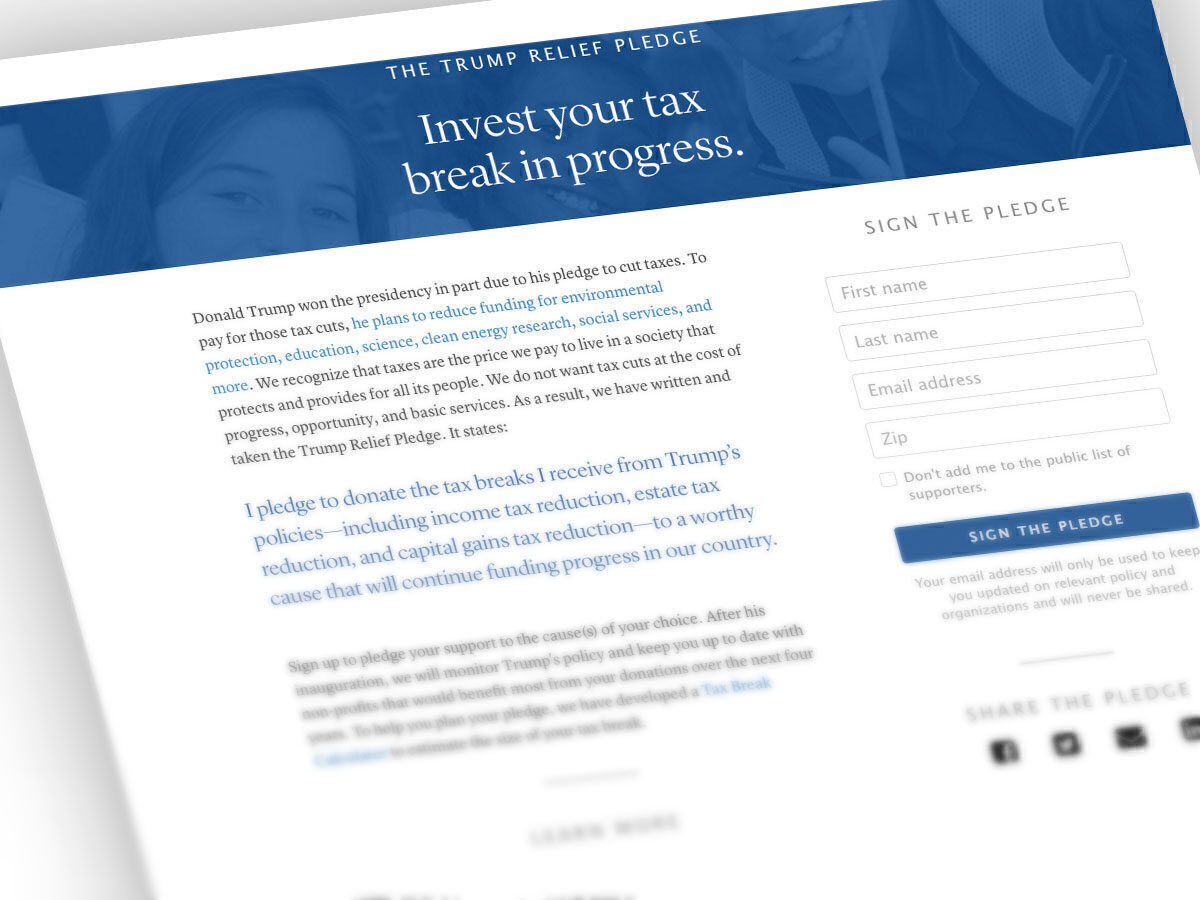
More than 100 people have pledged to give the money they retain through tax breaks under Donald Trump’s presidency to progressive nonprofits. They’re organizing around a new effort, called the Trump Relief Pledge, started by a group of twenty-somethings to raise awareness about the impact of the anticipated tax-code overhaul and support organizations that serve vulnerable people.
“This is a powerful way to funnel funds to progressive causes as well as get a conversation started around the links between taxes, social good, and progress in the United States,” said Erin Leonard, a co-founder of the effort who works at an anti-hunger nonprofit.
A calculator on the Trump Relief Pledge site helps estimate how much people should expect in tax cuts based on their gross income. Organizers plan to update the calculator as the Trump administration’s policies evolve.
Unlike the Giving Pledge, there is no plan to publish the names of those who sign on, though organizers plan to soon have a running tally of the number of signatories on the site. Though the details of Mr. Trump’s tax plan are still unclear, the average American can likely expect to pay less in 2017.
The Trump Relief Pledge site also provides recommendations for organizations participants might consider supporting, including the International Rescue Committee, Planned Parenthood, and the Human Rights Campaign. Many of these groups have charted unprecedented support since the election.
To keep people engaged and up to date on the impact of the tax cuts, the Relief Pledge’s creators plan to send emails with policy updates, featuring nonprofits of a variety of missions that connect to different policy changes. The organizers have been connecting with like-minded nonprofits such as United for a Fair Economy, which works to lessen income inequality and in the past has also urged people to donate tax rebates to charity, and hope other nonprofits will promote the pledge in their own fundraising efforts.

Sending a Message
While the organizers, who describe themselves as “concerned citizens,” are not shy about their views, Ms. Leonard hopes the effort has bipartisan appeal.
Philip Hackney, a Louisiana State University law professor who specializes in nonprofit issues, says the effort “sounds like something from an old-line Republican. They have traditionally sought a smaller state with a larger charitable sector.”
While people essentially volunteering to pay higher taxes to prop up nonprofits can have an impact on important issues, Mr. Hackney added, the sector doesn’t have the infrastructure to handle challenges like health care and poverty relief. “You can never get enough buy in both in terms of donations and in terms of consistent policy to take care of the enormous needs of our society through this path,” he said.
Ms. Leonard said the Relief Pledge aims to get the message across that higher taxes and government funding for social services are preferable.
“This is more about the feeling that it’s urgent and critical to step in right now and do what we can,” she said. “We simply encourage people to pledge to put their tax breaks to good use.”