
An Unexpected Online Success Offers a Blueprint for Other Nonprofits

By Megan O’Neil
Contributor
November 17, 2014 | Read Time: 8 minutes
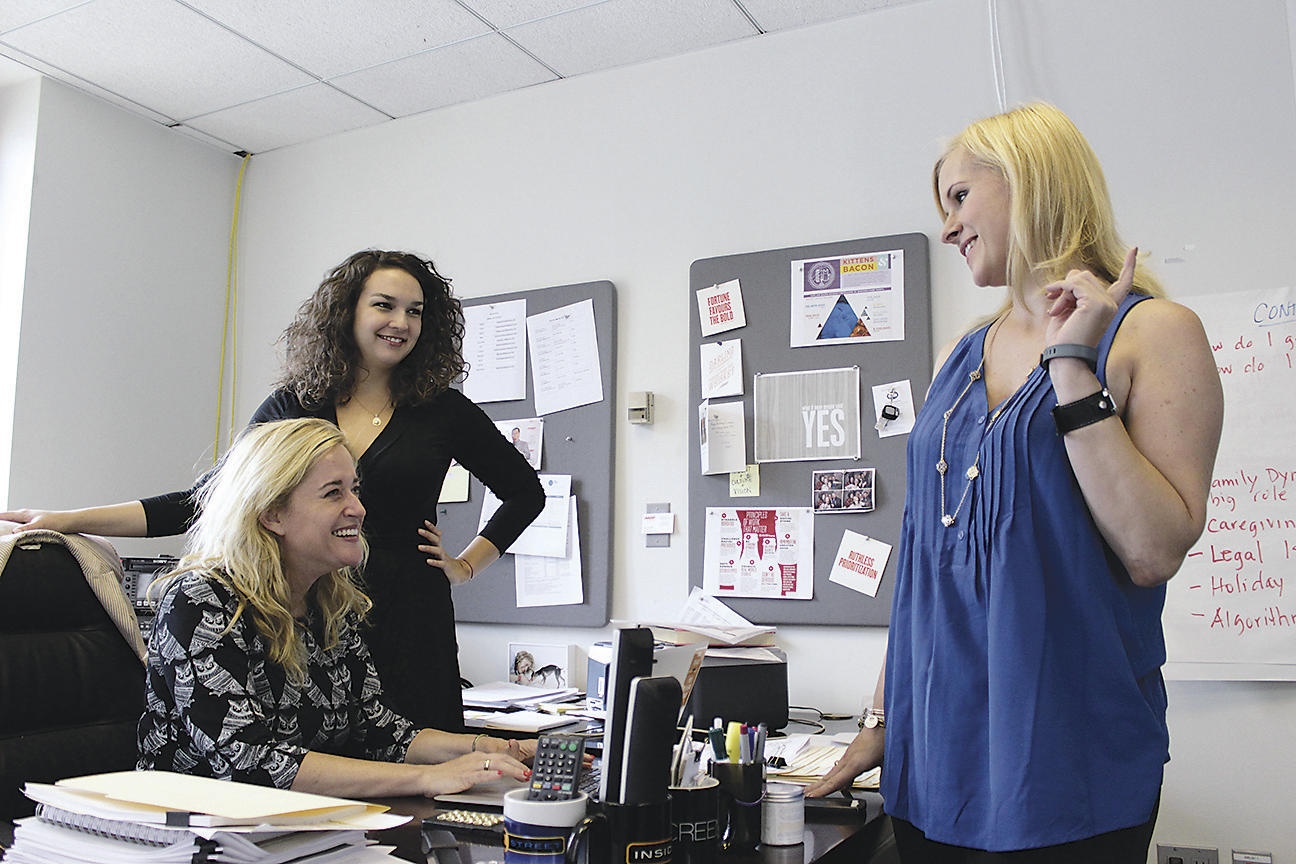
The world of selfies, likes, and retweets might seem like an ill-guided pursuit for AARP, an organization that serves people who largely grew up with rotary telephones and typewriters. But in late 2009, Tammy Gordon began to assemble what she describes as a “ragtag” team of six employees throughout AARP to lead a foray into social media.
Ms. Gordon, who was then working on an AARP Foundation project designed to increase volunteerism, pitched to her superiors a six-month plan to boost the nonprofit’s social-media profile by training employees and crafting organizationwide guidelines. The budget was zero.
Five years later, AARP—which claims 38 million members—has a social-media audience of 2 million on Facebook, Twitter, YouTube, Pinterest, GooglePlus, and Tumblr. Ms. Gordon’s team manages or helps guide 250 to 300 social-media accounts throughout the organization. Posts generate hundreds of shares, likes, and comments.
The work has become a blueprint for other nonprofits interested in establishing a major presence on social networks. Now AARP is looking to explore how it can build on its social-media success to generate revenue.
“Tammy has done an impressive job changing perspectives inside organizations and in the sector about who uses social media and what you can do with it to serve your community, regardless of age,” says Amy Sample Ward, chief executive of the Nonprofit Technology Network.
Shift in Focus
Ms. Gordon is not done. She says her social-media team’s operating budget has doubled each of the last three years, though she declines to say how much it is. And now, the social-media team is merging with AARP’s broadcast operation to create a new 18-person, multidisciplinary team called AARP Studios. The objective: produce AARP content to be shared on social networks. The move puts AARP shoulder to shoulder with many big consumer companies that are putting social media at the center of their marketing.
Social media “has changed publishing and changed distribution and changed the way people consume content,” says Ms. Gordon. “Social media can’t be successful without great content, and great video can’t find audiences without social these days,”
Central to the work that will take place under AARP Studios is the development of a suite of dashboards and rating systems that will allow Ms. Gordon and her colleagues to show the correlation between individual pieces of content and AARP’s financial objectives.
“I absolutely think it is the right time to start building a revenue model around this,” Ms. Gordon says. “We are hiring a development director to start working with advertisers on how they can reach our audience through our video and social products.”
A Voice Called ‘Rhonda’
As the social-media team came together five years ago, some people at AARP questioned whether there would be enough work for six employees, says Alejandra Owens, an original team member whose new title at AARP Studios is director of media and community. They soon discovered “it was drinking from a fire hose. There is absolutely enough work everyday for everyone,” she says.
In addition to Ms. Gordon and Ms. Owens, the team grew to include a social-communications trainer, three community managers, and three social strategists—a total of nine people.
They dissected the composition of AARP’s social media-content like medical students working on cadavers.
They developed what they call their “rule of one”—a formula for posts that includes one photo, one sentence, one link, and one request from readers—so as not to overwhelm or confuse AARP supporters. A recent tweet about Veteran’s Day, for example, featured a single photo of a World War II veteran, a short message, and a link to an AARP blog that explains AARP’s advocacy work on behalf of caregivers, with a call for personal stories about caregivers and the assistance they provide to veterans and others:
He fought for our country. Now you fight for him. Share your story at http://t.co/36khoDQNDO #VeteransDay pic.twitter.com/H8TmjT95YE
— AARP (@AARP) November 11, 2014
The AARP team has worked out how many posts to publish (on Facebook, it’s three to four daily) and the optimal times to publish them (weekday evenings and Sundays). They assess how and when to use paid promotional tools to bolster what they post on Facebook and Twitter.
The team is now working to analyze what social-media activities prompt the greatest response in terms of website visits, donations, and joining or renewing membership in AARP.
The use of social media, Ms. Owens says, “is not going to solve every single problem or help to contribute to every single campaign. But where we think we can have an impact, we like to help people.”
To strengthen continuity in the social-media posts by different staff members, the team created an imaginary character to embody the kind of person AARP should aim to reach. They jokingly refer to her internally as “Rhonda,” a woman in her mid-50s with adult children who likes to garden and have wine nights with her female friends.
The team has also worked with prominent people and organizations to increase attention on social networks.
For example, it built one of its most successful campaigns in coordination with Jeff Gordon, the Nascar driver. The AARP Foundation’s Drive to End Hunger Campaign has 50,000 followers on Facebook and another 19,400 on Twitter, plus Mr. Gordon’s own substantial social-media reach.
Last year, AARP members were offered the chance, for a $124 donation, to have their names put on Mr. Gordon’s car for a race in Chicago, says Jen Martin, the social-media team’s leader on the campaign.
With 516 participants, the drive raised about $64,000 for the foundation’s anti-hunger programs. Tracking codes indicated that 150 of the donors were channeled through social media, Ms. Martin says.
This year, the foundation asked for $224 per donor, and 180 people gave. Social media was the second-biggest funnel for those donors, generating about $40,000. She and her colleagues have not been able to pinpoint the exact reason for the decrease in the total dollars raised, Ms. Martin says, adding that it is not unusual for donations to fluctuate year to year.
Making Adjustments
To be sure, AARP’s media team has stumbled. In 2012, they seized on the increasing popularity of the site Pinterest. It didn’t take long to see that their posts about health, personal finance, and politics didn’t take hold on a network that has become popular for posting crafts, recipes, and other such items.
Moreover, the team didn’t have a strategy in place to provide the steady stream of images needed to be successful on the highly visual site.
Working with AARP’s director of photography, they set about identifying which images played well with their audience. They figured out that the members of their audience who used Pinterest were predominantly women, and what they were sharing was more about what they did in their free time than anything else.
“Don’t be afraid to throw away what you’ve built and go in a different direction.” Ms. Gordon says. “We did an immediate shift and pretty much exclusively everything we put on Pinterest is content from our magazine, because we know those readers are also on Pinterest.”
The success of the social-media team led to a larger role for Ms. Gordon at AARP.
In March, she took on the title of interim director of the television and radio department, which in turn set the stage for the creation of AARP Studios. She is now hiring a staff of 15 people for AARP Studios.
Jessica Kirkwood, a longtime nonprofit-communications professional, says she first met Ms. Gordon in 2010 at SXSW Interactive, where they bonded over “the isolation of being early digital leaders in the nonprofit sector, where there weren’t many in place yet.”
They were studying what was happening in other industries, including technology start-ups, and trying to adapt for-profit strategies and approaches for nonprofit work, she says.
“One thing I have always admired about Tammy is her enthusiasm for trying new things,” says Ms. Kirkwood, who most recently served as deputy campaign manager for former nonprofit executive Michelle Nunn when she ran as a Democratic candidate for the Senate in Georgia. “She’s an early adapter around new technologies and a keen experimenter.”
Ms. Gordon’s first piece of advice for someone working to expand a nonprofit’s social-media presence is to find colleagues who are already enthusiastic about using social media—what she describes as one’s office “wolf pack.”
“You may have the only job of social media at the organization, but that doesn’t mean you can’t leverage a CEO that has a Twitter account or your smartest researcher who reads the top 10 blogs,” she says.
Ms. Gordon doesn’t know of other nonprofits that are making such a deliberate effort to produce content specifically for social networks, as she is doing at AARP Studios, but she predicts other charities will follow.
“What I am doing every day is going in and looking at what organizations and what companies and what people are doing new and innovative things and how can we be developing that as well,” she says.
“I am always trying to think, ‘What should we look like in 2016 as opposed to today?’ And that is the most fun part of the job for me.”
AARP’s Social-Media Formula

AARP’s social-media experts developed what they call the “rule of one,” which they urge employees to follow when posting on the organization’s behalf on Facebook and other online outlets. These cards, given to the group’s employees, remind them to include only one photo, one sentence, one link, and one request for money or action per posting, to avoid overwhelming or confusing supporters.
Send an e-mail to Megan O’Neil.




