Back-to-Back Hurricanes Force Donors to Rethink Their Disaster Approach
The question is whether to fund long-term recovery and resilience rather than just immediate relief efforts.

By Stephanie Beasley
Senior Writer
October 15, 2024 | Read Time: 7 minutes
The increasing frequency and severity of extreme weather events is prompting some philanthropists to reconsider their disaster responses. The question is whether to fund long-term recovery and resilience rather than just immediate relief efforts following floods, fires, and storms.
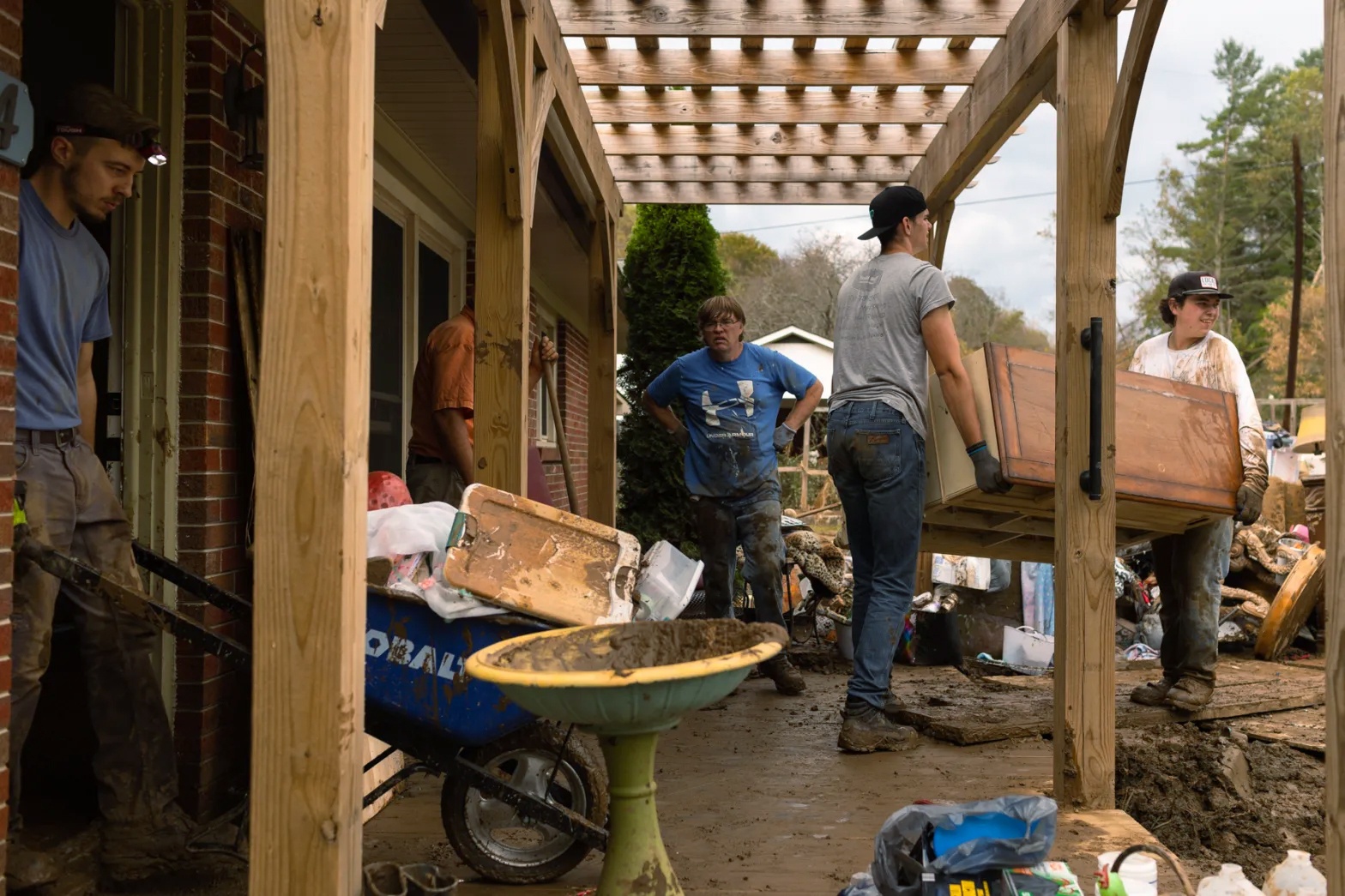
Two major tropical storms struck the United States in the past month. First, Hurricane Helene tore through Southeastern states, killing hundreds, washing out and flooding homes, and leaving many without power. Last week, Hurricane Milton whipped behind it, wreaking more havoc on the Florida coast and affecting millions more.
Federal aid is stretched. FEMA, the agency tasked with delivering federal assistance to disaster survivors, has already spent nearly half of its relief budget for fiscal year 2025, which is intended to last until Sept. 30 of next year. That could force the agency to cut funding for rebuilding projects such as repairing roads and water facilities, to reserve money for more urgent, life-saving operations, Politico reported Thursday.
The U.S. philanthropy sector, which includes $1.4 trillion in assets among private foundations and more than $228 billion among donor-advised funds as of 2022, has the capacity to fill some of that shortfall. Corporations and private foundations such as Walmart, Sam’s Club, and Dogwood Health Trust provided millions of emergency relief dollars to Florida, Georgia, North and South Carolina, and Tennessee in the aftermath of Helene. Groups like Catholic Charities and GiveDirectly have launched campaigns to raise relief funding for those affected by Milton.
However, much like the federal government, philanthropic funders need to consider how they can provide long-term support in an era of extreme weather that increasingly impacts the groups they fund and communities they seek to help, said Tanya Gulliver-Garcia, director of advisory and educational services at the Center for Disaster Philanthropy.
Climate change is warming the oceans, which is creating storms with stronger winds and heavier rain. The effects of these mega storms are being felt beyond coastal regions, expanding to cities like Asheville, nestled in North Carolina’s Blue Ridge Mountains, where residents are expected to go for weeks without city water. Inland North Carolina was previously considered safe from the kind of devastation wrought by Hurricane Helene. Meanwhile, states like Florida have had to deal with one storm after another.
“We keep having disasters, and Florida is a really good example of that, with three hurricanes making landfall in Florida this year,” Gulliver-Garcia said. “How do you deal with the impact, especially when they hit the same areas repeatedly? That requires long-term investment in recovery.”
Every Funder a Disaster Funder?
Recently, the Center for Disaster Philanthropy hosted a webinar focused on the need for funders to adopt a layered and forward-looking approach to disaster response. The center is an intermediary funder and donor advisory group. Last year, it distributed more than $22 million in grant funding within the United States and abroad; some of it was delivered through its Atlantic Hurricane Season Recovery Fund, launched in 2020.
There are many ways a disaster can play out, but the goal should be to minimize the extent to which people are negatively affected in the short- and long-term, Patricia McIlreavy, the center’s CEO, said at the web event.
One way is to identify the places that aren’t receiving enough aid, such as rural and isolated communities, and focus efforts there, she said. It’s also important to address “root cause problems” that might be exacerbated by disasters, such as racial discrimination, poverty, housing shortages, and food insecurity, McIlreavy added.
Finally, funders should work to support community leaders likely to be involved in both the immediate response and the development of future action plans, she said.
Both funders focused on slowing climate change and those not addressing climate change at all may need to support communities struck by large-scale disasters, speakers at the event said.
Whether you fund early education, environmental issues, or animal welfare, philanthropists will soon find that more of their grantees need assistance with recovery and making operations more resilient, Debra Jacobs, CEO of the Patterson Foundation, said. The Florida-based foundation has been working with other philanthropic organizations to support recovery and relief efforts in the state.
Funders need to “plan ahead for how we think about disasters,” she said.
“Know it ahead of time,” she said. “Are you going to be an immediate-response funder? Are you going to be a recovery funder? Are you going to be a prep funder?”
The Center for Disaster Philanthropy’s grant making focuses on recovery and funding projects that might help mitigate the worst potential impacts of the next disaster, Gulliver-Garcia said in an interview. The center gave housing grants after Hurricanes Ida in 2021 to groups like the Lowlander Center and the Mennonite Disaster Service in Louisiana. When Hurricane Francine struck the U.S. this year, “all of the houses that were built by the organizations we worked with were 100 percent okay,” she noted.
“We picked organizations that were going to build for future resilience,” she said. “They were using materials and building in ways that reduced the chance of the next disaster having impact on that home.”
That included materials that could withstand extreme heat, which killed a record number of Americans last year.
Only 10 cents of every $1 given to disaster relief is for resilience, risk reduction, preparedness, reconstruction, and recovery efforts, according to the most recent data collected by the center.
Disaster DEI
It can take years to see measurable results from recovery and resilience funding. Take Disability Rights North Carolina. The nonprofit legal advocacy agency receives both federal and private funding for its work supporting North Carolinians with disabilities. It received a $150,000, multi-year grant from the Center for Disaster Philanthropy in 2018 to strengthen its emergency-assistance services.
In the years since, DRNC has grown and added staff like Vivianette Ortiz Caraballo, who is bilingual and helps coordinate outreach to Latino communities. Over the past two weeks, she has hiked through western North Carolina to identify individuals and families in need of help. It’s mostly been knocking on doors in trailer homes and parks and other communities “off the beaten path” to see what people need, she said.
“I’ve noticed that sometimes people aren’t even sure what they need or what capacity the person knocking at the door has to provide,” she said.
“Somebody might start off with ‘I need just some waters,’ and as you continue the conversation and ask about different assistance they might have applied for, they’ll say, ‘Oh, I didn’t even know about that.’”
Needs also evolve over time, Caraballo said. In the immediate aftermath of Hurricane Helene, people were asking for canned goods and water. Now, storm-struck residents are requesting staples like corn tortillas and rice or itching cream to help treat the bug bites that many are getting as a result of the standing water, she said.
Disability Rights North Carolina quickly pivoted to meet these needs by coordinating with grassroots groups more familiar with the communities. Many of those connections sprang from the infrastructure work funded by the center, said Iris Peoples Green, director of constituent services. The grant also allowed DRNC to offer trauma-informed training to more than 285 people, including shelter workers and other emergency responders, she said. That training emphasizes the need to create safe and empathetic environments for people who have experienced significant distress, she added.
DRNC also pushed state government leaders to include resources for people with disabilities into the work of the North Carolina Office of Recovery and Resiliency, which accepts federal disaster relief and recovery funding and can more quickly disperse aid to those in need.
“Part of our job was to get people with disabilities at the table,” she said.
Tens of millions of Americans could eventually relocate to escape extreme heat, drought, storms, and wildfires, but they are more likely to be young, middle-class and without disabilities, according to a recent report from ProPublica. The elderly and those with lower incomes or disabilities will be left behind, the findings suggest. Philanthropists will need to pay attention to those demographic shifts.
McIlreavy advises that “victim blaming” is unhelpful, given the increasing unpredictability of extreme weather and the reasons many people are unable to move.
“Meet people where they are, but really challenge them on that equity issue,” McIlreavy suggested to funders and nonprofit leaders alike.