

November 3, 2014 | Read Time: 7 minutes
Within just a few days last month, the Smithsonian Institution, the University of Oregon, and Florida State University announced campaigns to raise at least $1-billion, joining the swelling ranks of nonprofits running ambitious fundraising drives.
As the economy continues to recuperate, more and more groups are getting over the anxiety they felt during the downturn about raising big money and launching capital campaigns.
No national data on the number and scope of such campaigns exist, but nonprofit experts say that throughout the country, organizations embracing every cause are starting drives, with goals modest to eye-popping.
“I guess like everyone else, we have the need and feel it’s the right time,” says Jo Gilbert, executive director of the Madonna Learning Center, a Tennessee school for children and young adults with disabilities, which in May announced a $10-million capital campaign, its first.
But the renewed campaign fever has raised growing questions about whether such drives are right for every organization, whether they are accelerating donor fatigue, and even whether they are still relevant, especially for younger donors. Some charities are taking a step back, working instead on other fundraising approaches, while others are looking for ways to adjust the traditional-style capital campaign to meet today’s needs.
For now, though, plenty of drives are going full-steam ahead, and many more are quietly reaching out to donors, gearing up for drives yet to be publicly announced.
Charity experts point to pent-up demand for all-out fundraising after many groups pulled back efforts during the economic downturn, even as their financial needs were escalating. Now nonprofits see a window of opportunity as the financial climate continues to improve, the jobless rate is dropping, and America’s wealthiest have even more money than before.
“We all know from 2008 how quickly the window can shut,” says William Krueger, a campaign consultant in Tennessee. “No one wants to be left out.”
But Mr. Krueger and other consultants, who all say business is especially brisk, caution that enthusiasm for capital campaigns may be running too high. Emboldened by headline-grabbing fundraising goals and news of multimillion-dollar gifts to campaigns at nonprofits around the country and around the corner, some organizations, they say, are jumping on the bandwagon with unreasonable expectations and without enough fundraising savvy and financing.
Second Thoughts
Running a capital campaign requires time, money, and additional staff that not every organization can or should afford, fundraising experts say. And even charities that have the resources and skills to run a drive should think twice before diving headlong into a campaign.
The Wilderness Society, for one, decided in June to pull back from the roughly $100-million campaign it was considering. Instead, the group will spend a couple of years building its capacity to seek big gifts by training staff members and volunteers.
“We were moving ahead but came around to saying maybe we didn’t want to be like everybody else. Maybe we don’t need to rush,” says Amelia Hellman, the Wilderness Society’s vice president for philanthropy. “We have set impressive and important goals for ourselves. They are just not as big and flashy as if we were in a campaign.”
One of the goals is to increase the number of donors giving more than $10,000 and to grow revenue from such major gifts—from about $4-million in 2012 to more than $13-million annually within the next two years.
Carl Ferenbach, a retired co-founder of a private-equity firm who serves on the Wilderness Society’s governing board, says he agrees with the group’s decision to postpone a campaign.
“There’s been a huge appreciation of assets, and we all know that trend is not going to last forever, but that doesn’t mean it’s absolutely right for every group to jump into a campaign at the moment,” he says.
The Wilderness Society, he says, “has many deeply committed donors, but there is no need to push them through a funnel on a certain timeline,” as with a campaign’s fundraising deadlines. And while Mr. Ferenbach himself is a generous Wilderness Society supporter and volunteer and helps with fundraising duties, he says he would rather not deal with the “infrastructure and committees” that are typically built around a capital campaign.
“Spare me,” he says.
Top Volunteers Needed
That kind of sentiment, says Edith Falk, a Chicago fundraising consultant, echoes jarringly throughout the fundraising world, where competition for the attention of would-be campaign leaders is intensifying. One of the toughest challenges for charities wishing to start a capital campaign, she says, is not identifying where the money might come from but who the top volunteers will be. Nonprofits often rely on those volunteers to solicit some of the largest gifts from their peers and business associates.
“High-net-worth people and the CEOs in a city are less likely to have roots in that city, less likely to be committed to that city. They travel more, they are busier,” Ms. Falk says. “There are simply fewer people to ask to be the volunteer leaders of your campaign.”
That means the wealthiest and best-connected candidates are probably fielding a growing number of requests to join campaign committees. Add that to the ever-increasing number of solicitations those people get, and the risk of burnout escalates.
Focused on Goals
Charity officials recognize the concern but say that focusing on their own organization’s goals, mission, and special connection to individual donors can help.
“All the development directors in town know the same top 20 prospects, and all have the same people on their lists,” says Tina Postel, chief executive of the YMCA in Billings, which in April kicked off a $2.5-million drive. “We know that’s an issue when you’re running a capital campaign or any time you are raising money, so what we do is not just look for the person with the most money but the person with the passion for our organization.”
There are plenty of wealthy people in the oil business in Montana, for example, but if they have never walked through the doors of the YMCA, which has been in Billings for more than 100 years, they probably aren’t the best prospects, she says.
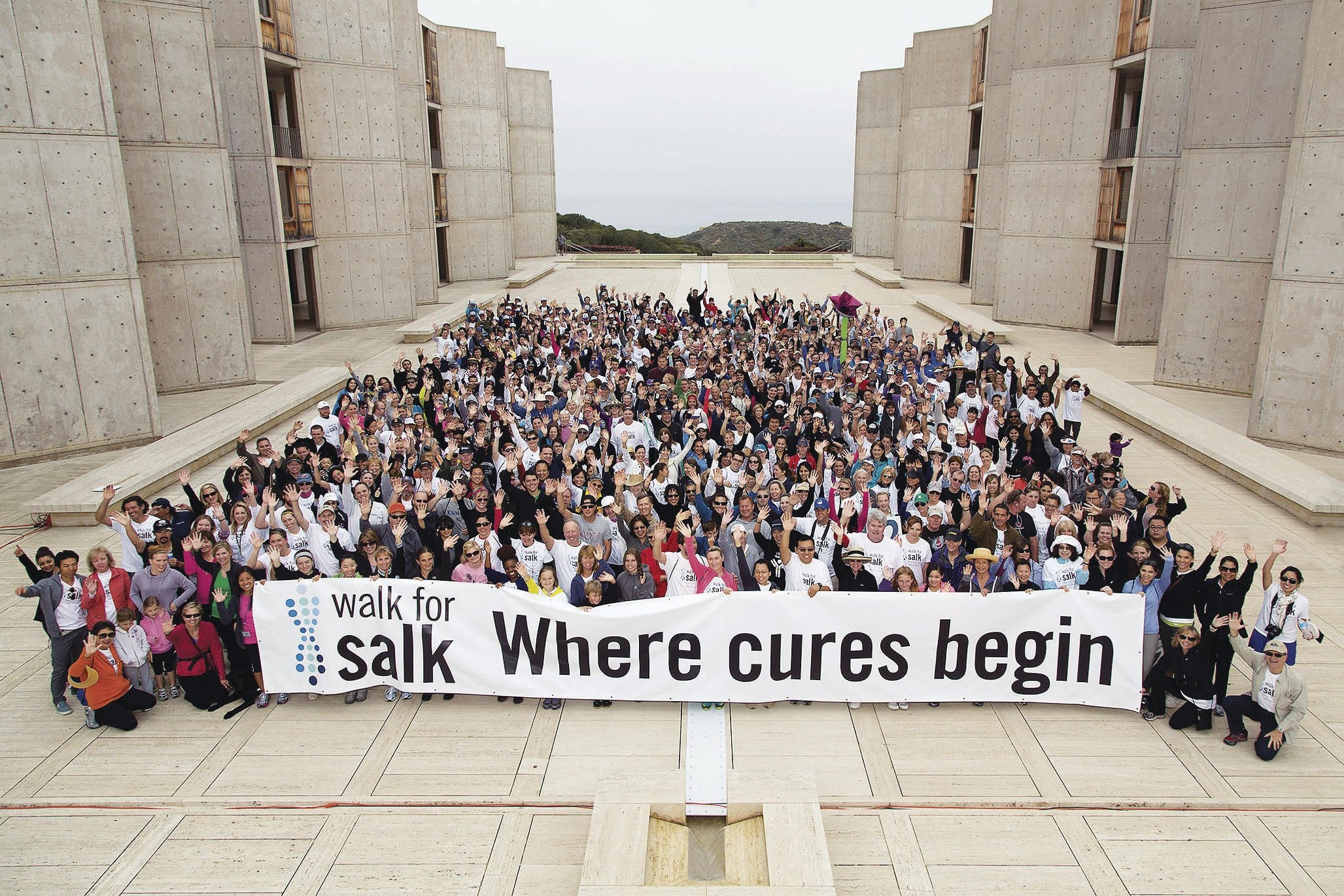
Rebecca Newman, vice president for external relations at the Salk Institute for Biological Studies, which is conducting its first capital campaign, says fundraisers at her organization knew that Conrad Prebys, a San Diego real-estate magnate and busy philanthropist, “probably gets thousands of solicitations a week.”
Mr. Prebys had made significant contributions to Salk before and had served on its governing board. In June, he gave $25-million to Salk as part of its $300-million fundraising drive. In February, he donated $20-million to San Diego State University, which just last month increased its campaign goal from a $500-million to $750-million.
“We never feel like, oh my, if a Conrad Prebys or another major donor gives to another institution, we’re not going to get anything,” Ms. Newman says. “We each have to tell our story and demonstrate the investment to be made in our campaign.”
Increasingly, nonprofits are aiming that storytelling at a broad market, hoping to increase the number of people who give.
In a typical campaign, a handful of the biggest donations continue to account for a large and even growing share of total fundraising. Now, more nonprofits are trying to use campaigns to draw in new, especially younger, supporters.
Uncertain Response
The catch, fundraisers say, is that no one is sure how millennials, a generation described as wanting their philanthropy to be impact-oriented and hands-on, will respond over time to the traditional model of capital campaigns.
That’s one reason Arizona State University, which may launch a campaign as early as the end of next year, is considering new ways to run its drive.
To appeal to younger donors and others interested in seeing the direct results of their contributions, the campaign’s “external focus will be largely on the impact of the gifts,” says Dan Saftig, chief development officer of Arizona State’s fundraising foundation. That means that instead of simply touting a “big-number” goal, the campaign might be promoted and measured according to “outcome goals,” he says, like the scholarships and faculty positions it could fund.
The drive is also likely to go beyond the traditional focus on private support, Mr. Saftig says. It may seek partnerships with businesses, like the tuition-reimbursement program at ASU announced in June for Starbucks employees.
Still, Mr. Saftig knows that in many ways conventional drives are still what work.
“I’m a strong proponent for capital campaigns,” he says, “No matter how you slice it, the heightened focus on philanthropy brings in the money.”




