Can a Nonprofit Help Lawmakers Understand A.I.?
The Horizon Institute for Public Service aims to bridge the gap between the worlds of policy and emerging tech by creating a pipeline of tech-savvy public servants.

By Eden Stiffman
Senior Editor
November 30, 2023 | Read Time: 11 minutes
Talk of artificial intelligence seems to be everywhere all at once. As A.I. intrudes into more facets of the economy and our everyday lives, the pace of innovation is racing ahead of lawmakers’ ability to understand the technology, let alone regulate it.
We’ve seen this before — with social media and the gig economy — and policymakers are expected to continue to struggle to keep up on future developments in tech.
The Horizon Institute for Public Service was founded with this in mind. The year-old nonprofit aims to bridge the gap between the worlds of policy and emerging tech by creating a pipeline of tech-savvy public servants. The group’s main program trains policy fellows with in-demand tech expertise and helps them secure one- or two-year placements in key senate offices, congressional committees, federal departments like Department of Defense, and think tanks like the RAND Corporation and Brookings Institution. Most of the group’s fellows have backgrounds in A.I. and biotechnology, with a single fellow focused on space.
Horizon’s initial funder, Open Philanthropy, was also an early backer of OpenAI, the company that created ChatGPT and that has captured headlines over the past week for a chaotic leadership and governance shakeup. In 2017, Open Philanthropy committed $30 million to OpenAI.
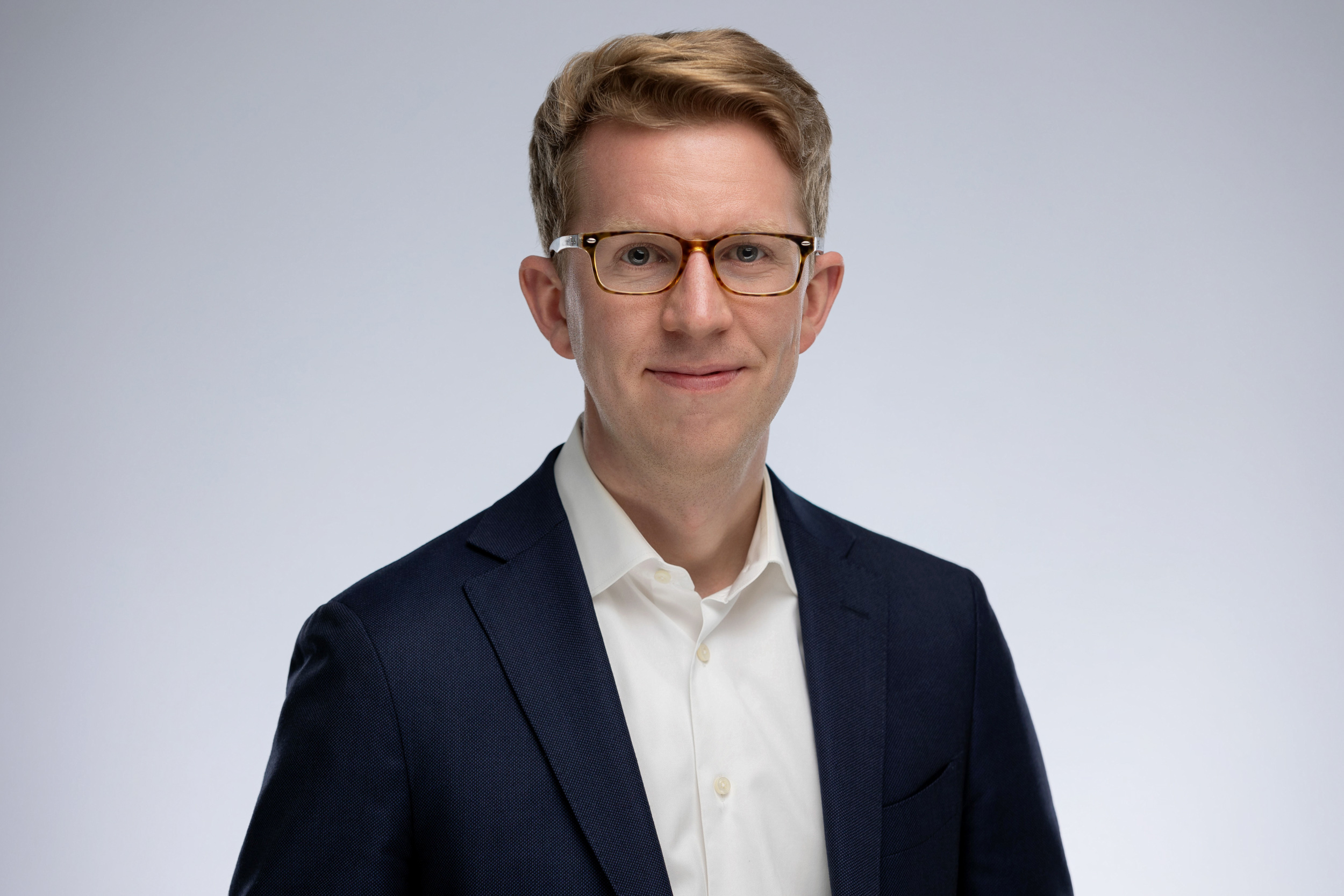
In an interview with the Chronicle via phone and email, Horizon co-founder and executive director Remco Zwetsloot elaborated on the group’s work to bridge gaps between government needs and emerging tech talent, addressed its approach to policy and ties to Open Philanthropy, and spelled out his views on government’s role in confronting A.I. risks.
“It’s clear that we cannot rely exclusively on companies to govern important technologies that could impact society in so many ways,” he wrote in an email. “Government has a critical role to play here, with people who serve and are accountable to the American public. But right now government struggles to play that role due to its lack of access to talent and independent expertise.”
This interview was edited for length and clarity.
What’s the core problem that Horizon seeks to address?
The government has a really important role to play, both in steering where technology is going and also in navigating the impact of that technology on society. But government often really struggles to track what’s happening as it’s happening and to respond to it in a timely fashion. It’s important for government to have access to technical expertise to track and respond to the changes that are happening.
How did you end up here?
I was doing a political science PhD, not really working on technology issues. But I became convinced that A.I. might have a big impact on society and I wanted to help make sure that impact was positive. After my PhD, I worked at OpenAI as a contractor for a few months, but I always wanted to do policy.
I was part of the team that launched the Center for Security and Emerging Technology, CSET, which is a think tank affiliated with Georgetown University’s Walsh School of Foreign Service. I ran a team studying the A.I. workforce — the guiding question was: How do we get more scientists, engineers, product managers, other people who are necessary for the U.S. to lead in A.I., both in general, but also specifically in government?
At the same time [in 2019], I was helping recruit and hire new staff at CSET. There were a lot of people who had really great knowledge of the technology, but they didn’t have any experience in policy. It was really risky to hire those people. It was often easier to hire policy people and to try to train them in the basics of A.I. I thought that was a real loss to the policy and government world writ large that those really exciting technical people couldn’t break in.
I would try to advise them and connect them, but there were so few programs I could send them to. That was the genesis.
How does the fellowship program work?
There are three phases. First, we provide roughly 10 weeks of part-time, mostly virtual training. We teach them how the policy world works, who are the different players, how you can be effective in policy, which includes a bit of skill training, like writing for policymakers. Fellows hear from guest speakers who’ve been in that world a while and who can provide advice based on their experience.
In the second phase, fellows talk to different host organizations about what they’re interested in, and the host organizations talk to the fellows about their needs and their missions to see if there’s a mutual fit. If there’s a successful match, we then provide funding for them to do the third phase, where fellows end up working at host organizations — think tanks or government offices — full time for a year or two years.
Someone can do a first year at a think tank and then transition into Congress or the executive branch for their second year if they want to, or vice versa. It’s really up to the fellow and the host organization what they work on. Fellows work on a range of areas, like auditing A.I. tools for equity, technology infrastructure on the African continent, the biotech R&D landscape in Russia.
We occasionally catch up to see if we can provide professional support or career guidance, and to help the fellows transition into full-time jobs post fellowship.
Is philanthropy necessary to make it financially attractive for people with in-demand tech expertise to work in government?
To some extent. It’s easy to throw your hands up and say, “Well, we just can’t recruit these people because they’re getting paid better in the private sector.” But there are a lot of people who really want to contribute.
Because our mission is to help people get their foot in the door and, as much as possible, to transition into full-time public-service careers afterwards, you’ve got to select for people who are willing to work for public-sector salaries in the long run.
The majority of the fellows have a base salary of $105,000 per year plus a health-insurance stipend and some professional development support. Junior fellows, who are recent college graduates for the most part, make $70,000 per year. It’s not anywhere close to what you would make in the private sector, but we try hard not to make the salary a reason not to do the program. You also don’t want to pay so much that you end up attracting people who wouldn’t work for full-time government salaries afterwards.
Why are nonprofits needed in this space?
The primary role of organizations like Horizon is more cultural. There’s a culture and a language in particular subject-matter communities, whether it’s A.I. engineers in Silicon Valley or biotech entrepreneurs in Boston. Likewise, the government hiring managers, the HR professionals, they’re from a very different world.
Recently, someone compared our work to a dating app. There’s more to it than that, but there are a lot of people who have mutual interests who just aren’t finding each other. The role for civil society and philanthropy is to try to have a foot in both worlds, to help bridge build and translate.
Open Philanthropy incubated the fellowship program and provided almost $3 million to support the 2022 class of fellows. How do you work with the foundation?
Open Philanthropy was also the main funder of CSET so I’d gotten to know them a little bit. They were excited about supporting a fellowship project on a trial basis. I had no experience running a nonprofit and I didn’t have a 501(c)(3) setup initially, so they agreed to incubate it. I ran the project independently. After we did one fellowship cycle, it was clear that there was a real demand among the policy organizations and a real supply of talent that could benefit.
The plan was always to launch a separate organization, recruit a team, and Open Philanthropy would be one among multiple funders of this separate independent nonprofit. Open Philanthropy gave us launch grants, and that provides us some runway, but we now have to fundraise from a wide range of sources for it to be sustainable. [Editor’s note: Horizon’s other supporters include the Lonsdale Family Philanthropic Fund and the Maurice Amado Foundation. Horizon spent $2.66 million in its first year as an independent nonprofit.]
Some A.I experts have been critical of Open Philanthropy’s approach to the technology and say the grant maker’s network focuses too much on long-term A.I. risks and not enough on current harms that Washington should address. Does Open Philanthropy’s position bias the Horizon’s fellows against short-term needs?
From the beginning, we had a really hands-off relationship with Open Philanthropy. I ran the project independently.
There’s obviously people who think we should focus on the benefits of A.I. and move faster. There are people who are worried about the risks and think we should move slower and regulate. Within that group, there are people who want to prioritize different kinds of risks. We’re very careful not to take policy positions and just exist to help fill talent needs. We let the fellows and the host organizations set their agenda. We don’t impart policy positions on fellows or anything like that.
We have a fundraising policy that very clearly specifies that we work independently from our donors. If prospective donors appear interested in supporting our fellowship program for purposes of influencing specific policy outcomes, Horizon will not accept funds from them.
Some of the fellows have come directly from positions at big A.I. companies. Does that kind of “revolving door” give undue influence to the biggest players in this emerging industry?
In my experience, having worked for one of these big A.I. companies doesn’t mean that you’re supportive of these companies per se. In fact, some former employees are quite critical based on what they’ve seen there. We want to make sure we select fellows who are humble and are in this program because they want to work in public service, but also bring a variety of perspectives.
The first year of the fellowship recently wrapped up. Can you share a few highlights?
It’s been really exciting to see fellows find their footing and for us to help them go off and do work that they might not otherwise have been able to do. One of our fellows helped run the Department of Health and Human Services’ free at-home test and mask program for COVID. They helped fill a really critical role in that program in a new office that may otherwise have had trouble staffing.
A lot of the benefits that I expect will occur are a little bit more nebulous and long-term, where it’s just about making sure that there are enough people who can answer questions about emerging tech trends in an informed way to policymakers.
You’re expanding beyond the fellowship program. What does that look like?
We ran a workshop together with Brown University’s Pandemic Center, where we organized a weekend in D.C. for students and professionals who are interested in biotech and biosecurity policy careers. We hosted a webinar series with the Scowcroft Center for International Affairs at the Bush School of Texas A&M University and a nonprofit called SeedAI where we had speakers talk about what it’s like to work in policy. Both of those are examples of things we’re excited to do more of.
We’ve also tried to do as many talks on campuses as we can, and one-on-one career coaching with people who reach out to us. We’ve reached a few hundred people with that sort of work over the last year or so. This week we launched a career advice website to make these resources more accessible to large numbers of people. It’s all under the umbrella of building pathways into public service and helping the government meet talent needs.
Fellowship programs are not a long-term solution by themselves. Government really needs this capacity in-house, permanently, and fellowship programs are too small in size to serve all the available needs of both the talent and the hiring managers. We’re thinking about ways that we can run programs that reach more people and meet more needs.