Cardinali Announces Departure From Independent Sector

By dan.parks
Contributor
January 13, 2022 | Read Time: 6 minutes
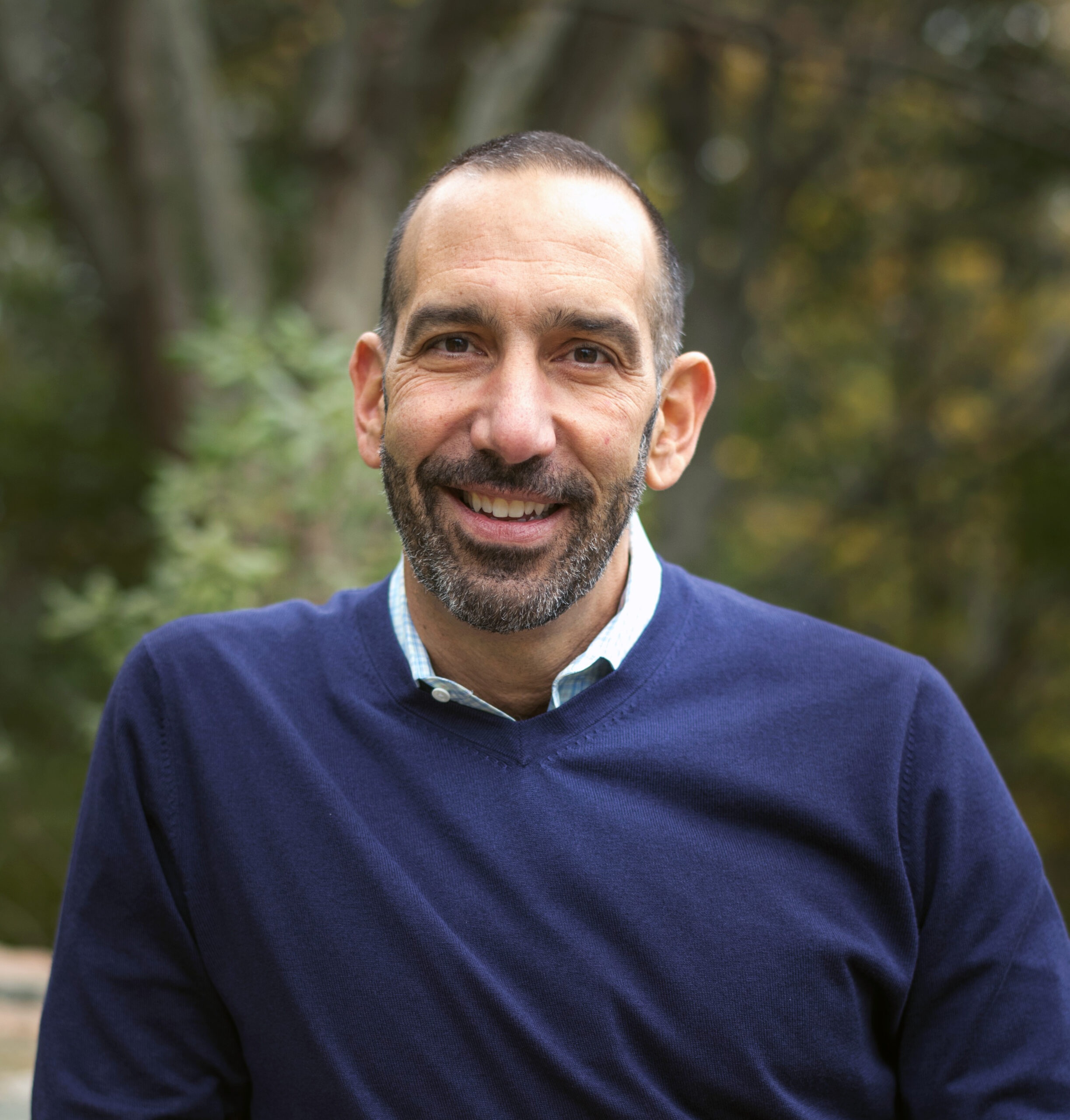
Independent Sector CEO Dan Cardinali announced Wednesday that he will leave the organization after six years in which he upended its conference strategy to bring more nonprofits together and accelerated its shift in focus toward equity and inclusion, both internally and among the national nonprofits and foundations it represents.
Cardinali will stay in his job while the organization, a national coalition that advocates for policies that benefit foundations and nonprofits, searches for his successor.
In an email announcing his decision, Cardinali said he plans to take a sabbatical to focus on “interrogating a number of philosophical and theological questions that have guided my life and work,” exploring in particular theories of common good and justice. He hinted at a return to nonprofit work after those studies.
Before he joined Independent Sector, Cardinali led Communities in Schools for 12 years, where launched the nonprofit’s push to improve public education and promoted evidence-based measures to improve services to students.
In a Zoom interview, Cardinali said the pandemic “was difficult and exhausting for everybody involved, and I’m no exception.” However, he says it didn’t drive his decision to leave. In fact, it likely delayed that move so he could help steer the organization through a difficult time.
He said that although Independent Sector had begun shifting to an equity focus years earlier, the pandemic and the racial reckoning after the George Floyd murder spurred the organization to accelerate those efforts and “to confront our own racism, institutionally, our complicitness with it and then also do the soul searching about what to do about it.”
Financial Support
Shortly after Cardinali’s arrival, Independent Sector, facing declining revenue and a budget shortfall, laid off a quarter of its staff, shrinking it to 33 employees. Cardinali said the organization is now “in a very strong and stable place” with “significant reserves.”
The organization had cash reserves of $8.4 million in 2016, according to a spokesman. By 2020, the most recent year for which the organization provided data, that figure had nearly doubled to $16.3 million, and the number of employees remained at 33. Annual expenses in 2016 were $12.1 million, compared with $9.9 million in 2020.
MacKenzie Scott gave the organization $6 million in July 2020, and Cardinali added that “many of our long-term funders have really hung in there.” He cited the Fetzer Institute; Walmart; and the American Express, Annie E. Casey, Charles Stewart Mott, Ford, Gates, Hewlett, Kellogg, MacArthur, Packard, and Robert Wood Johnson foundations.
One of the biggest changes under Cardinali was that instead of emphasizing a single annual conference, Independent Sector created what it calls “Upswell,” with multiple gatherings to collect ideas and connect nonprofit leaders with each another in virtual groups focused on specific causes. Cardinali said those gatherings tap the wisdom and experience of community-led organizations and leaders of color.
Under Cardinali, the organization also launched two new annual reports drawing together a broad range of data about nonprofits and philanthropy — the Health of the U.S. Nonprofit Sector and Trust in Civil Society.
Independent Sector’s membership has been holding steady in recent years at about 500 organizations, Cardinali said. However, he noted that Upswell events have been drawing 1,500 to 2,000 people, so he considers the organization’s reach far greater than its official membership.
When asked what he is most proud of during his time at Independent Sector, Cardinali said it’s been reorienting the organization to be about “collective leadership and not about its own brand or my brand as CEO.”
He also said he’s hopeful about the future, despite the current era of polarization because people in the United States have a remarkable commitment to contributing to their communities.
“We may not always agree,” he said, “but there is a well of goodwill that if we can continue to tap it, we have a great chance of driving some real repair and vitality back into our democracy.”
Praise for Cardinali
Jeff Bradach, co-founder and partner of the Bridgespan Group, praised Cardinali for expanding the data available on the health of nonprofits and philanthropy through the new reports, creating Upswell to expand the organization’s reach and taking on a more aggressive advocacy role that goes beyond protecting existing charitable tax breaks.
In particular, Bradach praised Independent Sector’s role in ensuring that nonprofits were eligible for the federal Paycheck Protection Program, saying that charities would be in far worse shape without it.
Bradach, who was chairman of the Independent Sector board until his term expired in November, also noted that Cardinali pulled Independent Sector out of tough financial straits.
“There were some tough organizational challenges when Dan took over,” Bradach said. “It’s in very solid shape now and much stronger than it was five years ago, that’s for sure.”
Praise for Cardinali flowed in from other corners as well.
Alan Abramson, a professor of government and politics at George Mason University, said Cardinali, among other achievements, changed Independent Sector into an organization with “a broad view of civil society, rather than a narrower emphasis on charities.”
“Dan has been tireless in his efforts to shape a more equitable and just world by leveraging the power of the social good community,” added Shannon McCracken, chief executive of the Nonprofit Alliance, an advocacy group that represents nonprofits and for-profit organizations that provide services to nonprofits. “I’ve no doubt that he’ll continue to be a force for change after handing over the keys to Independent Sector.”
However, Jan Masaoka, chief executive of the California Association of Nonprofits, said Independent Sector tries too hard to avoid upsetting anyone in its coalition by, for example, not taking a stand on legislation that would boost payout requirements for foundations and people who establish charitable donor-advised funds.
Masaoka said too many infrastructure groups like Independent Sector are willing to speak passionately only about causes that won’t generate controversy among nonprofits, donors and grant makers. “Timid is their middle name, if not their first name,” she said.
She added that Independent Sector is almost unheard of in her state. “It’s hard for us, especially in California, to tell what impact Independent Sector is actually having,” Masaoka said. “I just don’t see leadership from them in the key areas where we’d want to see it.”
Cardinali’s announcement comes just a month after another prominent leader of a group that serves nonprofits announced her departure. Anne Wallestad, who since 2013 has led BoardSource, an organization focused on improving governance, said she would leave in June.
Bradach said leading infrastructure groups during the past two years has been especially challenging. With demand for services rising at so many nonprofits, it can be tough for infrastructure groups to make the case for continued support, he said. While those groups continue to play a vital role in supporting nonprofits and philanthropy, that role is often underappreciated and taken for granted by donors, Bradach added.