
Colleges Are Inventing New Ways to Attract Recent Graduates to Donate

By Megan O’Neil
Contributor
September 8, 2014 | Read Time: 9 minutes
Katie Randall describes her education at Augustana College in Sioux Falls, S.D., as “awesome.” After three years and a patchwork of jobs that included an unpaid internship, babysitting, and a stint at an appliance store, she is happily settling into a promising position at a start-up marketing firm.
The 25-year-old budgets about 10 percent of her income for giving and estimates that she donated between $1,000 and $2,000 in the last year to causes like the Florida-based nonprofit To Write Love on Her Arms, to a friend’s Kickstarter campaign, and to community church groups. Absent from that list is her alma mater.
“It would never cross my mind to give to my school,” Ms. Randall says. “If I can only give $100, you get to see that go so much farther with a smaller, more localized cause. If you give $100 to a school you might get a thank-you note. It almost feels like giving your money to the mall.”
New research commissioned by the Chronicle of Philanthropy shows that the giving patterns of young donors like Ms. Randall may signal a looming financial threat to universities—and potentially a big opportunity for other kinds of organizations. For two decades, alumni loyalty has been key in building universities into fundraising powerhouses, but other types of tech-savvy nonprofits are successfully competing for cash from millennials, the survey suggests.
Three-quarters of millennials surveyed said they would donate to other organizations over giving to their colleges or universities, and less than half made donations to their alma maters.
Derrick Feldmann, president of the consulting firm Achieve and lead researcher on the Chronicle’s Millennial Alumni Study, said the statistics on financial loyalty among alumni likely would have looked much different if the survey had been conducted in past decades.
“The institution’s philanthropic relationship is not as strong with them as other organizations such as Charity: Water or LINK,” Mr. Feldmann says, naming two nonprofits that have had success with young supporters. “The value proposition to a millennial to give to their alma mater is changing.”
University fundraisers acknowledge the competition.
“The reality is millennials have a lot of choices about where to spend their time and their money,” says Scott Mory, associate senior vice president and campaign director at the University of Southern California, in Los Angeles. “They have far more choices than people their age did 20 years ago. The Internet has fueled that. The growth of the nonprofit sector has fueled that. The culture of volunteerism that pervades the generation has fueled that.”
Download the full survey results at millennialalumni.com for $199 with registration for the Young Donors webinar, and $249 without.
Still, despite some data points that might send a chill down a university development officer’s spine, many remain bullish about a demographic group sometimes derided for its love of selfies and for moving back home with mom and dad. Millennials themselves show a propensity to give—73 percent say they will donate to their alma maters. But getting them to crack open their wallets will require a new arsenal of engagement and fundraising tactics that use technology, personal relationships, and storytelling in ways not yet widely seen.
“I don’t believe that the picture is all gloom and doom,” Mr. Mory says. “I believe that the millennials represent an opportunity for philanthropy in the future. It is just going to be directed to them on their own terms.”
Shaping Habits
There are 13.1-million millennials with four-year degrees, according to U.S. Census 2013 Educational Attainment data. Defined as those born between 1980 and 2000, it’s a generation with nuanced giving habits, shaped by instantaneous access to information, influential peer groups, and economics.
A recent report from Pew Research found that a record 37 percent of young households—defined as those headed by individuals under age 40—had outstanding student loans in 2010, up from 16 percent in 1989. The median debt owed by such households was $13,000.
For all they are paying for college, millennials expect good customer service not only in the classroom but also from their career counselors and alumni officers, fundraisers say. Yet just 14 percent of those surveyed reported that they had gotten help from career services after graduation. Alumni who reported positive experiences with university resources reported higher levels of volunteering and giving.
Listen to young alumni react to their alma maters’ request for donation, website, and Facebook page.
“A lot of our millennials are saying, ‘Am I getting the job I anticipated? Am I receiving the salary that I expected after having this degree?’ ” says Rob Henry, executive director of emerging constituencies and online programs at the Council for Advancement and Support of Education, or CASE. “It is an expectation: There is something I expect the degree to do for me. When you meet that expectation, now I am willing to give back to you as an institution.”
Colleges and universities are failing to employ faculty members to engage potential alumni donors, Mr. Feldmann says. There is also an inclination among millennials to want their donations to benefit students with experiences similar to their own. A little more than half of those surveyed said they would direct their donations to scholarships and aid for current students, while 29 percent said they wanted their money to go to support specific departments or majors.
“I think for this generation in particular, they want to know where their $25 is going,” says Brandi Brooks Davis, director of Young Alumni Giving Programs at the University of North Carolina, which maintains 7,000 specific funds donors can support. “It is a big chunk of change for them.”
Doubling Down
In an effort to capture millennials before their attention wanders elsewhere, increasing numbers of colleges and universities are hosting one-year reunions, says Mr. Henry of CASE.
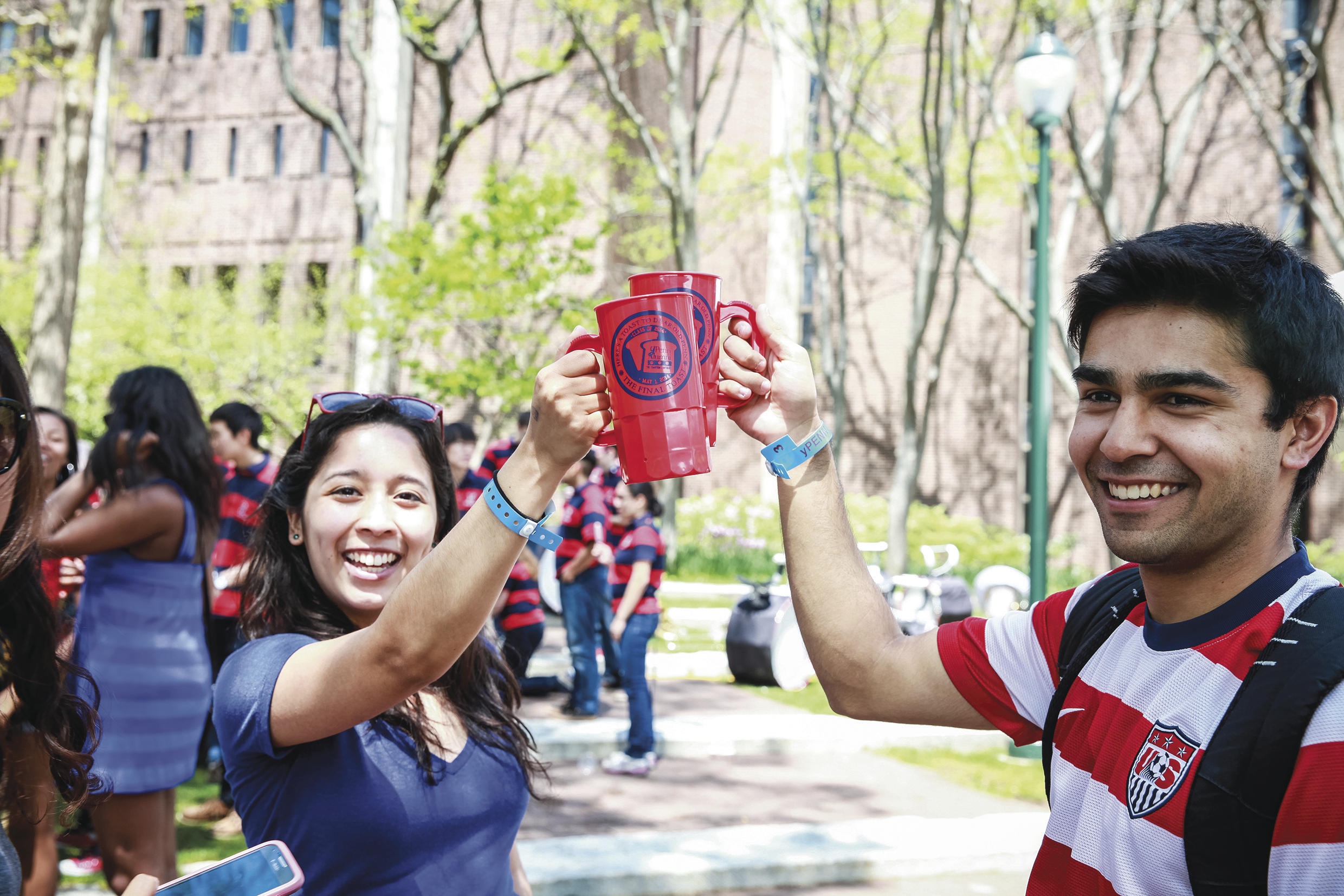
One example is the University of Pennsylvania and the Penn Fund, which piloted its first one-year reunion last year with the class of 2012. The university had already rebranded the senior-class gift as Seniors for the Penn Fund to create continuity between the student-donor experience and the alumni-donor experience. The fund now has three staff positions dedicated to reaching young alumni.
“If people give five or more consecutive years to the Penn Fund, we have about an 86-percent retention rate of that donor population,” says Colin D. Hennessy, the fund’s executive director. “If we can do things to develop that relationship with our youngest alumni, we are going to see great returns in that long game.”
Mr. Hennessy declined to disclose dollar amounts, but the efforts have yielded at least some early successes. This year, a record 1,808 graduating seniors participated in their class’s Penn Fund gift. And the second one-year reunion, for the class of 2013, brought in 100 more donors than in the previous year, he says.
Early Push
Stanford University has also invested in its young alumni donors. Long a fundraising juggernaut, the campus in Palo Alto, Calif., pulled in $931.57-million in 2013, to finish No. 1 in the Council for Aid to Education’s fundraising survey for the ninth consecutive year.
From September 1, 2012, through August 31, 2013, Stanford’s young alumni donated more than $500,000 to the Stanford Fund, says Felicity Meu, senior associate director of student and young-alumni development. Participation in the 2013 senior-class gift was 86 percent, up from 38 percent in 2008.
“Our growth in dollars for the young- alumni demographic—10 years out and under—has massively outpaced our growth in dollars over all, which has also been incredibly fruitful over the last five to 10 years,” says Ms. Meu.
In 2010, she and her colleagues extended the President’s Fund, a donor-recognition program, to young alumni and 30 graduating seniors made a $1,000 gift that first year.
Two years ago, her office created what might best be described as the mascot of young-alumni fundraising at Stanford. Stan the Stanford Gnome has his own Facebook page. Each time a young alum makes a gift of any amount, he or she can request a photo “thank you” featuring Stan anywhere on campus. There are photos of Stan visiting the faculty club, guarding a beer keg, and sleeping at the library.
As millennials make up an increasing share of donor bases at universities, fundraisers will need to adjust their messaging and giving channels to match donors’ habits, according to the study. Nearly half of those surveyed said they did not like how they were asked for money. Sixty-one percent said email was the preferred method. The least-preferred way was by phone.
USC and some other universities are already experimenting with building Kickstarter-like giving channels into annual funds, Mr. Mory says.
“I think it will become more and more popular with this generation because it really does give power to the donor at any level to direct exactly where their money will go,” Mr. Mory says. “The notion of the unrestricted annual fund is never going to go away and it will always have an audience, but there will be a greater audience where as specific as the designation is will be more successful.”
More than anything else, colleges and universities must deliver a value proposition about why young donors should spend their time and money with them when there are so many other options at their fingertips.
“Every nonprofit in the country—universities, whatever—will be reliant on millennials within five to 10 years,” Mr. Mory says. “They can’t be dismissed. They need to be understood.”
Millennials Want to Help Their Alma Maters, but Loyalties Wander
- 47% have made a financial donation to their alma mater
- 73% plan to give to their alma mater
- 75% would give to a different organization before giving to their alma mater
- 42% of those who have never given to their alma mater say they never intend to
- 61% prefer email to other ways of being asked for a donation
- 86% want to use specific skills, talents, or expertise to help their alma mater
Source: Millennial Alumni Study, by Achieve and The Chronicle of Philanthropy
How to Get Millennials to Give
- Offer narrowly tailored giving options that allow support of specific departments, programs, and students.
- Communicate through digital channels, including email and social media. Avoid phone solicitations.
- Use colorful storytelling that illustrates how gifts are used.
- Offer great customer service. At universities, career-counseling and alumni offices are especially important.
- Provide opportunities to donate time and skills, in addition to money.
- Be clear about how donors’ money will be spent.




