How Nonprofits Can Strike a Deal With Corporate Partners

By Alex Daniels
Senior Editor, Foundations
June 1, 2016 | Read Time: 6 minutes
Kellogg’s and State Farm provide insights into what charities need to do to land deep-pocket sponsors in the business world.
Cereal Giant Kellogg’s Backs a Nimble Anti-Hunger Nonprofit

Jill Davis wasn’t even hungry. But there she was at Target one night in February, sifting through the cereal boxes.
Ms. Davis, a Kellogg’s Corn Flakes fan and senior director of corporate partnerships at anti-hunger charity Share Our Strength, wasn’t really interested in their contents — she was more eager to read the messages on the packages. What she saw anchoring the front of Apple Jacks, Frosted Flakes, and Fruit Loops boxes was the result of months of painstaking work that could mean a donation of about $500,000 from the Kellogg Company.
The cereal giant placed information about Share Our Strength’s No Kid Hungry campaign on nearly 33 million boxes of cereal and pledged that it would give 1 percent of all sales to the nonprofit organization’s school-breakfast and nutrition programs.
Being invited into breakfast nooks across the country was a huge win for the charity. But working with a big company like Kellogg’s required a high level of marketing and project-management skills, plus an ability to work fast.
Focus on Breakfast
Lots of nonprofits are working on hunger and nutrition, but Kellogg’s was drawn to Share Our Strength because of the charity’s work on breakfast, the meal with which the company is nearly synonymous.
Deciding it would make the biggest mark if it directed its attention to the morning meal, Kellogg’s launched its Breakfast for Better Days campaign in 2013.
The firm’s relationship with Share Our Strength began the same year, when Kellogg’s made a $250,000 grant to support the nonprofit’s general work providing school breakfasts and advocating on nutrition policy.
In 2014, Kellogg’s followed up with another $250,000, this time to support Share Our Strength’s Center for Best Practices, an effort to catalog policies adopted at school districts across the nation and measure the impact breakfast has on things like school attendance and grades.
The cereal-box campaign was helped by Share Our Strength’s ability to collect and act on data, according to Ms. Davis.
“As our relationship deepened, Kellogg’s had a better understanding of our work and how it has a connection to both their foundation and their business side,” she says. “We were able to educate each other along the way.”
That meant Kellogg’s had to rely on Share Our Strength for expertise in crafting anti-hunger campaigns and for insight into the development of federal, state, and local policy.
While both partners say they collaborated on the cereal-box messages, Kellogg’s took the lead on box design and making sure the campaign was displayed across all of its brands.
The package placement gave Share Our Strength enormous reach. Kellogg’s got something else: credibility. Having a respected nonprofit partner like Share Our Strength helps elevate the cereal giant in the public eye, according to Jodi Gibson, Kellogg’s vice president for corporate social responsibility.
“Our customers now know what we are doing, and they reward us for our behavior and commitment to giving back to the community,” says Gibson, who spent more than a decade directing corporate relationships at Feeding America. “If we don’t tell them, they don’t know we’re doing it.”
For a nonprofit to work well with a corporation, Ms. Gibson says, it must be willing to promote the business. Stores began stocking the Share Our Strength boxes less than six months after the idea was conceived. Share Our Strength dedicated two of its 25-member corporate-partnership staff to work directly with Kellogg’s to expedite the plan.
To complement the box campaign, Share Our Strength designed a community event in Chicago to spotlight the importance of breakfast. Kellogg’s mascot Tony the Tiger and Jimmy Butler of the Chicago Bulls played basketball with high-school students and feasted on breakfast cereal. Ms. Gibson credits Share Our Strength with a fast-paced “360 degree” approach, much like an ad agency, with public events and social-media messaging.
“They were able to share ideas and commit to approvals and be responsive in a timely fashion,” she says. “Being able to support that properly can be an aspiration for some charities.”
Nonprofit’s ‘Cafeteria Approach’ Lures Long-Term Commitment From State Farm
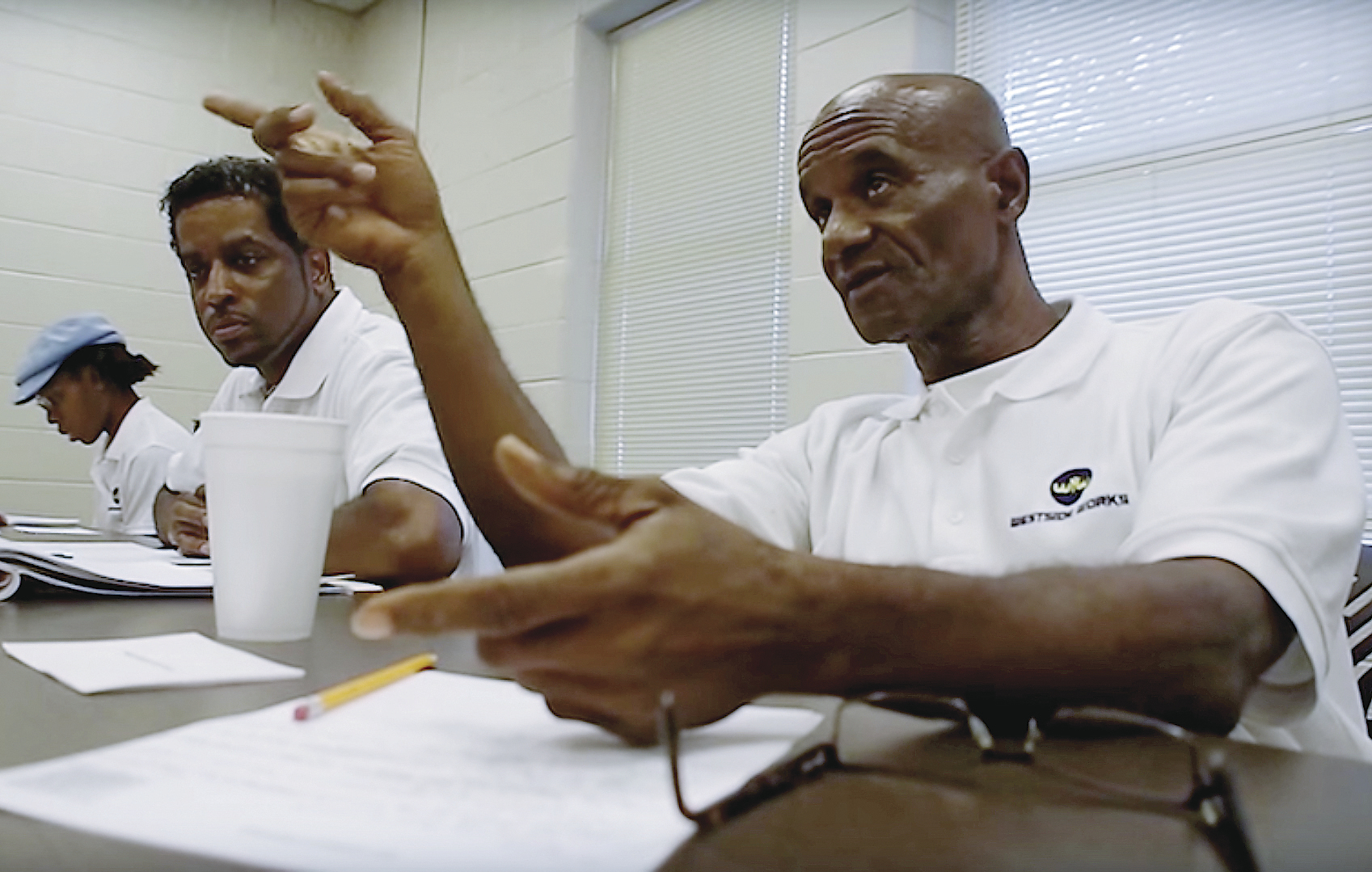
Timothy May, the senior director of development at Enterprise Community Partners, takes what he calls a “cafeteria approach” when he meets with potential corporate donors.
He provides companies with a full menu of the affordable-housing nonprofit’s activities so they can pick and choose programs to support. Mr. May keeps the list succinct, briefly describing the organization’s policy advocacy and approaches to housing development.
“We’re not trying to write War and Peace here,” he says.
The menu is just a starting point. In later discussions, Mr. May goes into more detail about Enterprise’s rental assistance, work-force development, and health-care projects. He can spell out for corporate donors exactly what the nonprofit can do for them, such as produce videos that highlight the company’s involvement in the work. In those conversations, Mr. May also lays out what Enterprise wants in return, such as help from corporate managers to work with participants in job-training and life-skills programs.
Stable Partnership
State Farm began supporting Enterprise’s work five years ago. The insurance company was impressed by the nonprofit’s standing among community organizations. State Farm also liked that Enterprise offered a menu of options for how it could help.
Since then, the company has committed nearly $1 million to Enterprise. Of the $200,0000 in grants planned for this year, $75,000 will support Open Doors, a program run by Enterprise and several other partners in Atlanta that seeks to link homeless people to landlords with vacancies.
The program provides guaranteed rent payments and offers post-placement services, such as vocational training, mental-health clinics, and substance-abuse recovery programs.
State Farm decided to direct a large part of its support to Open Doors because both the company and Enterprise have a big presence in Atlanta. It’s a place where State Farm could “go deeper, see the product, and be a part of it,” says Lonnie Smith, the insurer’s community-alliances manager.
Lending Credibility
The partnership was cemented in part because Enterprise is out front in touting State Farm’s generosity. Some corporate donors are content with getting the company name on a charity’s annual report or putting up a logo at workshops and other public events, Mr. May says. In the past, State Farm took this sort of “modest” approach to its philanthropy and received little recognition for its charity work, according to Mr. Smith.
Enterprise is changing that, making videos highlighting State Farm’s involvement and introducing the insurer to other nonprofit players in Atlanta, such as the East Lake Foundation.
“Our partners have cachet and are really immersed in the communities they’re engaged in,” Mr. Smith says. “The credibility that Enterprise gives as a third party makes it more compelling than State Farm just sort of pounding our chest, saying, ‘Woo wee, look how good we are.’ ”