July 31, 2018 | Read Time: 8 minutes
Fundraising is a profession that lacks the structured career ladder typical of other fields. “If you’re in teaching, you know your path,” says Rob Henry, vice president for education at the Council for Advancement and Support of Education. “If you’re in nursing, you know your path. But in fundraising, people don’t know their path.”
For a package on “The Making of a Fundraiser,” dozens of professionals and experts shared with The Chronicle their stories and advice about the best way to find success and happiness. Here is what they had to say about advancing to the top levels of fundraising.
Case Study
Fifteen years ago, Kimberly Churches moved into her first director of development job, at the Broward Performing Arts Foundation, in Florida. She made a lateral move to the University of North Florida but set her sights on advancing.
“I knew that I had to have an understanding of the front of the house and the back of the house,” says Churches, 48. She began a deep study of annual giving, events, campaign planning, and the like but also data, budgets and financial management, and how to manage change.
She also joined the boards of other organizations and studied their programs. She talked to chief financial officers and built networks of strategic-planning officers and general counsels. She pored over the Harvard Business Review, Stanford Social Innovation Review, and other journals aimed at MBAs. She read about how organizations handled scandals and crises.
Many fundraisers, Churches says, limit their momentum by not learning more about how organizations operate. “They stay too far in their own lane,” she says. “They are too concerned with their own team. There are times when I gave up budget to help the whole of the organization.”
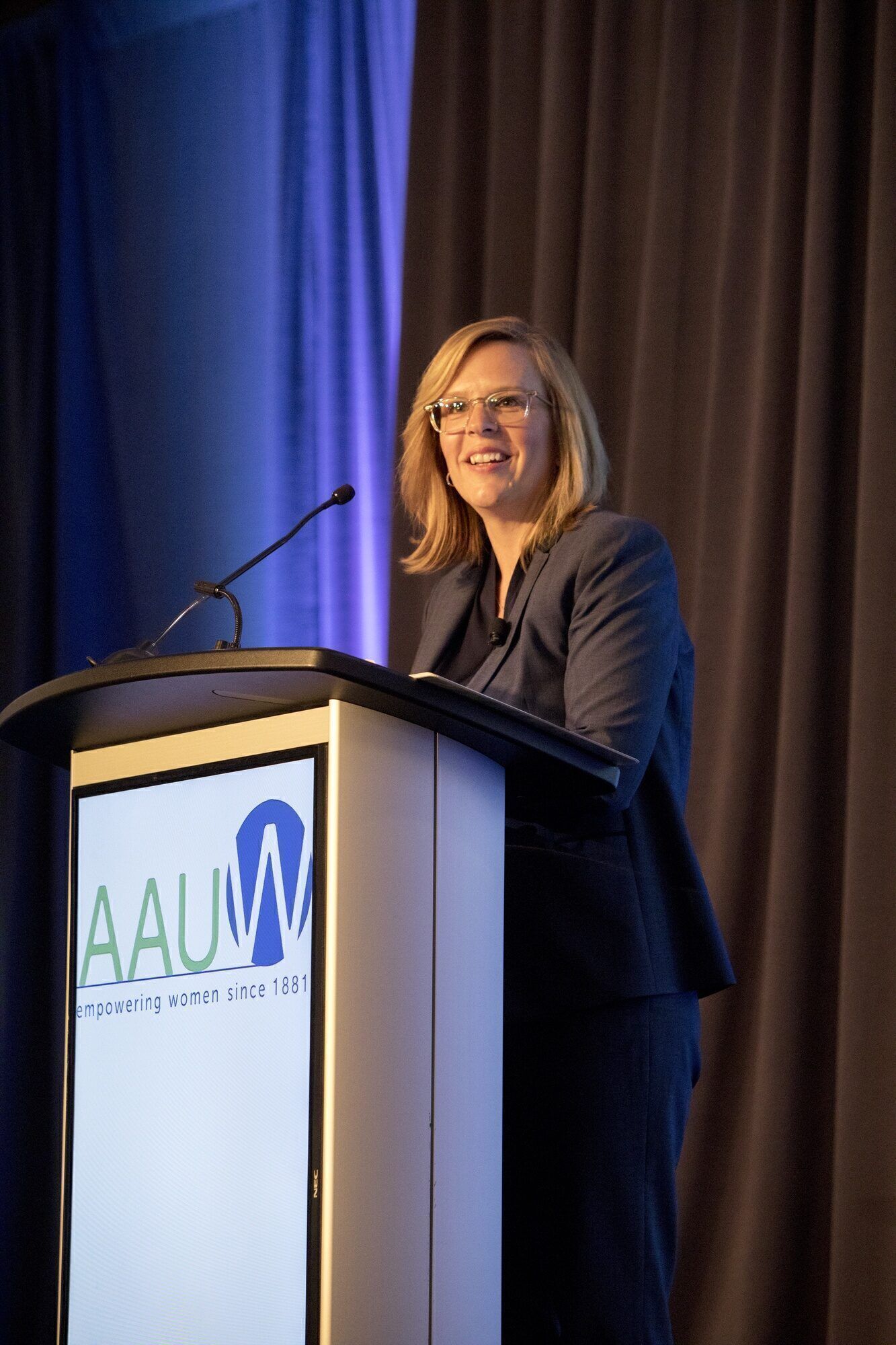
Churches’s work and attitude paid off. After additional stints in higher education, she spent about six years at the Brookings Institution, a prestigious Washington think tank, where she climbed the executive ranks to managing director. Last year, she took her first top-executive post, becoming CEO of the American Association of University Women.
Tips for Senior-Level Fundraisers
Know what you really want.
Nancy Racette, a recruiter, has a warning for fundraisers seeking to join the C-suite: Be careful what you wish for. “If you love to manage a portfolio and to get out the door and travel, and then you find yourself in-house, attending 2 million internal meetings, well, then that’s the job you signed up for.”
Keep learning.
David Whitehead, 57, runs fundraising at the advocacy group AARP and its foundation. He maintains a “personal learning agenda” to keep pushing himself, even after a dozen years in his job.
He recently acquired his Certified Fund Raising Executive credential. He attends a couple of conferences every year, and he helps pick speakers for an annual meeting of chief development officers.
Professional development looks different at the top. “As time went on, it became less about technical expertise, more about how you manage a team,” says Whitehead, who previously led fundraising at the Nature Conservancy, overseeing a $1.4 billion campaign. “The different things that I’m responsible for have changed. And I was tackling different problems.”
Treat your fundraising expertise like the superpower it is.
A fundraiser who only knows fundraising can get typecast, but a fundraiser who also understands organizational management is gold in leadership, say recruiters and other experts.
Says Ira Madin, a recruiter: “More than 50 percent of the responsibilities of an executive director are going to be philanthropy in some shape or form.”
Will Shafroth, 61, president since 2015 of the National Park Foundation, says he spends about 70 percent of his job raising money. (His organization is in the final months of a campaign to bring in $500 million.)
He mentions the theory that the writer Malcolm Gladwell popularized, that a person masters an activity after a minimum of 10,000 hours engaged in it. That notion applies to fundraising, Shafroth suggests. “It became something I do that is natural for me,” he says. “That level of repetition weeds out any fear.”
If you’re a minority, brace yourself for a tougher climb.
People of color can find it challenging to move up in the nonprofit world. Ninety percent of nonprofit board members and CEOs are white, according to BoardSource research. Eight-six percent of fundraisers are white, according to Census figures; by contrast, 74 percent of the U.S. work force is white.
Uncomfortable experiences are just part of the job for minorities in fundraising, says Mamie Jackson Williams, 41, an African-American and vice president for development at Planned Parenthood of Metropolitan Washington, D.C. “I’m been in situations where strange things have been said. I have had to pause and recognize, Oh, I am the only one at this conference. Or, there’s only three of us here, and there’s 400 people.”
She responds by focusing on her performance: “I’ve always got to be the best I can be and get there quicker and faster.”
Yet excellent performance can be a mixed blessing for ambitious fundraisers of color. “If you’re good, people will want to hire you,” notes Rob Henry of the Council for Advancement and Support of Education. “But people can get promoted to positions they’re not quite ready for.”
Learn to manage people — up, down, and sideways.
Sylvia Eggleston Wehr, a 30-year veteran of fundraising for the Johns Hopkins University, says the Myers-Briggs Type Indicator, a personality-classification test widely used in corporate America, helped her identify her strengths and weaknesses dealing with donors and staff.
Now associate dean for external affairs and development at Hopkins’s Sheridan Libraries and nearing retirement, Eggleston Wehr helped secure Michael Bloomberg’s 2001 $100 million naming gift to the university’s school of public health.
She counts the six deans she’s worked for as crucial mentors. But they also taught her how to work around a team member’s idiosyncrasies.
At a dinner with a big donor, the dean persuasively made the case for support. But at the meal’s end, he stood up to shake hands without bringing up money. “I realized he’s not going to do it,” she says. Eggleston Wehr gently swooped in to pop the question — and accepted that she would always need to do so during donor meetings with him.
By contrast, she says, another Hopkins dean had a blunt pitch style she sums up as, “Could you pass the salt and a million dollars?”
Her response was to temper his tactics, if not his enthusiasm: “I told him, ‘Nothing gets asked until the entrée has arrived.’ ”
Correction: The CFRE sidebar in this article has been updated to reflect the following: There are now more than 6,300, rather than 6,100, people who have earned the CFRE. And fundraisers are eligible to take the credentialing exam after a minimum of three, rather than five, years of professional practice.