In a Tiny Neb. Town, a Community Fund Serves as a Model for Giving to Rural Charities

By Ben Gose
Senior Editor
August 21, 2011 | Read Time: 3 minutes
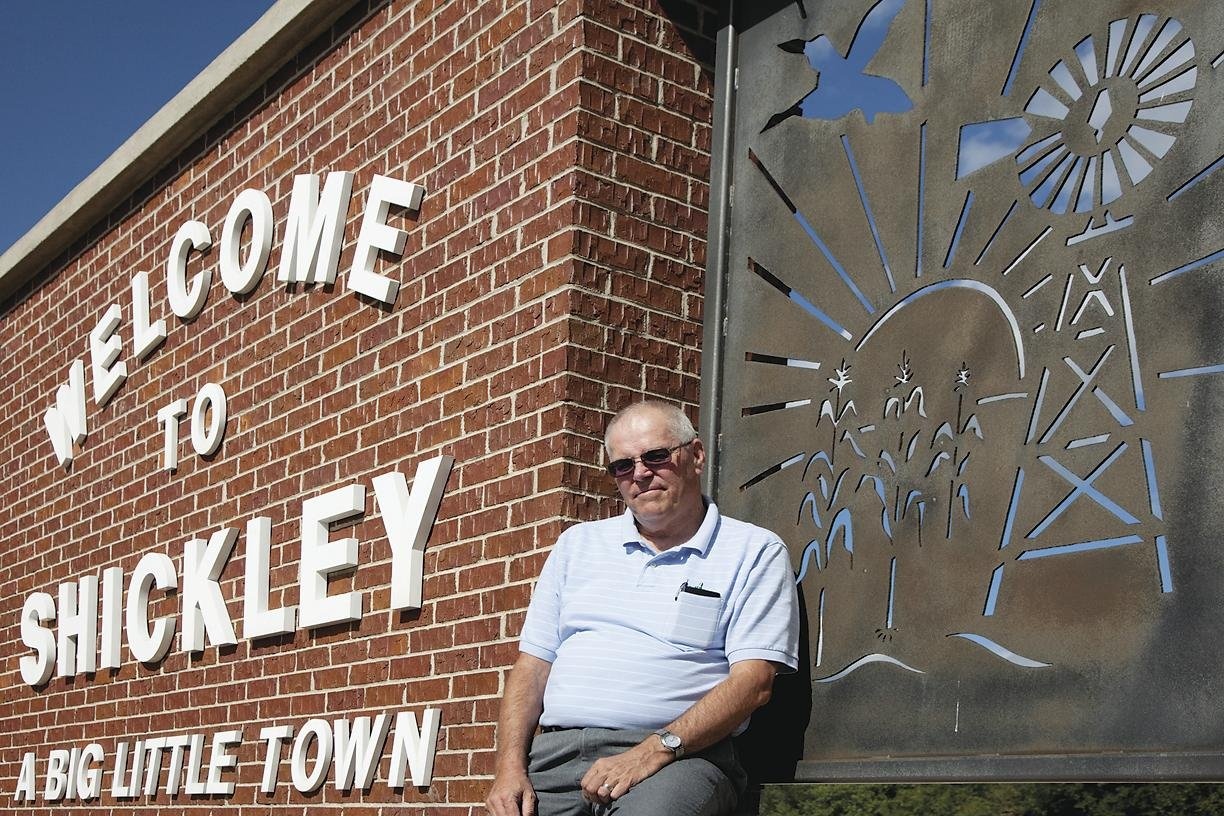
The Shickley Community Foundation has a response rate to solicitations that few charities can match: 60 percent of the town’s residents have made a gift to the community fund.
Of course, Shickley, 80 miles southwest of Lincoln, only has 376 people, so it’s relatively easy for the fund’s board to schedule face-to-face requests.
The fund, which had $686,000 at the end of last year, expects eventually to net another $2-million in bequests and other planned gifts.
The Shickley fund has been around for 20 years, but the vast majority of its assets have been accumulated during the past 11 years, after it became an affiliated fund of the Nebraska Community Foundation.
At a time when rural advocates are fretting about whether national foundations are providing adequate support to rural areas, Shickley isn’t waiting for a white knight. The fund, which has made grants worth a total of more than $100,000, is tapping its endowment to help train emergency medical workers, supply the high school with a pole-vault pole and stock the library with encyclopedias.
“We now have the money to do some things that we weren’t able to do before,” says Richard Walter, an insurance agent and the vice president of the Shickley fund’s board.
Rural Self-Reliance
The Council on Foundations has held three national conferences on rural philanthropy in the five years since Sen. Max Baucus of Montana called on foundations to double their giving in rural areas. But Steve Gunderson, the council’s president, says big foundations aren’t likely to be guilted into changing their giving patterns based on national statistics.
“You are not going to get redistribution philanthropy for the sake of redistribution philanthropy,” he says.
The better course for rural communities, he believes, is to follow the lead of towns like Shickley and build a substantial community fund before the young people take their inheritances and run off to the city. The time is ripe for soliciting donations from rural residents, Mr. Gunderson and others argue, since rural land values have held up better recently than investments in the stock market.
“There’s more potential for capturing rural philanthropy than there is for urban philanthropy,” Mr. Gunderson says.
‘Not Satisfied Yet’
The Nebraska Community Foundation now has 107 affiliated funds in small towns like Shickley, up from 68 in 2005. Assets in those funds have more than tripled during that period, to $28.5-million.
Five states—Iowa, Kentucky, Michigan, Montana, and North Dakota—currently offer tax credits for contributions to community foundations. A similar tax credit in Nebraska expired in 2009.
National foundations can also help stimulate donations to rural community endowments. The Ford Foundation, for example, made a $1-million challenge grant to the Nebraska Community Foundation in 2009 that required the foundation to raise $3-million from donors connected to the state.
In 2000 Shickley’s board solicited a $105,000 challenge grant from the family that owns the local bank. By 2003 that matching campaign had boosted the fund to $260,000.
With the fund now approaching $700,000—or $2.7-million, counting expected gifts—the board has raised its sites to $3.5-million by 2013 and $10-million by 2031. All 12 board members have made planned gifts to the fund.
The ambitious long-term goals might require getting the freeloaders—the other 40 percent of Shickley—to chip in to the fund.
“We’re not satisfied yet,” Mr. Walter says.