Major Donors Drive Increased Giving; Fundraisers Express Job Satisfaction
Plus, a new report finds more advancement professionals are using A.I.

By Rasheeda Childress
Senior Editor, Fundraising
August 1, 2024 | Read Time: 4 minutes
Keep up with everything happening in fundraising by signing up for our Philanthropy Today newsletter and joining our LinkedIn group for fundraisers.
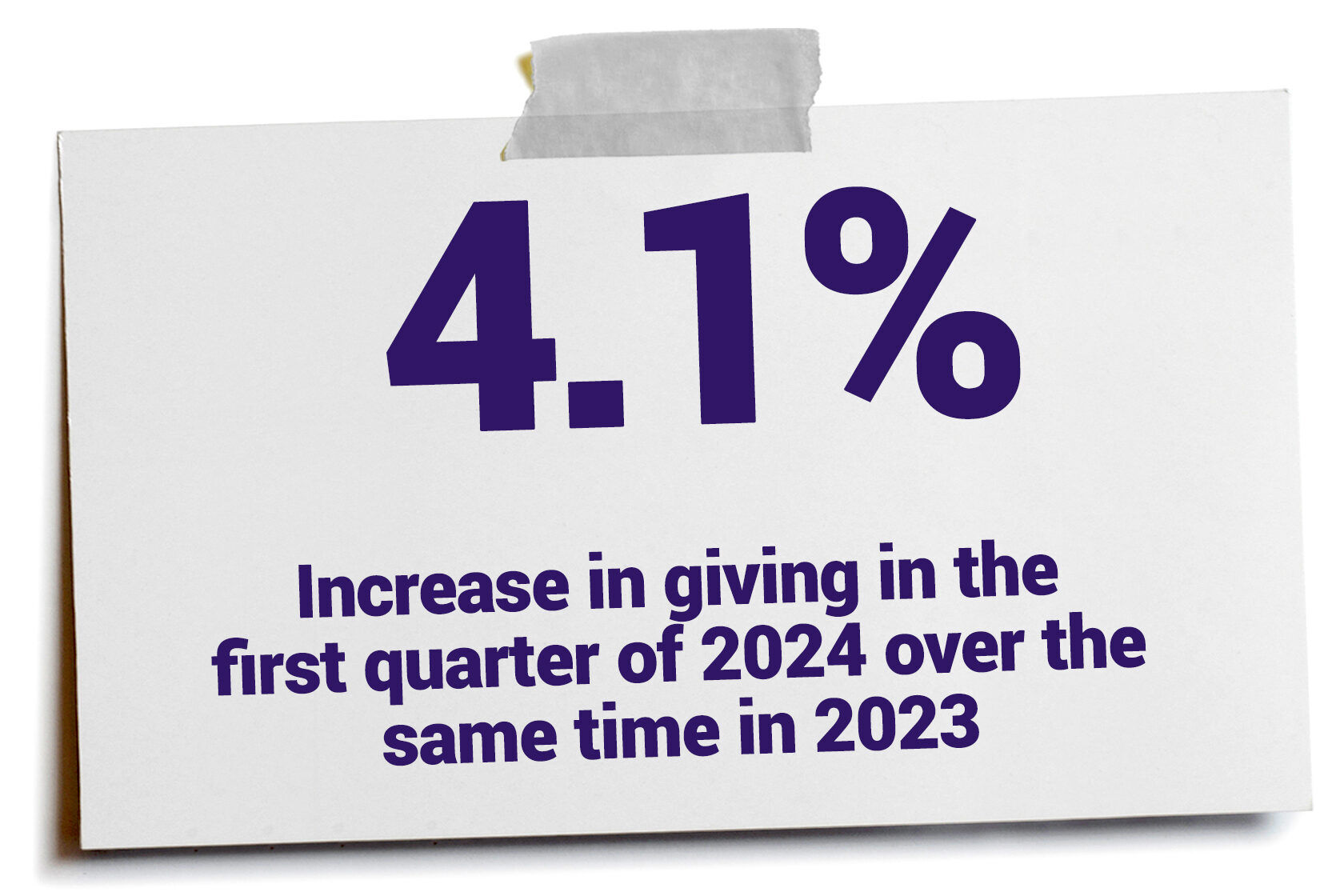
The amount donated in the first quarter of 2024 grew 4.1 percent over the same period in 2023, according to Fundraising Effectiveness Project data released Tuesday. The growth, however, was driven primarily by major donors rather than everyday donors who give small sums, the report said.
“I was excited to see that the donations were increasing, but I continue to be worried about the decline in donors,” says Ben Miller, chair of the FEP.
More on Fundraising

-
Year-End Fundraising
How to Craft a Winning Year-End Appeal in Challenging Times
The number of donors year over year dropped by 1.3 percent for all donor types. This is better than the huge 10.3 percent decline in donors in 2022.
However, in the first three months of this year, there were big decreases for certain types of donors compared with the overall number. People who donated $100 or less — the report calls them “micro donors” — had a 10.4 percent drop. Those who gave $50,000 or more, which the report calls “supersize donors,” had a 0.8 percent decline. The giving groups in between had declines in the high 4 percent or low 5 percent range. When looking at the total amount each group gave, micro donors accounted for only 2.8 percent of total dollars raised, whereas supersize donors accounted for 48.6 percent.
The FEP is a joint effort of the Association of Fundraising Professionals and GivingTuesday. Researchers pull data from the Growth in Giving Initiative, which includes more than 400 million donations. The growth in giving detailed in the FEP report is in line with predictions from the Lilly Family School of Philanthropy’s 2024-25 outlook report, which predicted 4.2 percent growth for 2024.
When looking at giving by cause, international and foreign affairs saw a 9.5 percent increase. Education was up 5.2 percent, and environment and animal causes were up 2.9 percent. Giving to arts, culture, and humanities charities dropped 10.9 percent, and religion related causes saw a 4.6 percent decline.
Miller pointed out that while small-dollar donors were down in general, international and foreign affairs nonprofits had done a good job capturing those donors. International giving was driven primarily by headlines about the war in Gaza and in the Ukraine, which Miller says shows a clear, palpable need to potential donors. “The generosity is there,” he says. “We are generous people. We want to help each other, but we don’t always see the need.”
To tap into that generosity, he says, charities have to find a way to get out the message about the needs of the constituents they serve.
The full report is available online.
Goals, Job Satisfaction, and A.I.
Advancement leaders at colleges and universities are less optimistic about their ability to meet their fundraising goals, yet they rate their job satisfaction as high, according to the recent “Advancement Moving Forward” survey conducted by the consulting firm Washburn & McGoldrick.
The survey found only 56 percent of senior advancement leaders — such as chief advancement officers and advancement vice presidents — felt confident they would meet their key goals. The June 2024 survey included 257 individuals at 111 colleges, universities, independent schools, and museums. The survey, in recent years, has been conducted twice annually — having decreased its frequency from quarterly during the pandemic.
“It’s the lowest confidence level in about four years,” says Carla Willis, a managing principal at Washburn & McGoldrick.
While leaders were worried, a higher share of gift officers and alumni affairs officers — 70 percent — felt good about meeting fundraising goals. Willis says those with higher-level positions who understand the overall thrust of the organization may feel more pressure.
Even though leaders feared they may not meet their goals, they love their jobs. Eighty-four percent of senior leaders said they were satisfied or very satisfied. When it came to gift and alumni affairs officers, 76 percent reported they were satisfied or very satisfied.
Development professionals may be more excited about their jobs because they are getting back to normal, with many organizations back to having in-person events and meetings with donors, Willis suggests, saying this is more engaging for fundraisers.
The survey also found that artificial intelligence use is beginning to permeate colleges and universities; 55 percent of respondents said they use it as part of their work. Some uses included writing stewardship communications, writing annual giving communications, crafting personalized content, and evaluating capacity to give.
Leaders were more likely to use A.I. than alumni and gift officers. Willis says many universities are still finalizing A.I. use policies, so it may be more accessible to leaders testing the technology than to the rest of the staff.
The report also includes information on how campus protests impacted donor communications and the most significant challenges advancement departments face making the case for giving at their institution.