


October 31, 2023 | Read Time: 2 minutes
The US Latinx Art Forum champions visual artists of Latin American or Caribbean descent who live and work in the United States. One of the most important ways the forum supports artists is through the Latinx Artist Fellowship program. For the last three years, the forum has awarded $50,000 each to 15 artists annually.
The awards have been transformational for the artists, bringing them greater national and international visibility, says Adriana Zavala, the forum’s executive director.
“They are having more exhibitions. They’re being invited to participate in group shows,” says Zavala, who is also an associate professor of art history at Tufts University. “Some of them have been able to rent state-of-the-art studio facilities or hire studio assistants for the first time.”
Last month, multidisciplinary artist María Magdalena Campos-Pons — a member of the fellowship’s second cohort whose work explores memory, spirituality, and identity — received a MacArthur “genius” grant.
The forum works hard to make sure the fellowships showcase the breadth of contemporary Latinx art. Each group of fellows is divided equally among early-stage, midcareer, and established artists. The program’s nominators look for artists who represent the full range of races, ethnicities, and genders in the Latinx community, as well as artists with disabilities. Where the artists are located matters, too.
“Latinx artists are not just in Los Angeles, New York, San Antonio, and Miami,” Zavala says. “They’re everywhere.”
Because the fellowship program got its start during the pandemic, its gatherings have all been virtual. Four times a year, artists gather online with curators to talk about their work, presentations that are open to the public and later available on the forum’s YouTube channel.
“Anyone anywhere in the world can tune in and learn from the artists in conversation with each other,” Zavala says.
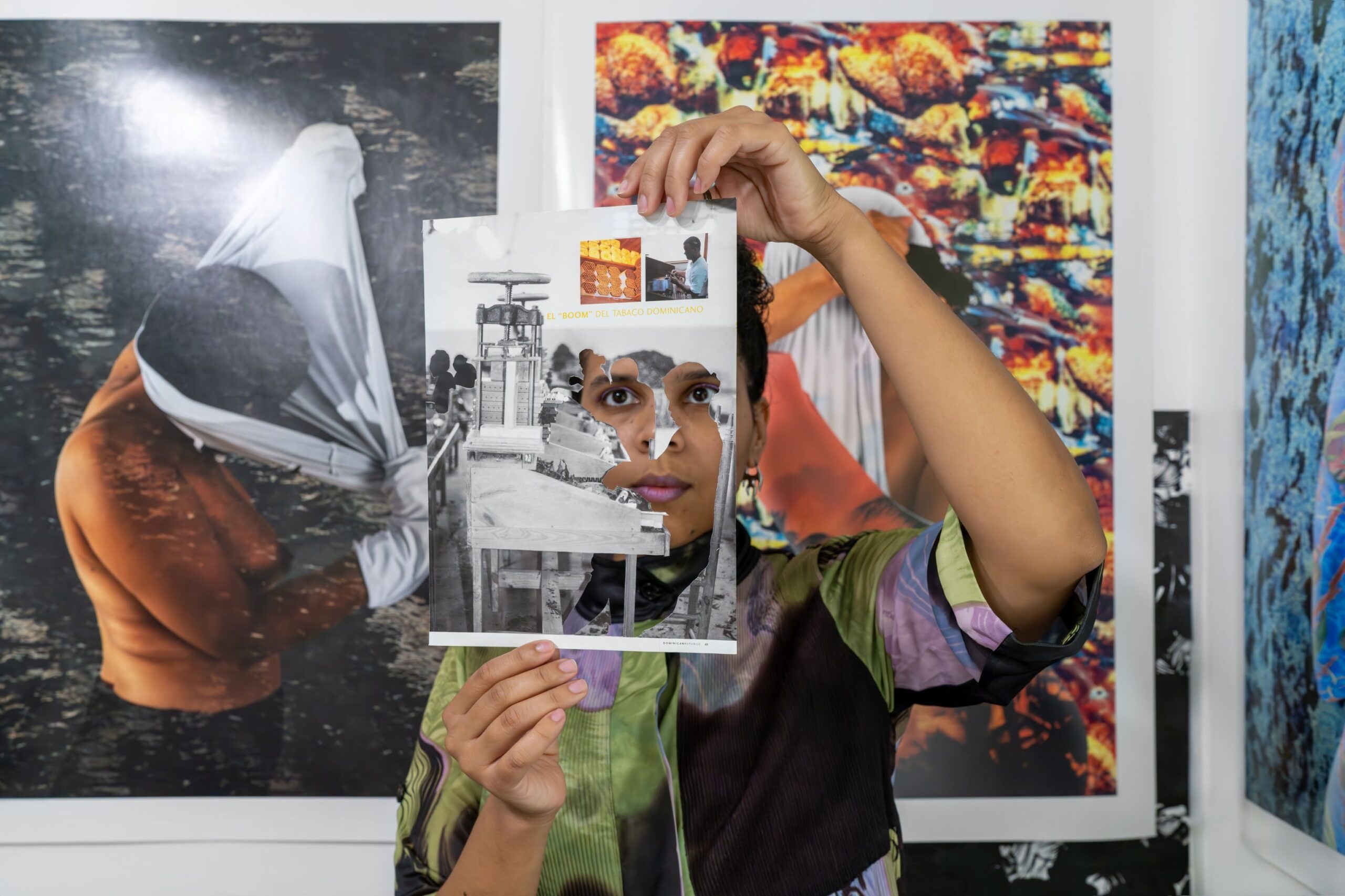
Joiri Minaya, shown here, was named a 2023 fellow. Her multidisciplinary work explores historical and contemporary representations of Caribbean women and how they have been shaped by colonialism and stereotyped images of the tropics.





