September 22, 2014 | Read Time: 5 minutes
Four years ago, a national controversy erupted over the nearly million-dollar salary the Boys & Girls Club of America paid to Roxanne Spillett. Fifteen months later she announced she would retire.
The organization’s news release said she would work closely with the new president, Jim Clark, for three months after he assumed the top job in January 2012 and would then remain on the staff for the rest of the year to work part-time on special projects.
That “part-time” work turned into quite a lucrative gig. The charity paid Ms. Spillett a total of $1.24-million for two years of work after she stepped down as CEO.
An increasing number of charity CEOs are sticking around after they give up the top job—and hardly in a volunteer capacity.
Charity boards are dangling generous terms to keep ex-CEOs involved, often out of a belief that the departing chief is the best bet for keeping big donations flowing. But some charity watchdogs and even members of Congress fear the deals may be little more than parting gifts that reflect the often-cozy relationships between boards and CEOs.
Departing CEOs “can be very, very valuable,” says Lindalee Lawrence, a compensation consultant in Boston. “They often take over fundraising because they have so many connections and a great deal of experience.”
Diana Aviv, president of Independent Sector, an association of charities and foundations, says the strategy can pay off big time or can backfire.
Many boards at large charities would happily pay a mid-six-figure salary to keep an ex-CEO around, she says, if they know the person’s connections might net a handful of big gifts totaling $3-million or more. But some boards, she says, are offering a high salary in a position with few responsibilities as a way to gently ease out a CEO they no longer want.
“That can do more harm then good, and it’s expensive,” she says. “I’ve seen instances where having an old executive hanging around creates a shadow over the incoming executive.”
Contributions in Question
Some charity watchdogs, meanwhile, worry that the trend is driving up administrative costs with additional big salaries. “It’s the buddy system,” says Ken Berger, president of Charity Navigator. “The amount of benefit the ex-CEO provides is limited, and usually the charity would be just fine without them.”
Sen. Charles E. Grassley, a Republican of Iowa and a frequent critic of nonprofit compensation, is putting charities on notice that he is paying attention to fat salaries that may yield little charitable benefit. “It’s not enough to say keeping former executives on the payroll helps the organization,” he says. “Charities should show how that expense benefits the mission they serve. Otherwise, they’re vulnerable to criticism that they’re wasting money that could be better spent on achieving their charitable mission.”
Some former leaders remain at the charities they once led for a long time.
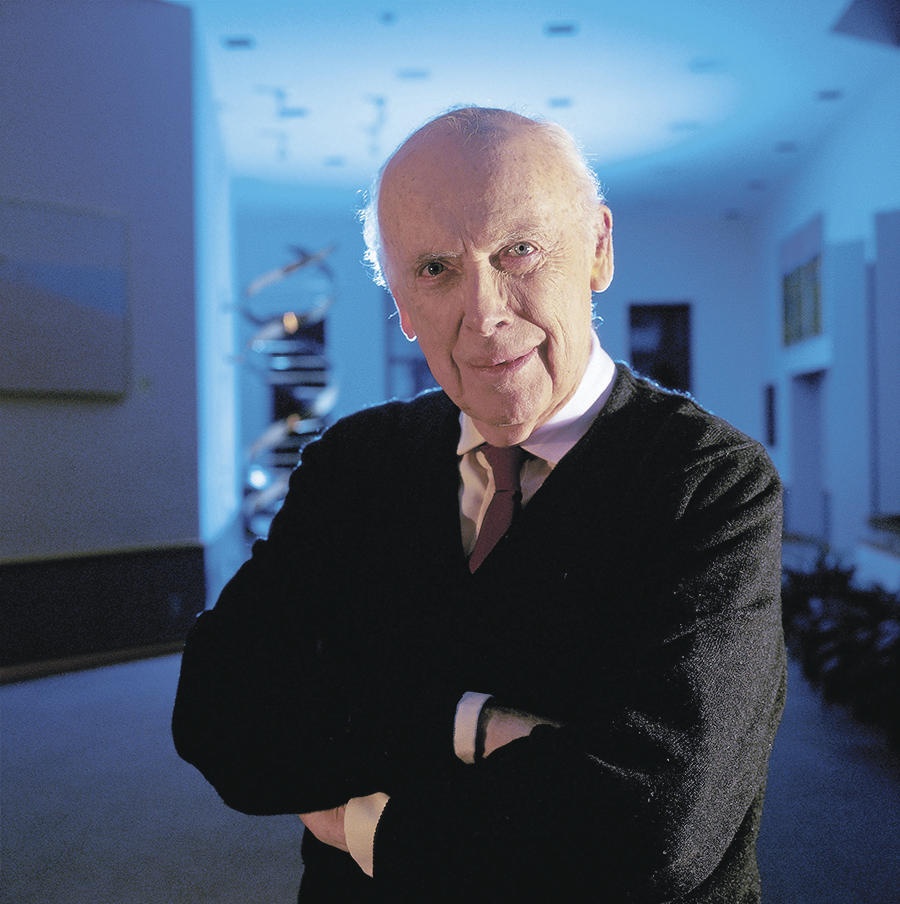
James D. Watson, the Nobel Prize-winning biophysicist, resigned as chancellor of Cold Spring Harbor Laboratory in 2007 after making controversial statements about race and intelligence. But a year later he was brought back to the research laboratory as chancellor emeritus.
In each of the previous two years, Mr. Watson has earned more than $568,000 in total compensation, including the use of a home on campus, a benefit valued at $98,000 a year.
Mr. Watson, best known for his work to help discover the structure of DNA, retains some professorial duties and presents an award each year at a fundraising gala called the “Double Helix.”
“You can well imagine that his stature in the scientific community, and as an icon in contemporary society, makes his fundraising capabilities a rather unique attribute,” says Dagnia Zeidlickis, a Cold Spring spokeswoman.
‘The Way America Works’
Herbert Pardes, the former president of NewYork-Presbyterian Hospital, earned $5.6-million from the nonprofit hospital in 2012, the year after he retired.
That pay exceeded by $2-million the compensation that his successor, Steven Corwin, earned in 2012.
Frank A. Bennack Jr., the hospital’s chairman, told The New York Times in July that Mr. Pardes was kept on for “urgent fundraising activities and a range of other institutional needs.”
Last November, The Boston Globe published an article about several former college presidents who were kept on the payroll after leaving the top job, including Jehuda Reinharz at Brandeis University and Lawrence Summers at Harvard University.
Mr. Reinharz told the Globe he was being rewarded for his past accomplishments, including raising record amounts of money for the university.
“It’s the way America usually works,” he said.
Foundations are also following the practice. Aryeh Neier, president emeritus of the Open Society Foundations, George Soros’s network of philanthropies, earned total compensation of $366,342 in 2013, the year after he stepped down from the top position.
A page devoted to Mr. Neier on the foundation’s website doesn’t explain what his current responsibilities are, and multiple calls to the foundation were not returned.
Like many of the other executives hired by charities for roles after they leave the top job, Ms. Spillett had already made millions of dollars from the organization she headed before stepping into a lesser role that still paid quite well.
Ms. Spillett made national headlines in 2010, when members of Congress held up a bill that provides funds to the Boys & Girls Clubs, in part because they viewed her 2008 compensation of $988,591 as excessive.
But that turned out to be just a warm-up for her final year as president, in 2011, when she earned $1.81-million.
In the two years that Ms. Spillett worked at the charity after vacating the top job, she headed development and oversaw several special projects, in addition to advising Mr. Clark, according to Evan McElroy, a spokesman for the charity.
The charity’s top development official in 2011, Cynthia Court, earned total compensation of $303,000, roughly half the annual pay that Ms. Spillett received in 2012 and 2013. Ms. Spillett left the payroll for good at the end of 2013.
The Boys & Girls Clubs appear to have given Ms. Spillett plenty to do—a wise approach, says Ms. Lawrence, the compensation consultant.
Charities that keep ex-CEOs on the payroll simply as a reward for past achievements may attract the unwanted attention of the Internal Revenue Service, she says.
“The former CEOs can continue to be paid substantial amounts of money,” she says. “But they’ve got to be doing something.”