Spending It All: How a Small Foundation’s Big Bet Is Changing Lives
By focusing on patience, flexibility, and a willingness to forge relationships with grantees, a Maine foundation discovered that focused investments over many years can yield meaningful success.

By Eden Stiffman
Senior Editor
September 30, 2025 | Read Time: 13 minutes
In 2016, a small Maine family foundation found itself at a crossroads.
The Emanuel and Pauline A. Lerner Foundation had spent close to $4 million over its first decade supporting a wide array of causes to improve the lives of people in the state, including active-citizenship programs, immigrant and refugee services, and initiatives for women and children.
But with such a diffuse mission and limited funds, the board wasn’t certain the foundation was achieving much. “They wanted to have more oomph and more bang for their buck in their grant making,” says Erin Cinelli, then the foundation’s executive director.
At one decisive meeting, the board agreed to abandon its four annual cycles of one-off grants and pour the foundation’s remaining $8 million into a single bet: helping rural young people in Maine aim higher after high school.
The Lerners, who donated their estate to launch the foundation after they died, lived in Washington, D.C., but often visited Maine. Board members were aware that the state’s rural communities, and particularly the young people growing up in them, were struggling. Despite strong high school graduation rates, they were far less likely to pursue and complete college or job training programs, a gap driven by poverty, geographic isolation, and limited career opportunities. The foundation hoped to reverse those trends and give young people a chance at a better future.
That decision reshaped the foundation, which soon shed its name to become the Rural Futures Fund. It launched the Aspirations Incubator, a six-year experiment to develop and test an intensive approach to mentorship across the state. Instead of scattering small checks, as it had been doing, the fund backed eight organizations with $100,000 a year over six years, asking them to stick with the same kids from seventh grade through high school graduation and add a new group of students each year. It also funded a research-and-evaluation effort to track its programs from start to finish.
By the time the first group of students graduated in 2023, the payoff was clear. Students in the pilot were thriving compared to their peers. They showed up to school more regularly, scored better on state math and English exams, and were more likely to enroll in college. The results stood out given that the pilot coincided with the pandemic, when young people across the country were struggling.
But the real lesson lies in the unusual way the foundation achieved those results. The Rural Future Fund’s successes demonstrate that big change doesn’t require vast resources — it requires patience, flexibility, and a willingness to forge meaningful relationships with grantees. Scale isn’t the only measure of effectiveness; sometimes powerful results emerge when funders commit to small efforts over many years. To make that possible, the foundation also had to evolve: It became a partner and coach, not just a checkbook, modeling the kind of trusting relationships it wanted grantees to build with young people.
“It’s a delicate balance in the funding world, to try to do something that’s innovative without being too prescriptive,” says Don Carpenter, who led Trekkers, the outdoor mentoring organization whose approach was adapted by the fund, and later became its executive director. “The only way you can do that is to go all-in relationally with somebody. We had a true partnership with the folks that we were working with.”
Listening First
Rural students in Maine confront deep barriers to continuing their education. Rates of child poverty for rural youth are higher than their urban peers. Geographic isolation can make it hard to find well-paying jobs and launch fulfilling careers. At the time of the pivot in 2016, Maine’s rural students lagged national averages in college completion and job training.
Read More About Rural Philanthropy
-
Rural Philanthropy
National Grant Makers Bet This Rural Education Program Can Scale
-
Rural Philanthropy
Rural America Is Struggling. Where’s Philanthropy?
That shortfall drove the foundation’s new focus, but it needed to zero in on what to do about it. They asked Cinelli to take six months to learn about what made a difference in the lives of young people in Maine, especially when it came to their post-high school goals, and how a relatively small foundation could play a role. She discovered that young people suffered due to a gap in programs at the precarious transition point from middle to high school.
In many small rural towns, students spend their elementary years in close-knit schools with low student-teacher ratios. “They’re surrounded by adults who can really name, know, and nourish their sparks, the things that light them up and get them really excited,” says Megan Taft, who managed an Aspirations Incubator program early on and later served on the Rural Futures Fund board.
But when those students move on to larger regional high schools, those connections often vanish and many kids hit a slump. “There’s no longer somebody there to tend that fire and keep it burning,” she says.
An ‘MTV Real World’ for Youth Development
Cinelli’s research eventually led her to Don Carpenter, an unconventional leader and former grantee, who had recently retired from Trekkers. She hired him as a senior program officer and he later replaced her as executive director.
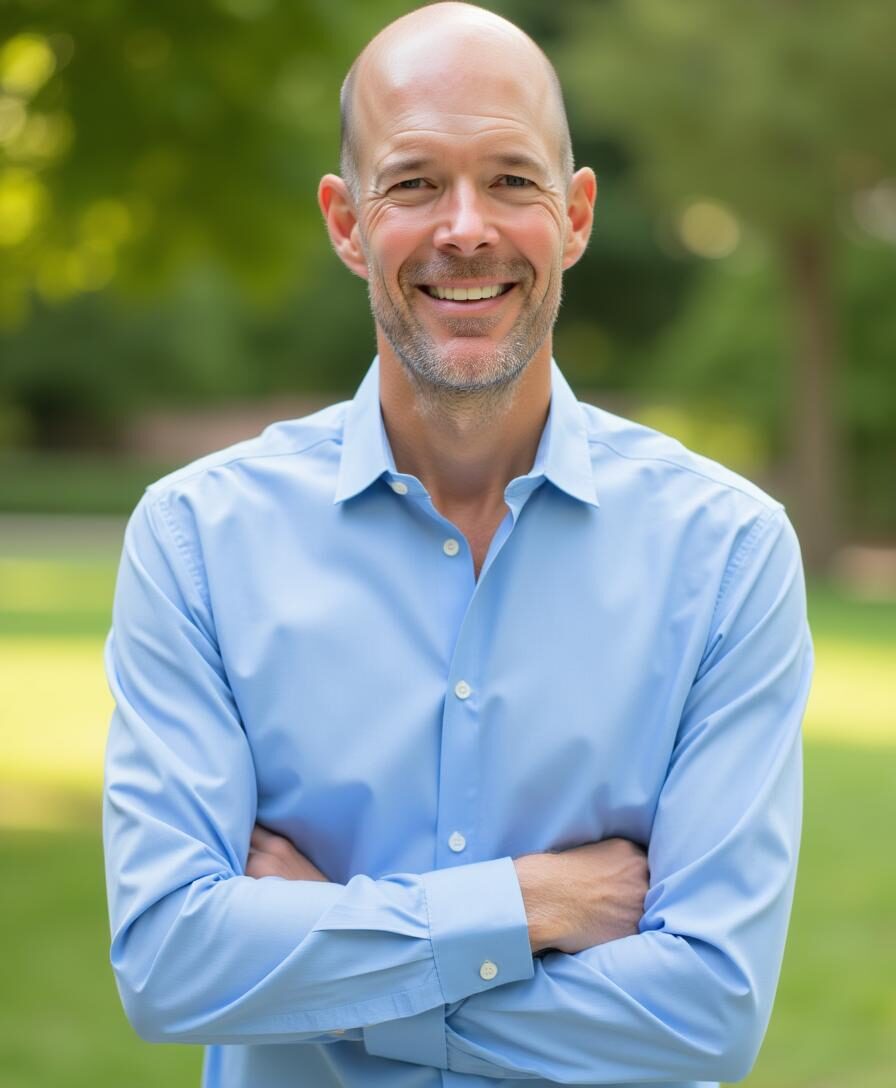
Carpenter had spent decades proving that strong, steady relationships with small groups of young people — not rapid program expansion — could change lives. Despite his experience, he had no interest in requiring other groups to use his exact model. Instead he sought out others to run localized programs based on their own expertise.
He distilled Trekker’s model into a set of 11 principles that any youth development organization could adapt. Those principles include prioritizing informal relationship-building, giving young people input in decision-making processes, and expanding worldviews through experiential learning. He also needed assurance that the board would remain committed over the long haul.
The board was taking a risk by going all-in on a single issue. But Carpenter made a strong case that his approach gave the foundation the best chance at success.
Still, the shift introduced some new challenges: The foundation had built deep relationships among Maine nonprofits serving immigrants and refugees, including helping to start a funder collaborative. The foundation worked with the collaborative to help grantees transition to new sources of support.
As the foundation forged ahead, it issued a request for proposals to identify organizations already working with rural middle schoolers. Nearly 90 applications came in. Half received small planning grants, and Carpenter spent more than a year visiting and learning about their ambitions and pain points.
For Ryder Scott, who oversees the 4-H Learning Centers through the University of Maine Cooperative Extension, the process stood apart from the transactional norm of philanthropy. Foundations put out a request for proposals, you either get the money or you don’t, you submit a report, and that’s where it typically ends, he says.
“This was clear right from the start that we were building a relationship with Don and with the foundation,” Scott says.
His was one of eight organizations selected to launch the Aspirations Incubator. The groups varied widely: a YMCA, a gaming-focused youth group, a summer camp. Each received $600,000 over six years and was charged with recruiting 10 to 20 7th-graders annually and sticking with them through high school graduation. Every group bridged that critical 8th-to-9th grade transition.
To launch the program, Carpenter took relationship-building to a new level. Over the summer of 2017, leaders of the eight programs moved into a house together for 12 weeks of training. Think a nonprofit version of MTV’s Real World, minus the drama.
The experience was “magical” says Taft, one of the program managers who attended.
As they trained on the Trekkers principles and developed plans for their own rollouts, they began building trust and support, something that Taft says is rare among youth development groups used to fighting for scarce dollars. “Because the Rural Futures Fund had taken money out of the equation, we could all come together and build connection and community in a way that just accelerated our work and our collective impact,” she says.
Once back home, staff and volunteer mentors wove themselves into students’ daily lives. They weren’t just running after-school activities, they were standing by lockers when the bell rang, showing up at basketball games and band concerts, getting to know families.
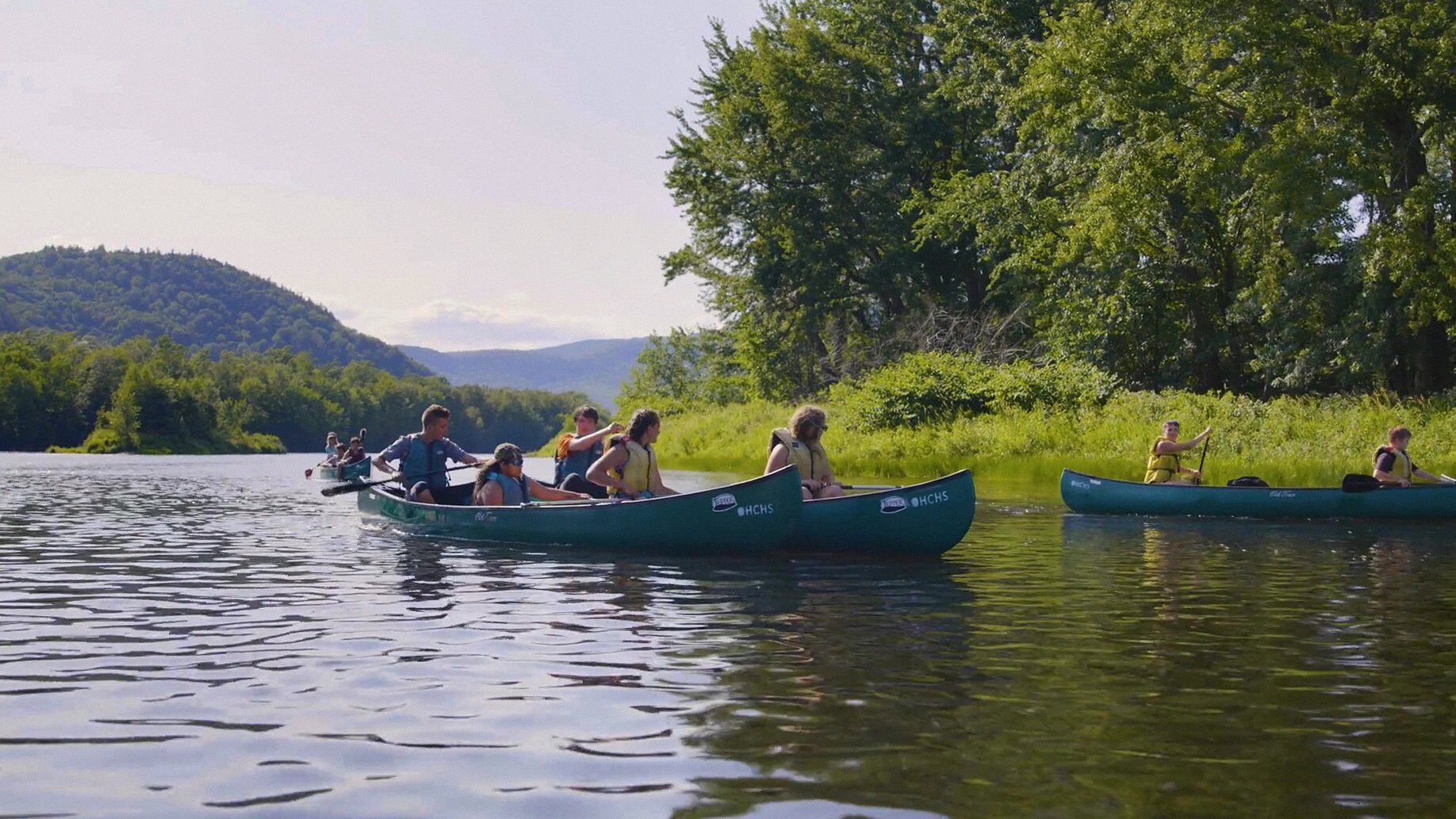
Olivia Neely joined the River Runners program when she was in 7th grade. The initiative supports young people using community service, team-building, and outdoor exploration and is run by the Old Town–Orono YMCA. Her mentor’s constant presence built a sense of reliability. “Through the chaotic schedules that we had in high school, we always had someone there,” she says.
The foundation tried to take a similar approach. Like the teens, many small nonprofits are just one crisis away from getting stuck. “We weren’t just writing the $100,000 checks for six years,” Carpenter says. “We were there to pick up the phone, provide coaching, help with board development and fundraising plans, and think through different policies.”
It was that combination of long-term funding and professional development that helped some groups sustain their programs for the six years and beyond. It helped them build higher-quality programs, and keep staff over many years in a field that suffers from high rates of staff turnover and burnout, providing the young people with a vital sense of stability.
Data: A Priority from the Start
Analyzing and understanding the program’s outcomes was a priority from the start. As part of the original plan, the foundation funded the University of Southern Maine’s Data Innovation Project to track the participants’ progress and analyze the results. If the outcomes were positive — as they ultimately were — that would help create a body of evidence for other communities to build on. If it failed, that too could be valuable information for other nonprofits and funders.
But data collection was an ongoing challenge for organizations that weren’t used to operating that way. It required a leadership shift and lots of staff training. But that ultimately paid off. Collecting information from a wide range of people in a young person’s life, along with self-reported data from well-regarded scientific assessment tools, helped staff tailor their approaches to individual needs and strengths rather than pushing one-size-fits-all programming.

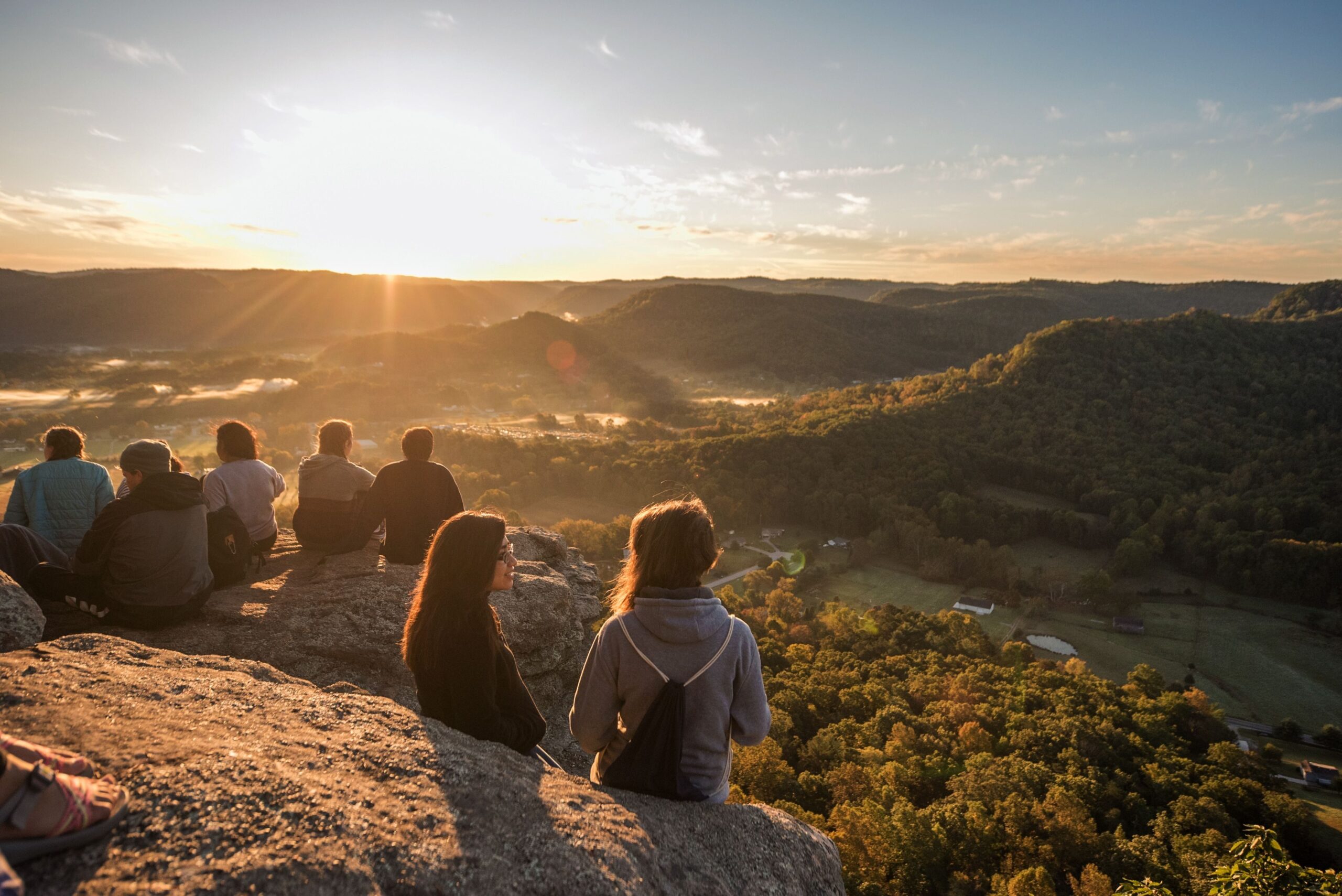
By exposing young people to new experiences and places, often through outdoor adventure or travel, and helping them take on greater levels of leadership in their communities, the program expanded students’ ideas of what was possible for their futures. Nearly three-quarters of participating 12th graders said the program had influenced their future plans, according to a final evaluation.
Nearly 90 percent of students in the program planned to go to college, and 74 percent were enrolled in college by the fall of 2023. Those high enrollment rates stood out against statewide declines from 2019 to 2021, when only about 53 percent of Maine students pursued higher education, with disadvantaged students faring even worse.
Students reported a stronger sense of belonging than their peers. Nearly 94 percent of seniors in the program reported feeling connected to their communities, versus just over half statewide.
The impact is also evident in the lives of graduates like Neely. “We all came from different backgrounds … Some of us didn’t have great home lives,” she says. “But the guidance in the program meant we all made it through high school together. Now we’re getting our degrees, working, still doing sports, going for what we want to do.”
Now a track-and-field athlete at Plymouth State University in New Hampshire, she is on her way to earning both a bachelor’s and master’s degree in four years.
How to Spread Success
From the start, the Rural Futures Fund was clear about its intention to spend itself out of existence by the end of 2025, giving grantees a long runway to look for other supporters.
Three of the five participating nonprofits wanted to continue mentoring the younger classes of students. In an effort to help them develop their fundraising capacity, the Rural Future Fund offered matching grants that diminished over the next three years: $50,000 in 2023, $25,000 in 2024, and $10,000 for this school year.
At the 4-H Learning Centers, Scott and his colleagues began raising additional funds by year three. “We didn’t want to be taken by surprise suddenly that the six-year pilot funding was gone,” he says. Today, the mentoring model has expanded into three districts, with more full-time staff, and both federal and philanthropic support funding further expansion.
But not every site had such a positive experience. A few discontinued the program or even closed their doors after the six-year program ended, leaving some of the younger students without services. Leadership transitions disrupted progress at some groups. “We would have benefited from spending more time on the front end, vetting the organizations and where they were in their own organizational development process and making sure that it was a good fit for them as much as for us,” Cinelli says
Leadership challenges also roiled the Rural Futures Fund. The foundation’s pilot unfolded against the backdrop of a scandal in 2022, when longtime board president Eliot Cutler — a family friend of the Lerners and two-time unsuccessful Independent gubernatorial candidate — was arrested and later convicted of possession of child pornography. He resigned immediately, and Cinelli emphasized he was never accused of having any direct contact with young people in the program.
As the pilot wound down in 2023, the question became how to sustain — and even spread — its success. A year later, the foundation’s leaders launched the Rural Youth Institute, a separate organization now led by Taft, the former program manager and board member. Carpenter and Cinelli sit on the board of the new nonprofit.
When the Rural Futures Fund sunsets, any remaining assets will be transferred to the new nonprofit. The Rural Youth Institute is also raising funds from new supporters, including the Peter Alfond Foundation. Right now it has a modest $160,684 budget.
This group is used to doing big things with small budgets. It has already absorbed the Aspirations Incubator, which today supports the mentoring model at eight sites across Maine. It’s building out new research partnerships, providing training to youth-serving organizations, and advocating for its depth-over-breadth strategy..
While they’re just getting started, Taft says there’s a good reason the new organization isn’t called Maine’s Rural Youth Institute. “We see and hope for opportunities to share the research and this model far and wide with rural communities.”
Reporting for this article was underwritten by a Lilly Endowment grant to enhance public understanding of philanthropy. The Chronicle is solely responsible for the content. See more about the Chronicle, the grant, how our foundation-supported journalism works, and our gift-acceptance policy.