What Is More Urgent Than Today? Why Some Foundations Are Choosing to Wind Down
Among the main reasons philanthropists decide to spend down: the desire to make an immediate impact, and fear that future generations won’t adhere to their wishes.

By Alex Daniels
Senior Editor, Foundations

August 11, 2025 | Read Time: 8 minutes
Last month, the Leon Levine Foundation announced it plans to go out of business in 50 years. The decision reflects a growing desire among philanthropies to send money out to grantees and eventually close up shop, rather than stash assets in investment accounts in perpetuity.
The Levine foundation nearly tripled in size, to $2 billion, following the 2023 death of its founder. It will use the infusion of cash to support Jewish organizations and nonprofits that serve people who have historically been marginalized in both North and South Carolina, where Levine maintained residences.

Levine, who founded the retail chain Family Dollar, determined before his death that he wanted the foundation to spend down, but he gave future boards of directors at the fund — which is independent except for Levine’s widow, chairman emerita Sandra Levine — a lot of leeway in how to proceed. He knew the pressing social issues and set of players working on them were bound to change after he died, and that the foundation would need to be able to shift, said Thomas Lawrence III, the grant maker’s president.
With the infusion of funds and the new timeline to spend, the foundation is considering making larger investments to support the creation of endowments at individual nonprofits, Lawrence said. Rather than “sunsetting,” he refers to the spend down as a “sunrise,” in that the foundation will cede control over how its fortune is spent to nonprofits that work directly to solve social problems.
“While the foundation will eventually spend itself out,” he said, “we will do so in a way that the legacy and the support for underserved and Jewish Carolinians will continue longer and hopefully in perpetuity.”
‘Too Many Urgent Problems’
Leon Levine was not alone in his desire to set a time clock on the foundation he created. In a long-anticipated move, Bill Gates in May announced that the Gates Foundation would close at the end of 2045.
In a message about the planned closure, Gates referenced Andrew Carnegie, who in his essay “The Gospel of Wealth” famously opined that a person who dies rich “dies disgraced.”
“There are too many urgent problems to solve for me to hold onto resources that could be used to help people,” Gates reflected. “That is why I have decided to give my money back to society much faster than I had originally planned.”
A growing number of philanthropists have in recent years decided to eventually close their foundations rather than take the default path of perpetuity. They include the TransitCenter foundation, a $70 million grant maker that last year announced plans to shutter in 12 years; Laurene Powell Jobs’s Waverly Street Foundation, which will devote $3.5 billion to respond to climate change over the next 10 years; and the Wellspring Philanthropic Fund, which plans to close in 2028.
Hard numbers are difficult to come by. But a survey of family foundation leaders conducted this year by the National Center for Family Philanthropy found that 13 percent of responding foundations have limited lifespans, up four percentage points over the last time the center did a similar survey, ten years ago.
Notably, more than a quarter of the 524 foundations surveyed are actively considering a time limit, says Nicholas Tedesco, the center’s president.
The three main reasons philanthropists consider spending down are a desire to make an immediate impact, a fear that future generations won’t adhere to a donor’s intent, and the donor’s specific family dynamics.
Political and financial considerations also apply, according to Tedesco. During the first six months of President Trump’s term, there was a “groundswell” of questions from the center’s members as the White House cut federal spending and closed government offices, and Congress considered sharply increasing the excise tax on foundation investment income.
Many families in Tedesco’s network began to question whether they should support “a government that has a self-expressed disavowment of investment in social infrastructure” by paying excise taxes and should instead spend their philanthropic resources as quickly as possible.
The proposal to increase the foundation excise tax was stripped from broader legislation that was eventually signed into law this summer, and Tedesco is not aware of any foundations that decided to empty their accounts as a result of the prospect of higher taxes.
But he said the attacks on the nonprofit sector coming from the Trump White House and nonprofits’ intense funding needs as a result of federal spending cuts have invigorated the debate over whether foundations should exist in perpetuity.
Said Tedesco: “The question being held is much more pronounced because of the political climate.”
Deciding whether to empty the vaults is often more personal than political, said Elizabeth Dale, the Frey Foundation Chair for Family Philanthropy at the Dorothy A. Johnson Center for Philanthropy at Grand Valley State University. Ensuring that future foundation boards will adhere to a donor’s wishes gets trickier the longer a foundation exists, she said.
But some problems require leadership and cash over generations, she explained. Sometimes a topic might fall out of favor at the national level, leaving philanthropy as a pillar of support when interest wanes. And some problems just need help over the long haul.
“Social change rarely follows a linear path,” she said. “There’s often periods of advancement and retrenchment. That cyclical nature of progress needs steady funding, and that means institutions that can weather shifts in priorities.”
A Fast Spend Down
Some foundations that aim to exist in perpetuity have changed their expectations on whether that means they will try to stay the same size — or grow — in the future.

When the California Endowment’s board decided to double its annual payout rate in response to Trump administration immigration policies and cuts to federal nutrition and health programs, it maintained its plan to exist into the future. But trustees realized the accelerated payout might cut into its endowment and understood the endowment might be a forever foundation, but a smaller one, said Brenda Solorzano, the grant maker’s president.
The Stupski Foundation, which had already decided in 2019 to close its doors in 2029 accelerated its spend-down plans to warp speed. Its original plan was to spend about 25 percent of its remaining assets this year. Surveying the harm federal policy was doing to residents of Alameda and San Francisco counties in California and the state of Hawaii — communities the foundation supports — Stupski CEO Glen Galaich and the foundation’s board decided to increase its spend this year to $57 million, or 76 percent of its remaining assets.
The decision was fairly easy for Galaich, who has dedicated much of his remaining time at the helm of the foundation preaching the gospel of sunsetting. Amassing wealth and creating an institution that employs lots of people and holds conferences is not the business philanthropy should be in, he said.
“Our job is: Move this money. That’s the only thing a foundation really needs to do,” he said. “The rest of the stuff we create, to me, is just noise.”
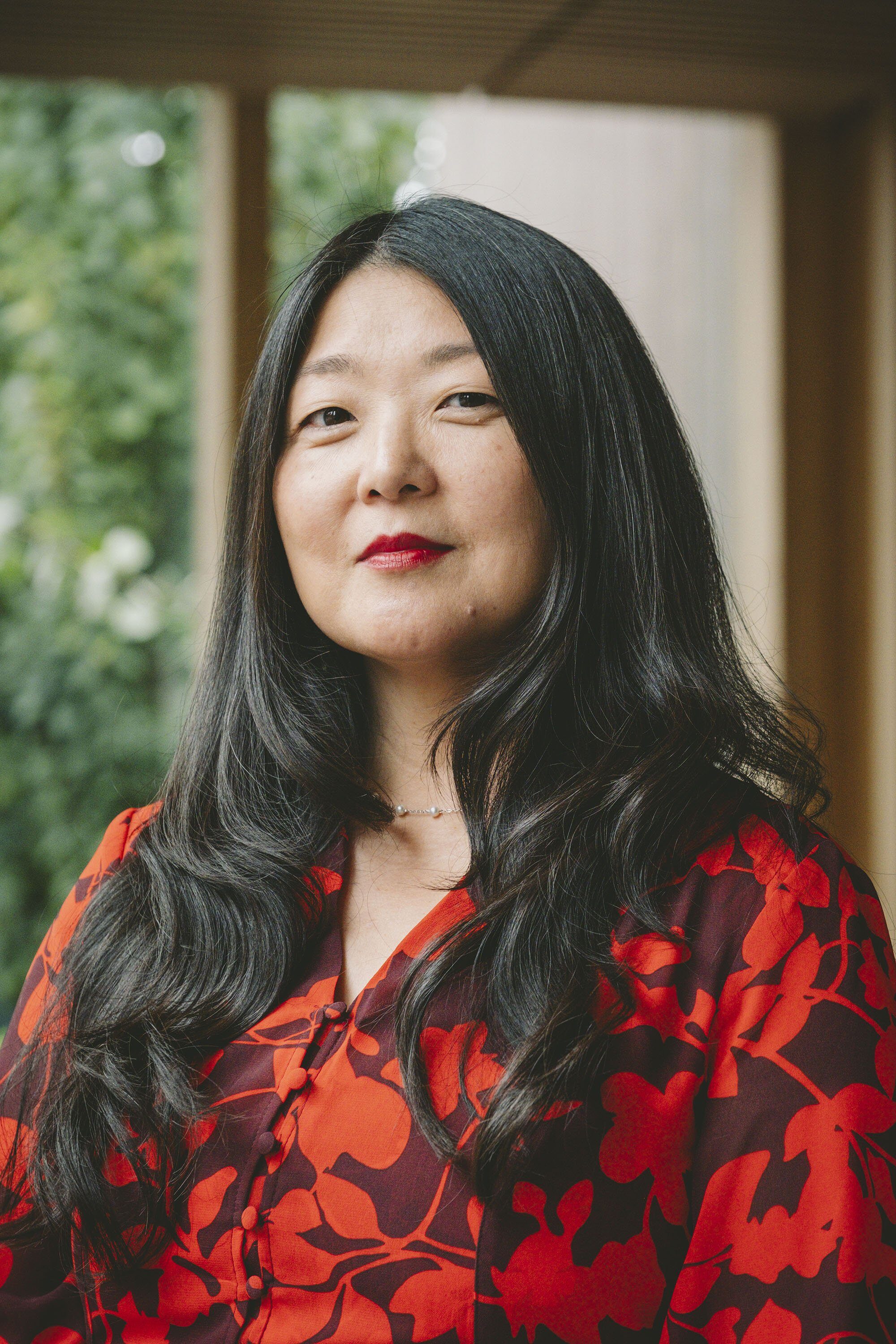
Others see benefits in a long-lasting foundation taking root in the community. The relationship-building required to make change isn’t noise, said Kara Inae Carlisle, president of the Ford Family Foundation, a rural grant maker in Oregon; it’s essential to her work.
Over the past 20 years, the Ford Family Foundation has worked with parents who were reunited with their children after losing them in the child welfare system. A group of those parents now advise Douglas County, Ore., officials, sharing reflections on the trauma they went through to try to make family reunification go more smoothly.
If the Ford Family Foundation were to close, there aren’t a lot of other philanthropies dedicated to rural Oregon that would stick with a program for so long, Carlisle said.
“The time horizon just requires durable funding,” she said. “It doesn’t happen in a five-year initiative.”
A 50-Year Sunset
There is little data on the time frame foundations pick when they decide to spend down.
Stupski’s Galaich said that if he had it to do all over again, he’d spend it “by next Friday.” While some grants may not work out, increasing grant volume in a short time frame is sure to provide immediate, and perhaps lasting, results, he said.
For Leon Levine, choosing a 50-year sunset had personal significance, said Lawrence, president of the Levine foundation. Levine was the head of Family Dollar for roughly 50 years, and he wanted the fund to mirror that time frame after his death.
But if the foundation identifies projects and nonprofits that make a lasting social change in the Carolinas, it’s possible the fund might spend down in a shorter time, said Michael Tarwater, who chairs the foundation’s board.
Said Tarwater: “Fifty years is the outside limit.”
It is the Leon Levine Foundation, not the Leon Levine Family Foundation.