What’s at Stake for Nonprofits With a Government Shutdown Looming
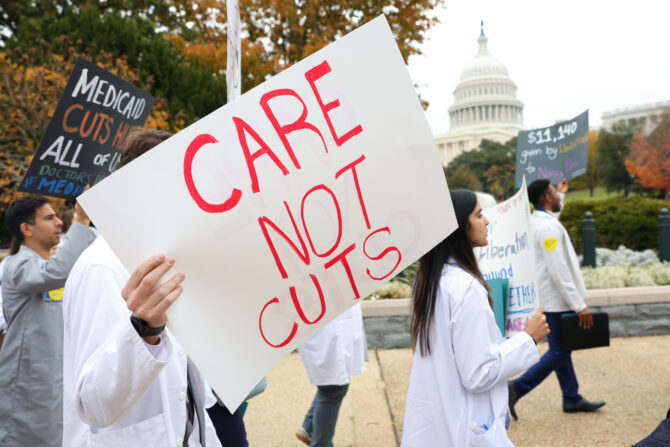
A government shutdown is likely to add stress to nonprofits that have been grappling with federal cuts since the start of the year, according to advocacy groups.

By Stephanie Beasley
Senior Writer
September 30, 2025 | Read Time: 4 minutes
As congressional lawmakers continue to disagree over what should go into a bill that would keep the government open beyond Wednesday, many nonprofits are bracing for more disruptions to the grants they need.
“Government shutdowns disrupt the vital work of nonprofits in local communities, preventing them from delivering the critical services on which the American people rely, ” Diane Yentel, CEO of the National Council of Nonprofits, said in a written statement.
“Nonprofits are already facing enormous financial and political challenges as the administration has sought to freeze federal funding, terminate contracts, and otherwise withhold grant funds. A shutdown further undermines their ability to serve, and the longer it lasts, the more severe the harm to people and communities.”
This would be the first government shutdown since 2019. When the government is shut down, most federal agencies cannot spend money, which means nonprofits that receive federal grants or contracts may not get the promised funds. Some groups may need to halt operations or programs until the government reopens.
What should nonprofits do? Press members of Congress to make a deal, the National Council of Nonprofits has said. The 30,000-member organization has also advised nonprofits to contact the federal employees managing their grants or contracts before the potential shutdown to see whether they can submit invoices or other documents to get paid before the government shuts down.

Additionally, groups should start thinking about how they might cover ongoing costs in the event the shutdown lasts for an extended period, the council said. The last shutdown, which started in late December 2018, lasted 35 days. Nonprofits might need to consider using credit cards, applying for bridge loans, or moving money around so their immediate financial needs are taken care of, the council said. When nonprofit organizations cannot access federal grant and contract funding, an extended government shutdown can “force nonprofits to take out expensive loans, adding unforeseen costs to their budget,” Yentel noted in her statement.
Independent Sector, another nonprofit membership group, has similarly recommended that nonprofits be proactive should federal funding expire. How exactly groups will be affected is difficult to predict, said Ben Kershaw, Independent Sector’s director of public policy and government relations.
Every agency has its own contingency plan, and in some cases that plan might allow for federal dollars to keep flowing to some nonprofits. However, even if the funding continues, it’s likely that the points-of-contact for those grants won’t be able to respond to any queries until the government reopens. That means nonprofits would be left “flying blind” if any issues arise, he said.
Kershaw further noted that unlike in previous shutdowns, the White House Office of Management and Budget isn’t publishing agency contingency plans on its website. Rather, the Trump administration has said the public will have to search each agency’s website for that information.
The impact of the OMB’s decision, said Kershaw, is that it makes funding information “harder to figure out.”
Mass Firings Threatened
More is at stake this year than in previous funding standoffs. The Trump administration has threatened to order mass firings of federal workers if Democrats don’t agree to Republicans’ terms for passing a spending bill. Those fired would be on top of the hundreds of thousands of federal workers who have been laid off or have resigned since January. A smaller federal work force could add pressures on federally funded nonprofits that serve a range of Americans.
Job losses, especially among federal government employees, are among the key drivers behind a rise in people needing food support in the Washington, D.C., region, according to a recent report from the Capital Area Food Bank.
Among households affected by federal funding and job cuts, 41 percent face food insecurity, said Radha Muthiah, CEO of Capital Area Food Bank. The food bank — which serves D.C. and parts of Maryland and Virginia — has seen increased demand for its services this year and is preparing for the possibility that more people will need meals if there is a shutdown, she said. For low-wage workers who are fired, it could be as little as two weeks before hitting “the slippery slope where people can go from being food secure to needing food assistance,” she said.
Since the start of the pandemic in 2020, the Capital Area Food Bank has doubled the number of meals it’s provided annually from 30 million to an estimated 64 million, she said. Philanthropy has helped the organization increase its distribution. And the food bank will again ask funders to step up with more dollars if the need for its services increases during the shutdown, Muthiah said.
Still, she and others said they hope some lawmakers will reach an agreement soon.
“We hope that cooler heads will prevail,” Kershaw said.
However, the ordeal of waiting to see if the government will shut down is adding to the stress that many nonprofits were already feeling after months of turmoil, he said.
“No matter what happens, it is a massive waste of resources for the nonprofit sector,” he said, “and just a mental and emotional drag on people who just want to get out of bed in the morning and help their neighbors have a better life.”