$1,000 for Every Baby: Can Philanthropy Shape the Impact of ‘Trump Accounts’?
The new policy echoes decades of donor-backed work — but philanthropy is divided on its potential.

By Eden Stiffman
Senior Writer
August 4, 2025 | Read Time: 9 minutes
At a time when the government is slashing nonprofit grants and contracts, the thought that it might adopt and expand philanthropy-backed ideas may be fanciful. But the Trump Administration is implementing its own take on an idea long studied and championed by major grant makers.
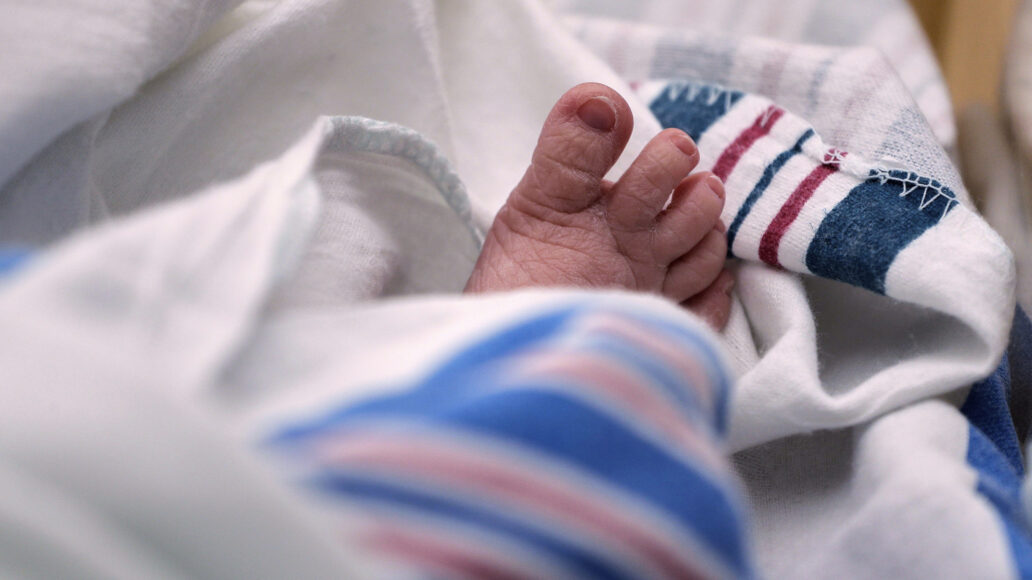
In the new tax-and-spending law passed in July, Congress tucked in a plan to put $1,000 into an investment account for every baby born in the next four years. The new accounts echo ideas like baby bonds and child savings accounts, which Ford, Mott, and other foundations have been testing for years as they seek ways to improve college access and help low and middle-income families build wealth.
The new “Trump Accounts” have been embraced by unusual messengers: Michael Dell, the billionaire philanthropist, and Brad Gerstner, a hedge-fund manager who pushed the idea to lawmakers. They say the new federal plan with $17 billion allocated could usher in a “Giving Pledge 2.0″ era. That’s because the accounts offer an opportunity for donors to direct cash to children around the country, for example, every resident of their region or state.
But not everyone is on board. Some philanthropic supporters of policies that aim to boost wealth and opportunity are hoping they can encourage changes to make the new program more effective. Others say the Trump approach misses the point.
Darrick Hamilton, the economist who, at the invitation of the Ford Foundation, came up with baby bonds as a way to address the racial wealth gap, is frustrated with how the policy took shape. Baby bonds are designed as trusts set up by the government for kids in a progressive manner so that lower-wealth families receive more. Along with a handful of foundations and researchers who have been studying what policies would make a real difference in lifting up the poorest Americans, he says the program should target low-income people rather than distributing the benefit equally to everyone.
Hamilton, who directs the Institute on Race, Power, and Political Economy at the New School, says the accounts in the new law represent the “co-opting of a good idea with a bad idea.”
Giving Pledge 2.0?
The new program wasn’t the result of a concerted advocacy effort from the groups that have long studied and pushed for these policies, as is often the case. Instead it emerged almost out of nowhere after Republican Sen. Ted Cruz of Texas met with Gerstner, who had been talking up the concept of “Invest America accounts” as a way to give all kids a financial foothold and a stake in the American economy. Money in Trump Accounts must be invested in stock funds that track a U.S. index like the S&P 500.
Gerstner, who has also said he will contribute, appreciates that the law allows nonprofits and philanthropists to direct funds to accounts in specific zip codes or other geographic areas. Donors can also target the accounts of kids born in a specific year. Under the new law, families can contribute up to $5,000 annually to each account, and employers can contribute up to $2,500, while there is no cap on philanthropic contributions.
Dell, worth an estimated $128.6 billion, has said he and his wife plan to make a significant contribution. “This is a really good way to get money directly to the next generation,” he said on a podcast in July. (A spokesman for his foundation said it’s still early and declined to provide specifics.) Dell also said his company would match the government’s $1,000 contributions for children of its employees.

When Gerstner began discussing the idea in 2023, Benita Melton, director of the education program at the Charles Stewart Mott Foundation, was hopeful — even a bit excited.
Melton has spent her career working to advance child savings accounts, which differ from baby bonds and are generally designed to encourage more young people to attend college. Much of her grant making has aimed to put into practice ideas introduced in Michael Sherraden’s 1991 book, Assets and the Poor. Sherraden made the case that poverty isn’t only about lack of income, it’s about lack of wealth. The book helped galvanize Mott and a whole group of funders.
“We have spent 30 years and $35 million trying to mainstream those concepts,” says Melton, who helped create the Asset Funders Network along with program officers at the Ford, Annie E. Casey, and Fannie Mae Foundations. “We really did cover the waterfront to move this idea out of the book and to something that’s going to now serve every kid born in this country.”
Over the years, many nonprofits and state and municipal policymakers have gotten on board, as have some federal policy makers. But Gerstner’s project “was really the first traction with the investment community,” Melton said. “If they got behind it, I figured we could really build some momentum.”
Gerstner spoke with several Mott grantees as the concept developed, Melton said.
She is hopeful that the policy, which won’t begin until July of 2026, can be made more effective as the federal government figures out how to translate the law into practice. There’s a lot the new policy got right — and plenty of room for improvement, she says. The regulatory process that comes next is where the important details come in. “Policy is just the beginning. Implementation is everything.”
A lot will depend on outreach and education to get families participating, Melton says. How the new program will integrate with similar local and state programs, as well as government benefits, will be key. “We need to use these next few years to try to make the best of this pilot that we can so we have the evidence and the information to make it permanent,” she says.
When Government Takes Up Your Idea
The federal government is following the states, which have been laboratories for youth-focused savings policies. In 2023, Connecticut became the first state to fund and implement a baby-bonds program. California, Rhode Island, and Washington, D.C., have passed legislation, and another 20 states have either introduced or are considering legislation.
Those state and local programs tend to follow principles that philanthropy-backed research recommended — such as increasing deposits for low-income families — and are therefore more likely to reduce wealth disparities, experts say.
“We know from years in the field that any savings vehicle that is predominantly reliant on individual savings to build wealth isn’t going to be enough,” says Leah Mayor, senior director for Asset Funders Network, a group of foundations and financial institutions supporting economic mobility. “Pairing that with strengthening the safety net, strengthening benefits, pairing it with other interventions, like baby bonds, is also part of the goal.”
Last week Treasury Secretary Scott Bessent said that the accounts were “a back door for privatizing Social Security,” which drew an immediate rebuke from congressional Democrats. He later posted on X that the new accounts will supplement Social Security but did not address the question of privatization.
Privatizing Social Security could undermine any potential benefits of the program, Mayor says. “The effectiveness of any youth-focused savings instrument lies in how well it complements existing programs to help close lifetime gaps in income, wealth, and opportunity,” she said in response to Bessent’s comments. Trump Accounts “cannot replace existing and successful programs” like Social Security.
Trump Accounts could actually have the opposite effect of those backed by philanthropy, Hamilton says. Rather than reducing inequality, they might actually increase it. Affluent families have additional money to invest while people who are less well-off may not, he says. “Baby bonds are intended to redress the fact that people born into low-income families simply don’t have enough resources,” Hamilton says.
In addition some people might not add more money to the accounts out of fear that could make them ineligible for benefits like food stamps, says Madeline Brown, a senior policy associate at the Urban Institute who studies financial security.
Hamilton points out that the new accounts were included in a law that delivers tax breaks for the wealthy and cuts social safety net programs like food stamps and Medicaid — policies that, according to the Congressional Budget Office, will reduce the financial resources for the lowest income Americans.
Potential in Scale
Some funders see potential in the program’s sheer scale. Grant makers have already been meeting to discuss how they can maximize the benefits of the Trump Accounts to meet philanthropy’s goals of expanding wealth and access, says Mayor, of Asset Funders Network. Though they are preliminary conversations, she says they might put resources into evaluating whether the new policy works or how states could supplement the accounts in ways that expand opportunities for kids from low-income backgrounds.
“There were plenty of things that we knew and have been working to communicate that didn’t get incorporated in this version,” says the Urban Institute’s Brown.
For his part, Hamilton wants to find ways that help his idea for baby bonds reach more kids. He says grant makers have a role to play in how the policy evolves. “Now is the time to not give up, but rather to roll up one’s sleeve and get ready to try to make it better the next time around,” he says. “In the end, we’re always going to be swimming upstream with our policies, even after coming up with all the evidence, all the ideas, all of the understanding.”
Reporting for this article was underwritten by a Lilly Endowment grant to enhance public understanding of philanthropy. The Chronicle is solely responsible for the content. See more about the Chronicle, the grant, how our foundation-supported journalism works, and our gift-acceptance policy.