$2 Billion Later, Ford Scraps Its Institution-Building Program
The Ford Foundation considered Building Institutions and Networks, or BUILD, one of its “key” efforts.

By Alex Daniels
Senior Editor, Foundations
November 17, 2025 | Read Time: 8 minutes
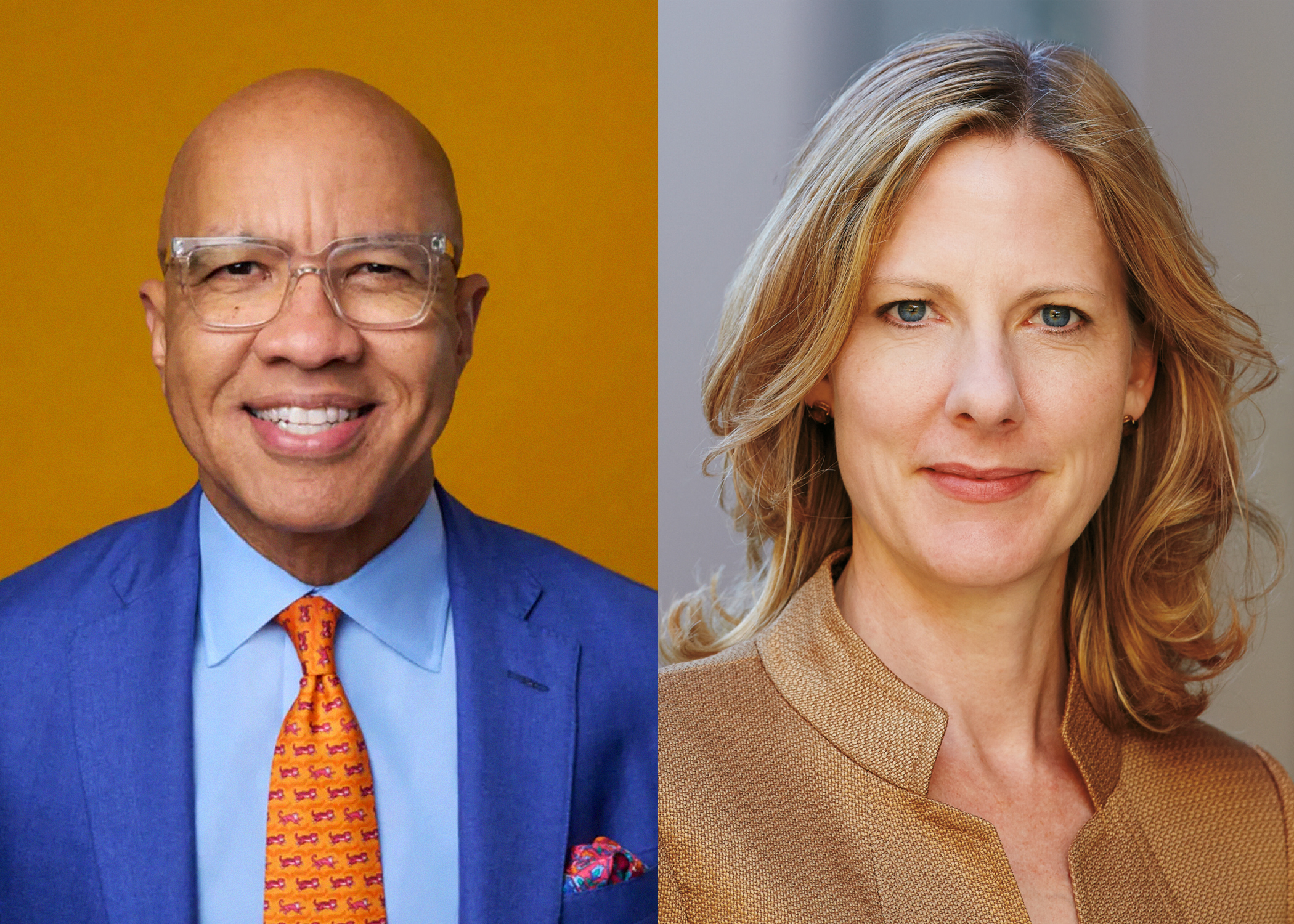
As the Ford Foundation prepared for the arrival of its new president, Heather Gerken, on November 3, it quietly pulled the plug on one of its signature efforts of the past decade: a multibillion-dollar plan to provide social justice nonprofits with flexible long-term grants.
Ford considered the Building Institutions and Networks, or BUILD, program one of its “key” efforts. It was started with a $1 billion, five-year commitment in 2015, and in 2021 the philanthropy committed another $1 billion, with the expectation that grants would run through 2026.
One of the reasons the program isn’t offering up another round of grants is to clear the deck for Gerken, giving her more latitude to shape the work of the $17.5 billion foundation, said Darren Walker in late October, during his last week as Ford’s president.
“As I look at transitioning and passing the baton to Heather, the opportunity is to create the space for her to begin to imagine what will come after BUILD,” he said.
The premise guiding BUILD was that social justice organizations need secure, long-term support so they can develop into sustainable institutions that can weather droughts in funding and periods of economic instability.
Philanthropy observers gave credit to Ford for making such a large financial commitment to strengthening social justice organizations and sticking with it for quite some time. But some wondered why the foundation was ending a program that had gotten sparkling results from several rounds of independent analyses and served as an example of the “trust-based” approach to philanthropy by making long-term, no-strings-attached grants.
BUILD scored a lot of “big wins” said Pia Infante, co-executive director of the Trust Based Philanthropy Project. The project is a network of foundation leaders that push for multiyear grants, easier grant applications, and other approaches that aim to level the power imbalance between grant makers and grantees.
Most noteworthy, Infante said, was that Ford regularly commissioned independent studies of the program, something that helped address a common complaint among trust-based philanthropy skeptics that the approach lacked rigor and that it was difficult to prove impact.
Ford’s approach also demonstrated that even large institutional grant makers can take on aspects of trust-based philanthropy. By doing so, Infante said, other grant makers became interested.
The end of BUILD “leaves a gap in the field where we still need to keep this conversation alive,” she said.
The end of BUILD also seemed a bit sudden, Infante said. The Trust Based Philanthropy Project wasn’t a full-fledged BUILD grantee. It received a grant under the BUILD program, but it was a one-year payment, split with another Ford program.
Infante said she heard about BUILD’s end through the grapevine and was never contacted by Ford until long after the fact.
Flipping the ‘Culture of No’
Before he left the foundation, Walker said BUILD was a success because it helped change the mindset throughout the entire organization. When he first took over as president in 2013, Walker said 20 percent of the foundation’s grants were for general operating support, with the remaining 80 percent earmarked for specific programs.
Now, he said, the numbers have been flipped. Grantees have the ability to decide how to use 80 percent of the grants the foundation makes each year, and a “significant” portion of them are multi-year grants, Walker said.
But getting there wasn’t easy.
When he first arrived, Walker said Ford was ruled by a “culture of no.” The finance department didn’t want to do five-year grants, Walker remembers, simply because that’s not the way they had done things, and program officers were cool to the idea of general operating support because they felt it robbed them of the oversight and control they could wield using program-related grants.
Asked why he put the brakes on BUILD, Walker suggested that its work had been completed and was a success. The core message of BUILD — which Walker insists remains “salient and vital” — is that building durable institutions is important to project democracy and promote justice.
“The foundation has been transformed in the way we do grant making as a result of BUILD,” he said.
Why Jettison BUILD Now?
During foundation leadership transitions, it is not uncommon for outgoing presidents to tie things off, leaving their successors the ability to exercise their prerogative about how to shape an institution, said Kris Putnam-Walkerly, a consultant who advises foundations.
But she questioned why Ford was jettisoning BUILD when by its own account it has been working well. The fact that the foundation has moved on may only add to the frustration that nonprofits have with foundations that pivot their priorities rather than sticking with a game plan.
Given the turbulent times in politics and culture, Putnam-Walkerly doesn’t know how much time Gerken will have to reflect and retool.
“Philanthropy is already slow enough,” she said, “and this just adds years of delay.”
Growing Slowly, Carefully, and Thoughtfully
Over its 11 years of existence, BUILD made grants to 574 organizations in 47 countries. Nonprofits in the program received five-year grants ranging from around $2 million to more than $10 million. In addition to the money, grantees received consulting support from consultants Ford provided and were brought together with other nonprofits in the group to share observations about their work.
To date, the foundation has spent $1.9 billion of the $2 billion it committed in total, with the remainder to be allocated to BUILD grantees over the next year. Ford would not comment on whether it would lay off employees working on the BUILD program.
All grantees will receive the funds promised under their grant agreements and will be eligible for a Life After BUILD Support (LABS) program, which helps grantees transition after their grant. That can result in a new grant from another Ford program or a “responsible” tie-off grant, according to a foundation spokesperson.
Rebecca Dixon, president of the National Employment Law Project, wasn’t surprised that BUILD was closing down. From the moment NELP received $12 million from its first BUILD grant -—a five-year total that far exceeded its annual budget — Ford program officers started prepping her for the day when the support would end.
A big problem before the grant, Dixon said, is that NELP suffered from a boom and bust grant cycle. Money would come in during low points in the economy, when NELP staff was in high demand to help secure unemployment benefits for workers. But in periods of high employment, interest in funding the organization receded, Dixon said.
Dixon used the grant to add staff, allowing her to stop “doing 17 things at once.” She added an HR team for the first time, developed a platform for managers in different departments to compare notes and coordinate plans, and added development and advocacy staff.
With the added muscle, Dixon said NELP and a broader coalition were able to successfully push to increase federal unemployment benefits during the pandemic. And in several states, the organization successfully worked to get certain tech workers covered by minimum pay rules.
With the consultants provided under the BUILD grant, Dixon and her staff received training in board development and brought in finance pros to conduct scenario planning tests to project future budgets.
With the grant, NELP entered a period of growth, with its assets rising from less than $14 million in 2016 to more than $26 million last year, thanks to grants from philanthropies other than Ford, including the Gates, Rockefeller, and Surdna foundations.
While Dixon was free to use the BUILD money as she liked, she credits the hands-on approach of the program when it came to technical expertise in making sure the nonprofit’s growth didn’t snowball uncontrollably. As a cautionary tale in unmanaged growth, she points to Benefits Data Trust, a nonprofit that received a total of $25 million from philanthropists Steve Ballmer and MacKenzie Scott from 2020 to 2022, only to go belly up two years later.“ We’ve grown slowly, carefully, and thoughtfully, and that’s on purpose,” she said.
Perhaps the most important thing about being a part of the BUILD program, Dixon said, was that it helped NELP tell its story better. Previously the nonprofit was known for an amalgam of support that it provided to many labor-related issues. including pushing for minimum wage increases and expanding unemployment benefits.
“What we were able to do with the support from Ford was to be able to tell the story of why NELP exists and why is it important,” Dixon said, pausing before voicing the refrain that adorns nearly every piece of the nonprofit’s literature: “We exist to build a good jobs economy.”
A New Leader’s Vision
It isn’t clear exactly how Gerken will make her mark on Ford. Coming from her most recent post as the dean of the Yale Law School, she is widely regarded as one of the foremost legal minds in the country. As the Ford Foundation and other progressive philanthropies are targeted by the White House and fears rise over the authoritarian tendencies of the Trump administration, that trait will surely be tested.
In her first statement since coming on board, Gerken signaled that under her leadership Ford would work to strengthen democracy and bolster the system of well-defined and consistently prosecuted laws.
“During the coming years, we will muster even more of our financial and human capital to fiercely protect the rule of law,” she said, adding “This is a moment for reflection, retooling, and renewal.”
(The Ford Foundation is a financial supporter of the Chronicle of Philanthropy.)