5 Years After the Hurricanes, Gulf Coast Grapples With Recovery

By NICOLE WALLACE
Features Editor
August 8, 2010 | Read Time: 6 minutes
As residents of the Gulf Coast plunge into another recovery, this time from the oil spill that has devastated the region’s economy and natural resources, they can count on help from a corps of nonprofit leaders and volunteers that has grown much bigger and stronger in the five years since Hurricanes Katrina and Rita slammed them with the challenge of a century.
More than $3-billion in philanthropic dollars flowed to the region in the year after the New Orleans levees broke, and the nation’s donors and grant makers have contributed several billion more dollars to the Gulf Coast recovery effort since then.
But now the bad economy and competing priorities have caused aid to slow to a trickle. Nonprofit leaders say that no matter how many hard-won victories they have achieved, the region needs another major philanthropic infusion.
“The nonprofit sector was a hero in the aftermath of Katrina,” says Bill Bynum, chief executive of Enterprise Corporation of the Delta/Hope Community Credit Union, in Jackson, Miss. “That said, we’ve still got a long way to go.”
Among the challenges still left: Many of New Orleans’s poorest residents who were dislocated by the storms have been unable to return because of a lack of housing and jobs.
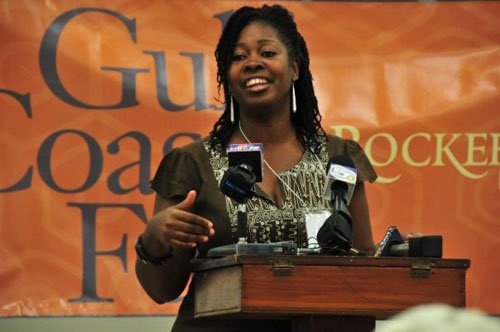
“Low-wage workers have not gotten the support they need to recover and come back to the region,” says LaTosha Brown, executive director of the Gulf Coast Fund for Community Renewal and Ecological Health. “I meet so many people who want to come back home and some who have come back home and are really, really struggling.”
And the people who still need help are those who require the costliest services from nonprofit groups: the elderly, the poor, and people with disabilities.
“They are the ones who are overlooked,” says Jessica Vermilyea, who oversees the Louisiana program for Lutheran Social Services Disaster Response. “The resources just aren’t there at this point to be able to quickly go out and say, ‘OK, we’ll fix your house.’”
Few Local Resources
It was not just donations that flowed into the region in the days after Katrina and Rita swept away lives and livelihoods but also plenty of free labor and expertise contributed by tens of thousands of volunteers and hundreds of charity and foundation veterans who wanted to bolster what everyone agrees was a relatively weak nonprofit arena.
Because the Gulf Coast has few big philanthropies to nurture the recovery, the region counted heavily on foundations from across the country for help. That kind of money got tougher to find when the nation’s economy soured and many grant makers lost big chunks of their endowments in the financial turmoil.
“Where New Orleans might have needed a second or third wave from the national philanthropic community, we’re not getting that due to the recession,” says Jim Kelly, co-president of Catholic Charities Archdiocese of New Orleans.
Doug Ahlers, a disaster-aid specialist at Harvard University who has been working to rebuild New Orleans’s Broadmoor neighborhood, says in many ways, it might have been better if donors had not rushed to give so much so fast, because now is the time when many Gulf Coast charities are in the best position to benefit from philanthropic largess.
During the first two to three years after the hurricanes, organizations struggled to find the best way to aid residents, says Mr. Ahlers.
Now, he says, “when you actually have very effective and efficient organizations, the money has basically dried up,” he says.
Signs of how much the Katrina experience did to strengthen nonprofit groups in the Gulf Coast abound.
When Vietnamese-speaking shrimpers lost their main source of income after the BP spill, a local nonprofit group—the Mississippi Center for Justice—knew just where to turn: to a Vietnamese-American group of lawyers in California who had volunteered their services to help homeowners resolve rebuilding disputes after Katrina and Rita.
In June the California volunteers returned to hold four bilingual clinics in Alabama, Mississippi, and Louisiana so the fishermen could learn how to fill out forms to seek aid from BP.
And when the scale of the social-service needs from the oil-rig explosion became clear, 27 New Orleans charities rallied in just three weeks to submit a $12-million proposal to BP for aid.
Some of those same groups had tried to work together to coordinate services for children in the city before Katrina struck. They met for three years and still couldn’t find a way to collaborate, says Keith H. Liederman, executive director of Kingsley House, in New Orleans, which provides services to children and families.
“We had things that we called partnerships” before the storm, says Mr. Liederman. “But our post-Katrina experience showed us that we were just playing at it before. We were going through the motions.”
Learning From Mistakes
The lessons of collaboration also affected many of the national organizations that came to New Orleans after the hurricanes.
The American Red Cross, which was widely criticized for its slow response in areas with large numbers of blacks and other minority-group members, says it has realized it needed a more consistent effort to reach out to local organizations to help deliver services after a disaster.
Joe Becker, senior vice president of disaster services at the Red Cross, says the charity realized “we had to shift it from a good idea that we did from time to time to how we do business in disasters.”
As an example of how the new approach has paid off, he says, the first kitchen the Red Cross opened to feed Louisiana residents after Hurricane Gustav in 2008 was staffed by members of the NAACP through a partnership arranged before the storm. “They might not know feeding,” he says, “but they know the community.”
‘Not About Katrina’
As nonprofit leaders look to what will happen in the next five years to the Gulf Coast region, some of them take heart in the fact that some grant makers are now using the region to test ideas about how to improve education and the availability of low-cost housing.
“This is not about Katrina anymore,” says Flozell Daniels Jr., chief executive of the Louisiana Disaster Recovery Foundation, in Baton Rouge. “This is about an opportunity to invest in a unique, world-class city and the region surrounding it in a way that allows you to test and model best practices that have application across the country.”
One example: The Ford Foundation, in New York, which made grants after Katrina to help the region rebuild homes that were destroyed, has made New Orleans one of the 10 to 12 cities it plans to support in a new $200-million effort to revive the nation’s urban areas and help their surrounding suburbs promote economic development.
While such efforts are helpful, some nonprofit leaders say it may not be wise to count on national foundations for a lot more money.
There’s a point at which it’s fair for grant makers to say “enough’s enough,” says John G. Davies, chief executive of the Baton Rouge Area Foundation. “In the case of the long-term recovery of the Gulf, I’m not sure that that time hasn’t come and gone,” he says.