
6 Projects That Make Data More Accessible Win $100,000 Each From Gates

By Sarah Frostenson
Contributor
November 20, 2013 | Read Time: 3 minutes
Six nonprofit projects that aim to combine multiple sets of data to help solve social problems have each won $100,000 grants from the Bill & Melinda Gates Foundation.
The new grants are part of Gates’s Grand Challenges Explorations program, now in its seventh year, which aims to spur innovative solutions to global challenges, says Victoria Vrana, a senior program officer at the foundation. Gates is working on the grants with Liquidnet for Good, the grant-making arm of the financial firm Liquidnet.
“With really complex problems, you need the kind of rich insight that comes from multiple data sets combined,” says Ms. Vrana. “But making different data sets talk to each other is pretty hard.”
Winning Projects
The winners of the grants were chosen from a pool of 400 applicants from 45 countries. The projects are experimental, but the hope is that they will be expanded and reproduced elsewhere.
The winners:
• Pushpa Aman Singh, who founded GuideStar India as an effort of the Civil Society Information Services India. GuideStar India is the most comprehensive database of India’s registered charities. It has profiles of more than 4,000 organizations, and Ms. Singh plans to expand that number and the types of information included.
• Development Initiatives, an international aid organization, to support its partnership with the Ugandan nonprofit Development Research and Training. Together, they are trying to help residents of two districts in Uganda identify a key problem the communities face and use existing data sets to build both online and offline tools to help tackle that challenge.
”Data needs to be as localized as possible,” says Simon Parrish, a program leader for Development Initiatives. “At the moment, much of the data is global or national, but we need to get it down to local levels to make it useful and meaningful.”
• H.V. Jagadish, at the University of Michigan, to develop a prototype that will merge sets of incompatible geographic data to make them comparable. Mr. Jagadish, a professor of electrical engineering and computer science, points to crime precincts and school districts as an example. “We want to understand the impact of education on crime, but the districts don’t quite overlap with the precincts,” he says. “This tool will address the lack of overlap.”
• Vijay Modi, at Columbia University, to work with government agencies and charities in Nigeria on a tool similar to Foursquare, the social network that allows people to share their location with friends. Mr. Modi, a mechanical-engineering professor and faculty member of the university’s Earth Institute, envisions a tool that will help people find important resources more easily.
“If someone wants to know where the health clinics or water pumps in their own vicinity are, they will be able to easily find them,” he says.
• Gisli Olafsson and his team at NetHope, a network of aid organizations. The group is building a tool to help humanitarian charities share their data more widely and in real time—potentially saving more lives during disasters.
“We want to create that glue or central thing that allows the data to flow between the different systems, so as soon as each organization begins to collect data about a situation it becomes available to everybody,” says Mr. Olafsson.
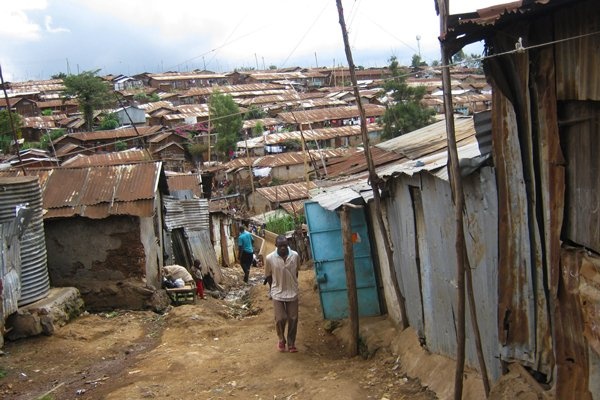
• Development Gateway, a nonprofit that assists international development charities with technology, and GroundTruth Initiative, a nonprofit that helps residents of underserved communities learn mapping and media skills. The two groups want to give people living in the slums of Nairobi, Kenya, more detailed information about local schools.
It’s very difficult to enroll slum children in the public schools in Kenya, says Erica Hagen, GroundTruth’s co-founder. She says the project aims to document everything it can about the informal “pop-up” schools poor children can attend in Nairobi’s slums, such as the number of students and teachers per school and parents’ opinions about those schools.
Says Ms. Hagen: “What we’d like to do is have an interactive system with mobile access that allows the residents themselves to query the data and make use of it.”




