A Ballet School Adjusts Its Position After Its Major Donor Bows Out

By Maria Di Mento
Senior Editor
December 4, 2011 | Read Time: 7 minutes
Washington
Robert E. Lucas was standing outside a Washington bar chatting with the pub’s proprietor last November when he mentioned that he had recently moved to town to take a job as a fund raiser for the Kirov Academy of Ballet of Washington, DC.
The bar owner gave him a look. “You mean you’re with that Moonie academy?” the man asked.
That was when Mr. Lucas fully understood his employer’s perception problem, which stems from the fact that until recently, almost all of the donations to start and run the academy came from the Korean businessman Sun Myung Moon, founder of the Unification Church, which some critics say is a religious cult. (Its followers are often referred to as Moonies.)
Yet that perception wasn’t the school’s biggest hurdle. Mr. Lucas had been hired to help avert a potential financial collapse when Mr. Moon could no longer afford to support the institution.
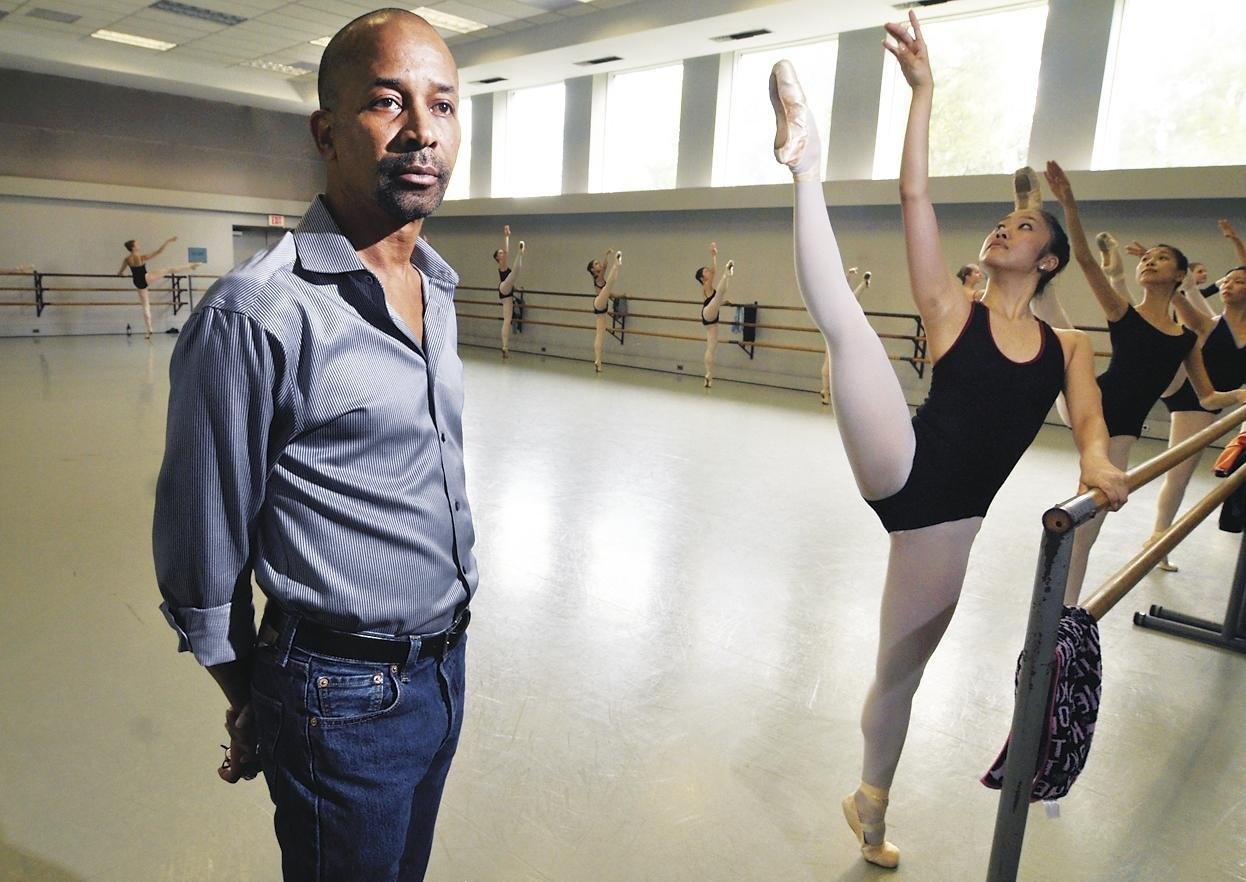
The 21-year-old academy—housed in a neoclassical brick building tucked away in a remote, run-down part of Washington—is famous in the ballet world for training its students in a traditional Russian system. The school, which has produced a stable of highly accomplished dancers working in top ballet companies throughout the world, not only trains dancers but also houses about 65 full-time boarding students annually, who attend the academy’s accredited junior-high and high-school academic program.
While still a work in progress, the Kirov Academy’s efforts to rebuild its finances and its image offer some lessons for other nonprofits coping with the tumult caused by the bad economy. The academy not only made cuts and reshaped the organization but also added programs, recruited trustees, and worked hard to show grant makers why it is different from its peers and worth the investment.
‘A Complete Cutoff’
The academy was established in 1990 through the Moon family’s Universal Ballet Foundation and was then called the Universal Ballet Academy. Three years later, the school’s founding artistic director, Oleg Vinogradov, who was simultaneously serving as artistic director of Russia’s legendary Kirov Ballet (now called Mariinsky Ballet), helped change the school’s name to the Kirov Academy.).
In the 1990s, Mr. Moon and his family, whose money comes from newspapers, real estate, and other investments, provided most of the academy’s $6-million annual budget. Although over the years that support diminished, academy officials said they were surprised last year when the Moon family announced it could no longer afford to provide its yearly $2-million cash infusion.
“We had no clue that we were going to get hit with a complete cutoff of the primary source of funding. That one definitely blindsided us,” says Michael Beard, executive director of the academy since 1995.
While the organization gets 60 percent of its budget from tuition, it relied on that $2-million for the rest of its budget. In past years, it operated with about $6-million, but now it has cut costs to $3.9-million. Along with the academy’s new artistic director, Martin Fredmann, who led Colorado Ballet for nearly two decades, Mr. Beard and Mr. Lucas have for the past year been working to shore up the academy’s future.
For Mr. Beard, this has meant cutting costs, including across-the-board salary cuts, eliminating the matches it provided to workers for retirement savings, and asking employees to pay more for their health-care plans. He also eliminated a handful of jobs and reduced some full-time workers to part-time.
In addition, the academy sliced the size of scholarships for students and hired a cheaper catering company to supply dining-hall services.
Lacking a Long-Term Plan
The organization’s survival strategy also involves finding new sources of revenue. The academy is now receiving extra tuition because it has added a preparatory program for students under 14, as well as a weekly evening ballet class for adults. Mr. Fredmann hopes the adults will do more than pay fees, that they will get excited about the school’s mission and start running fund-raising events and making donations.
The school has also earned money by selling some of its real-estate holdings, and it worked out a deal with a utility company that rents an antenna on the academy’s roof. (The school’s own rent is not among its leaders’ worries; another of Mr. Moon’s foundations owns the $9.5-million property and requires only a $100 annual payment.)
While those measures have staved off fiscal disaster for the moment, they do not make up for the $2-million loss.
“They should have developed a better-integrated long-term plan,” says Roudolf Kharatian, an instructor at the academy during the early 1990s and now artistic director of the National Ballet of Armenia.
“It was probably good help to start,” he says of Mr. Moon’s early support, “but for the long-term, they probably should have learned from the vast American experience of funding such institutions.”
Wooing Foundations
The academy’s leaders are focusing a lot of their energy on wooing grant makers. But approaching foundations remains a challenge: Since the school has never needed to raise money before, it is not well known among most foundations or in Washington generally.
The academy’s connections to Mr. Moon have also occasionally raised eyebrows. (Mr. Moon was imprisoned in the United States in 1982 on charges of tax evasion.) Among grant makers who had heard about the Moon association, some simply hung up on Mr. Lucas when he first called them.
“Questions were being asked by foundation folks as I’m trying to cultivate them over the phone and get grant guidelines, and I could sense the skepticism,” says Mr. Lucas. “It was palpable.”
Recognizing the problem, the school acknowledges Mr. Moon’s involvement in its history head-on, but says that the academy has now entered a new era.
“Look, I’ll be the first person to say when confronted, [the academy] was lucky enough to have somebody with the money, the desire, the love of ballet to make this place and to pay for it all these years,” says Mr. Fredmann.
Mr. Lucas has built fund-raising appeals around the academy’s annual winter and spring performances, introducing more local luminaries to the school’s work, by inviting City Council members, ambassadors from other countries based in Washington, and other prominent local residents to attend. The school also sends appeals to alumni, students’ parents, and businesses. He admits those efforts to attract individuals have not brought in much—less than $20,000 to date—yet he remains cautiously hopeful.
He has also sent grant proposals to more than 30 foundations, with hopes of raising about $500,000 from all sources before the end of 2011. Although two foundations have turned him down, he says others have shown an interest. The school recently landed a $12,750 grant from the D.C. Commission on the Arts and Humanities. One foundation grants administrator offered to shepherd him through her foundation’s request process, and another recently invited him to lunch. Most satisfying of all, no one hangs up on him anymore.
“I think they’re realizing that we’re not anyone’s enemy,” Mr. Lucas says. “We do tremendously good work here.”
Well-Connected Trustees
Expanding the Kirov’s Board of Directors—and boosting the role it plays in raising the school’s visibility—has become another important goal.
With little need to raise outside funds, board members (some of whom have ties to Mr. Moon) had become insular and were initially uncomfortable letting outsiders know about the school’s financial woes. But in relaying the skepticism he was hearing from grant makers, Mr. Lucas, with the help of Mr. Beard, convinced the trustees to become more open.
Strategic thinking in choosing new board members is key, says David G. Mallette, an associate at Management Consultants for the Arts, in Stamford Conn. “They should be exploring: What are the assets on the board, and what capabilities do new members bring?” he says.
And he cautions that the academy cannot afford to recruit trustees who are only interested in lending their name and not their time or fund-raising talents.
To that end, the academy appears to be on track. Three new board members have joined since the spring, rounding out the body to 10 people, and Mr. Lucas has his eye on five more candidates. The new trustees are enmeshed in arts networks and Washington society. Through them, the academy has received free promotion and fund-raising help, and it has connected with local schools and neighborhood groups to create arts-education programs.
Mr. Beard, Mr. Fredmann, and Mr. Lucas are determined to survive today’s tough economic climate but realize the academy’s goals will not be accomplished overnight.
“If you’re in a horrible storm, you have to make it to the shore where the sun is shining—and find a way, once you arrive there, to continue on,” says Mr. Fredmann. “You just can’t give up.”