A Big Year for Big Giving
Most-generous donors contributed $7.3-billion in 2007

By Maria Di Mento and nicole lewis
January 24, 2008 | Read Time: 15 minutes
Twenty donors made gifts of $100-million or more last year, just shy of the record of 21 such gifts made
|
ALSO SEE: DATABASE: America’s Top Donors TABLE: Top Donors of 2007: A Portrait TABLE: The Philanthropy 50: At a Glance LIST: Big Donors in 2007: Who Previously Made the List GRAPH: America’s Top Donors: How Much They Gave ARTICLE: 23 Donors Claimed Spots on Both ’06 and ’07 Most-Generous Lists ARTICLE: How The Chronicle Compiled the List of the Top Donors in the United States ARTICLE: Secret Admirers ARTICLE: Philanthropy From the Core ARTICLE: A Passion for Improving Kids’ Lives ARTICLE: Head of the Class ARTICLE: Social Studies ARTICLE: Philanthropy Retreats Help Married Couples Learn How to Balance Their Giving Priorities LIVE DISCUSSION: Join a live discussion with a donor from The Chronicle‘s Philanthropy 50 on January 22 at 12 noon, U.S. Eastern time. |
in 2006, according to The Chronicle’s annual ranking of the 50 most-generous Americans.
And despite a turbulent economy, fund raisers seeking donations of $10-million or more predict another strong year of big gifts in 2008.
“All our indicators are very positive,” says Jeffrey L. Newton, vice president for resource development at the Massachusetts Institute of Technology, in Cambridge. “I’m very optimistic we will continue this trend.”
Last year the university received pledges from two donors on the list, $100-million from the businessman David H. Koch (No. 14 on The Chronicle’s list) and $31-million from Irwin M. Jacobs, a telecommunications entrepreneur, and his wife, Joan (tied for No. 40).
Led by William Barron Hilton’s pledge of $1.2-billion to the Conrad N. Hilton Foundation, in Reno, Nev., donors on the list committed $7.4-billion to charity last year. In 2006, donors made gifts of $6.6-billion, not including Warren E. Buffett’s $43.5-billion in donations.
Donors had to give at least $38.4-million to be one of the top 50, a big leap from the minimum gift of $16.8-million in 2000, when The Chronicle first began compiling the list.
The median sum that donors on the list contributed was $74.7-million, meaning half gave more and half gave less. The figure represents a modest increase from the median of $71.8-million in 2006, which does not include Mr. Buffett’s gifts.
Charity ‘Cachet’
While the country’s richest man, Bill Gates, the chairman of the software giant Microsoft, in Redmond, Wash., did not announce any new megagifts last year, 28 donors on the list counted among the 400 wealthiest Americans, according to Forbes magazine’s most recent list.
“There is a lot of great social cachet about giving away a lot of money right now,” says Bruce W. Flessner, a Minneapolis consultant who works on billion-dollar fund-raising campaigns. “These are fortunes that are beyond anybody’s ability to give away or spend in any number of lifetimes.”
And the country’s rich are on track to become even richer, according to a 2007 study by the Boston Consulting Group, which projected an increase in wealth in North America from $36-trillion in 2006 to $45-trillion in 2011.
Such figures prompt some observers to suggest that contributions by America’s wealthy are paltry compared with their fortunes. Among Forbes’s roll of the 10 richest Americans, only the fourth and ninth wealthiest placed on the Chronicle’s Philanthropy 50.
Lawrence J. Ellison (No. 49 on The Chronicle’s list), who founded the Oracle Corporation, a computer-software company in Redwood Shores, Calif., is worth $26-billion, according to the magazine. He directed $39-million to the Ellison Medical Foundation, in Bethesda, Md., which supports medical research on topics that have trouble attracting money from other sources. Mr. Koch, executive vice president of Koch Industries, an oil and gas refinery in Wichita, Kan., whose fortune totals $17-billion, Forbes says, gave away $128-million last year, with most of his gift supporting a new cancer-research center at the Massachusetts Institute of Technology.
“It’s shocking how little the very rich give away,” says Gregg Easterbrook, an author and visiting fellow at the Brookings Institution, in Washington. “You look at people who could give away half of what they possess and still be billionaires but are hoarding for themselves — these are people society ought to view in contempt, and not feel grateful for the crumbs from the table.”
Living Donors Top the List
Two individuals who died last year, the hotel mogul Leona M. Helmsley and Helen R. Walton, widow of the Wal-Mart Stores founder Sam M. Walton, would probably have led the Philanthropy 50 with their bequests, but the donors’ multibillion-dollar estates have not yet been settled. As a result, 2007 was the first time in seven years that all 10 of the biggest donors were living.
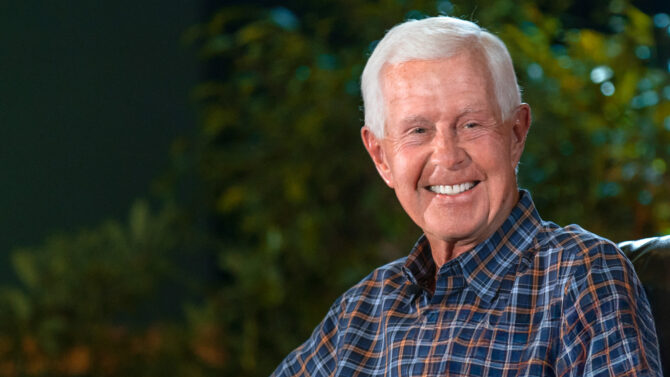
With only days to go in 2007, Mr. Hilton, 80, whose wealth comes from hotels and casinos, revealed plans to give $1.2-billion to the Conrad N. Hilton Foundation when he dies, which will push the value of the foundation and its affiliated charities to $4.3-billion. In addition, he said, the grant maker will receive the bulk of his remaining wealth, estimated at $1.1-billion.
The foundation, established by Mr. Hilton’s father in 1944, supports a range of programs, including preventing and treating blindness worldwide, improving water-sanitation systems in developing countries, curbing drug abuse among young people, providing early childhood education to disabled children, and helping the homeless.
“His intention has always been to follow in his father’s footsteps in leaving essentially all of his estate to the foundation,” says one of his sons, Steven M. Hilton, the foundation’s president. “He doesn’t believe it’s healthy to leave a lot of money to your children, because it robs them of the satisfaction of making it on their own.”
In accord with William Barron Hilton’s wishes, the foundation has no plans to significantly alter its mission or add new programs because of the pledge, says Steven Hilton.
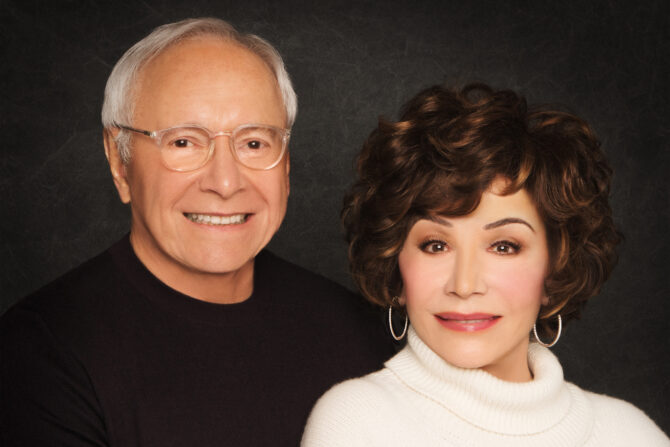
Jon M. Sr. and Karen H. Huntsman’s gift of $750-million gives them the second berth on the list. The bulk of the money, $700-million, will go through the Huntsman Foundation to support, among other causes, cancer research and treatment.
T. Denny Sanford (No. 3), chairman of First Premier Bank, Premier Bankcard, and the United National Corporation, all in Sioux Falls, S.D., pledged most of his gift, $400-million, to the Sanford Health Foundation to establish children’s health clinics in the United States and abroad and to support pediatric health-care and medical-research programs at home. Other major pledges include $30-million to the San Diego Consortium for Regenerative Medicine, $28-million to the Denny Sanford Foundation, in Scottsdale, Ariz., and $10-million to the Crazy Horse Memorial Foundation, in South Dakota.
George Soros (No. 4) made his donations to three grant-making foundations he created and helps manage: $238.6-million to the Open Society Institute, $230-million to the Soros Humanitarian Foundation, and $6-million to the Iris Foundation, all in New York. Mr. Soros, a Hungarian immigrant, is chairman of Soros Fund Management, in New York.
Rounding out the top five is John W. Kluge, who made a pledge of $400-million to Columbia University, in New York. The gift will pay for financial aid for undergraduate and graduate students. Mr. Kluge, who founded Metromedia, a New York entertainment company, graduated from the university in 1937.
College Contributions
Gifts to higher education by the top 50 donors far outpaced those to other types of charities in 2007.
Several universities received big commitments from donors who were not alumni. A neighbor introduced Robert C. and Jeannette Powell (tied for No. 17) to the University of the Pacific, in Stockton, Calif., where Ms. Powell now serves on the board. Last April the Powells, neither of whom graduated from the university, pledged $100-million to the institution, which will eventually pay for scholarships and campus-beautification projects.
Although Mr. Powell, who died in November, made the couple’s fortune in real estate, “both came from middle-income backgrounds,” says Donald V. DeRosa, the university’s president. “They saw an opportunity to help students who couldn’t afford to go to school.”
The donation is 10 times larger than any gift the university had previously received. Mr. DeRosa says he asked to hear the news twice from Mr. Powell. “It’s exceedingly unusual to have a gift like this not come from an alumnus,” says Mr. DeRosa.
Oral Roberts University, in Tulsa, Okla., also received a megagift from donors who were not alumni but who have strong ideas about how the university should be managed.
The Green family (No. 27) donated $70-million to the beleaguered university to shore up its finances after the failure of a medical complex and the alleged misspending by its former president, Richard Roberts. (Mr. Roberts has denied wrongdoing.)
The family, which owns several businesses including Hobby Lobby, a chain of arts-and-crafts stores and related businesses, based in Oklahoma City, gave $8-million immediately but made the bulk of the gift conditional upon the university’s meeting several criteria, including revising its board structure. Last week the university accepted the family’s proposal, and the Green family paid the remainder of the gift.
Mart D. Green, the founder of Mardel Christian and Educational Supply, an Oklahoma City company that sells Christian books, materials, and educational supplies, will serve as chairman of the board and have one vote.
Winners and Losers
Scholarships and health care proved popular causes among big donors, while arts and environmental groups, as well as community foundations, were largely shut out last year.
A fund raiser’s tenacity helped win the largest single pledge for scholarships to Catholic schools in New York.
For years Robert W. Wilson (tied for No. 46), a retired hedge-fund manager, had made modest gifts through the mail to the Inner-City Scholarship Fund, an organization that raises money to help pay for scholarships at schools run by the Archdiocese of New York, which serve many poor children.
Two years ago, Susan M. George, the fund’s executive director, began sending Mr. Wilson information about the schools and invitations to meet Edward Cardinal Egan, the Archbishop of New York.
In a letter last February, Ms. George told Mr. Wilson the schools had room for 8,000 students but no money to pay for tuition, which averages $3,000 a year. She requested a gift of $100,000. Without meeting Ms. George or Cardinal Egan, Mr. Wilson, a professed atheist, committed $22.5-million in April to cover scholarships for 3,000 students who transferred from public schools.
“He feels as if public schools are failing and we need to educate children,” says Ms. George, adding that the graduation rate in the archdiocese’s schools is 98 percent. “He never even questioned me about the religion taught in the schools.” Mr. Wilson, who has been on the Chronicle’s list three times in the past, has a history of making large gifts, mostly to cultural and environmental groups.
While a dozen other donors on the list also supported scholarships, not one directed a megagift toward the hot-button issue of global warming. The same fact won’t be true on next year’s list, predicts David Yarnold, executive vice president at Environmental Defense, a charity that works on the issue, in New York.
“It’s safe to say that pot is boiling,” he says. “The issue really got people’s attention in the last couple of years and has taken some time to percolate up to the biggest givers.”
The Buffett Effect
Two donors on the Philanthropy 50 list credit Mr. Buffett’s historic pledge in 2006 with prompting their own commitments.
One gift, from Richard C. and Melanie F. Lundquist (No. 33), will provide $50-million to improve public schools in Los Angeles. Mr. Lundquist is president of Continental Development Corporation, a real-estate company in El Segundo, Calif. The other, from Barbara Dodd Anderson (No. 13), directed $128.5-million to the George School, a Quaker boarding and day school in Newtown, Pa.
Ms. Anderson’s father, David Dodd, taught Mr. Buffett at Columbia University, in New York, and was an early investor in his company, Berkshire Hathaway. Ms. Anderson’s wealth comes from stock in the company.
“Originally my plan was to leave money when I die, but we changed that so it is now available for me to see how well it’s working,” says Ms. Anderson, a 1950 alumna of the school who still maintains close friendships with several classmates. “We said, ‘OK, Warren is doing it in his lifetime.’”
However, many groups on the list have been promised big gifts but won’t receive the money until the donors die. Dale E. and Sarah Ann Fowler (No. 29) pledged $60-million to Gordon College, in Wenham, Mass., from their estate. The money, derived from Mr. Fowler’s real-estate fortune, is tagged for the college’s endowment, and a large portion will likely help pay for scholarships.
“If we could have access to it today, that would be great,” says R. Judson Carlberg, the college’s president. “Any president who didn’t wish that wouldn’t be a good president.”
Three donors made gifts to nonprofit groups that once employed them:
- Ann Lurie (No. 15) pledged $100-million to Children’s Memorial Hospital, in Chicago, where she worked as a critical-care nurse 35 years ago. Ms. Lurie, who is president of Lurie Investments, in Chicago, and the mother of six children, says her link to the hospital was cemented after the care several of her children received. “I had at least one child whom I felt had his life saved there, so that certainly ties you to an allegiance with the place,” she says.
- Dennis and Joan Gillings (tied for No. 37) pledged $50-million to the School of Public Health at the University of North Carolina at Chapel Hill, which will be renamed for the couple. Mr. Gillings, chairman of the Quintiles Transnational Corporation, in Research Triangle Park, N.C., a research-consulting firm for heath-care and pharmaceutical companies, was previously a professor of biostatistics at the university; his wife worked as a staff member there as well.
- The Jacobses pledged $31-million to the Massachusetts Institute of Technology to provide graduate fellowships in electrical engineering and computer science. Mr. Jacobs, who co-founded Qualcomm, a wireless-communications company in San Diego, received a master’s and doctoral degree from the university and served as an associate and assistant professor of electrical engineering from 1959 to 1966.
However, not all megagifts in 2007 benefited large nonprofit organizations with track records of raising big dollars. Lillian Garner (No. 50) bequeathed $38.4-million to the Jewish Home and Care Center Foundation, in Milwaukee, to support medical care for poor residents without family members.
Mrs. Garner’s family founded and ran the Northwestern Weiss Woodwork Corporation, in Milwaukee, and the Phoenix Furniture Corporation, in Sheboygan, Wis. Ms. Garner did not want any formal recognition for her donation, but she did wish for some of her personal effects to benefit the charity directly, says Nita L. Corre, the group’s president. Ms. Corre plans to use Ms. Garner’s sterlingsilver tea set to anchor a monthly Lillian Garner tea party for residents.
“We hope her quiet generosity will be the standard of how we will use her money,” says Ms. Corre. “This is something that doesn’t happen very often in a place like ours.”
Candie Jones and Sam Kean contributed to this article.
|
THE PHILANTHROPY 50: AT A GLANCE
|
|||||||||||||||||||||||||||||||||||||||||||||||||||||||||||||||||||||||||||||||||||||||||||||||||||||||||||||||||||||||||||||||||||||||||||||||||||||||||||||||||||||||||||||||||||||||||||||||||||||||||||||||||||||||||||||||||||||||||||||||||||||||||||||||||||||||||||||||||||||||||||||||||||||||||||||||||||||||||||||||||||||||||||||||||||||||||||||||||||||||||||||||||||||||||||||||||||||||||||||||||||||||||||||||||||||||||||||||||||||||||||||||||||||||||||||||||||||||||||||||||||||||||||||||||||||||||||||||||||||||||||||||||||||||||||||||||||||||||||||||||||||||||||||||||||||||||||||||||||||||||||||||||||||||||||||||||||||||||||||||||||||||||||||||||||||||||||||||||||||||||||||||||||||||||||||||||||||||||||||||||||||||||||||||||||||||||||||||||||||||||||||||||||||||||||||||||||||||||||||||||||||||||||||||||||||||||||||||||||||||||||||||||||||||||||||||||||||||||||||||||||||||||||||||||||||||||||||||||||||||||||||||||||||||||||||||||||||||||||||||||||||||||||||||||||||||||||||||||||||||
|
TOP DONORS OF 2007: A PORTRAIT
|
|
BIG DONORS IN 2007: WHO PREVIOUSLY MADE THE LIST
|
|||||||||||||||||||||||||||||||||||||||||||||||||||||||||||||||||||||||||||||||||||||||||||||||||||||||||||||||||||||||||||||||||||||||||||||||||||||||||||||||||||||||||||||||||||||||||||||||||||||||||||||||||||||||||||||||||||||||||||||||||||||||||||||||||||||||||||||||||||||||||||||||||||||||||||||||||||||||||||||||||||||||||||||||||||||||||||||||||||||||||||||||||||||||||||||||||||||||||||||||||||||||||||||||||||||||||||||||||||||||||||||||||||||||||||||||||||||||||||||||||||||||||||||||||||||||||||||||||||||||||||||||||||||||||||||||||||||||||||||||||||||||||||||||||||||||||||||||||||||||||||||||||||||||||||||||||||||||||||||||||||||||||||||||||||||||||||||||||||||||||||||||||||||||||||||||||||||||||||||||||||||||||||||||||||||||||||||||||||||||||||||||||||||||||||||||||||||||||||||||||||||||||||||||||||||||||||||||||||||||||||||||||||||||||||||||||||||||||||||||||||||||||||||||||||||||||||||||||||||||||||||||||||||||||||||||||||||||||||||||||||||||||||||||||||||||||||||||||||||||
|
AMERICA’S TOP DONORS: HOW MUCH THEY GAVE
|
||||||||||||||||||||||||||||||||||||||||||||||||||||||||||||||||||||||||||||||||||||||||||||||||||||||||||||||||||||||||||||||||||||||||||||||||||||||||||||||||||||||||||||||||||||||||||||||||||||||||||||||||||||||||||||||||||||||||||||||||||||||||||||||||||||||||||||||||||||||||||||||||||||||||||||||||||||||||||||||||||||||||||||||||||||||||||||||||||||||||||||||||||||||||||||||||||||||||||||||||||||||||||||||||||||||||||||||||||||