
A Boston Nonprofit Gives Former Gang Members a Second Chance

By Ariella Phillips
Contributor
May 1, 2018 | Read Time: 2 minutes
Danny Austin dropped out of school at age 16. Growing up in Boston’s Dorchester neighborhood, he’d heard of College Bound Dorchester, a nonprofit that helps former gang members get an education. “It was like the corner store you walk by, but you never notice it,” he says.
After Austin returned from a stint in prison, a friend recommended he check out the organization’s Boston Uncornered program. He did — and earned his high-school diploma at age 30.
“If they didn’t help me get a GED, I’d probably still be running around,” he says.
Boston Uncornered provides $400-a-week stipends to former gang members so they can focus on their education. “We pay them to have the opportunity to make good choices,” says Mark Culliton, founder and CEO of College Bound Dorchester. “If we just invested in and believed in folks like Danny, they show you that they can and they will and they do if we set the expectations and provide them the support that they deserve.”
The organization estimates that only about 1 percent of gang-involved individuals across the country go to college.
Since 2016, the program has provided stipends to 66 people and has seen 67 percent of its students go on to some form of higher education. Many are now working as HVAC technicians, as mechanics, or in biotechnology.
College Bound also provides mentoring, mental-health support, anger-management classes, and mock interviews for when the students are ready to enter the work force.
After the students complete the program, the goal is for them to mentor new students.
“So much of what we do at College Bound is just uncornering that joy, that love that is inside these guys most people don’t see,” Culliton says.
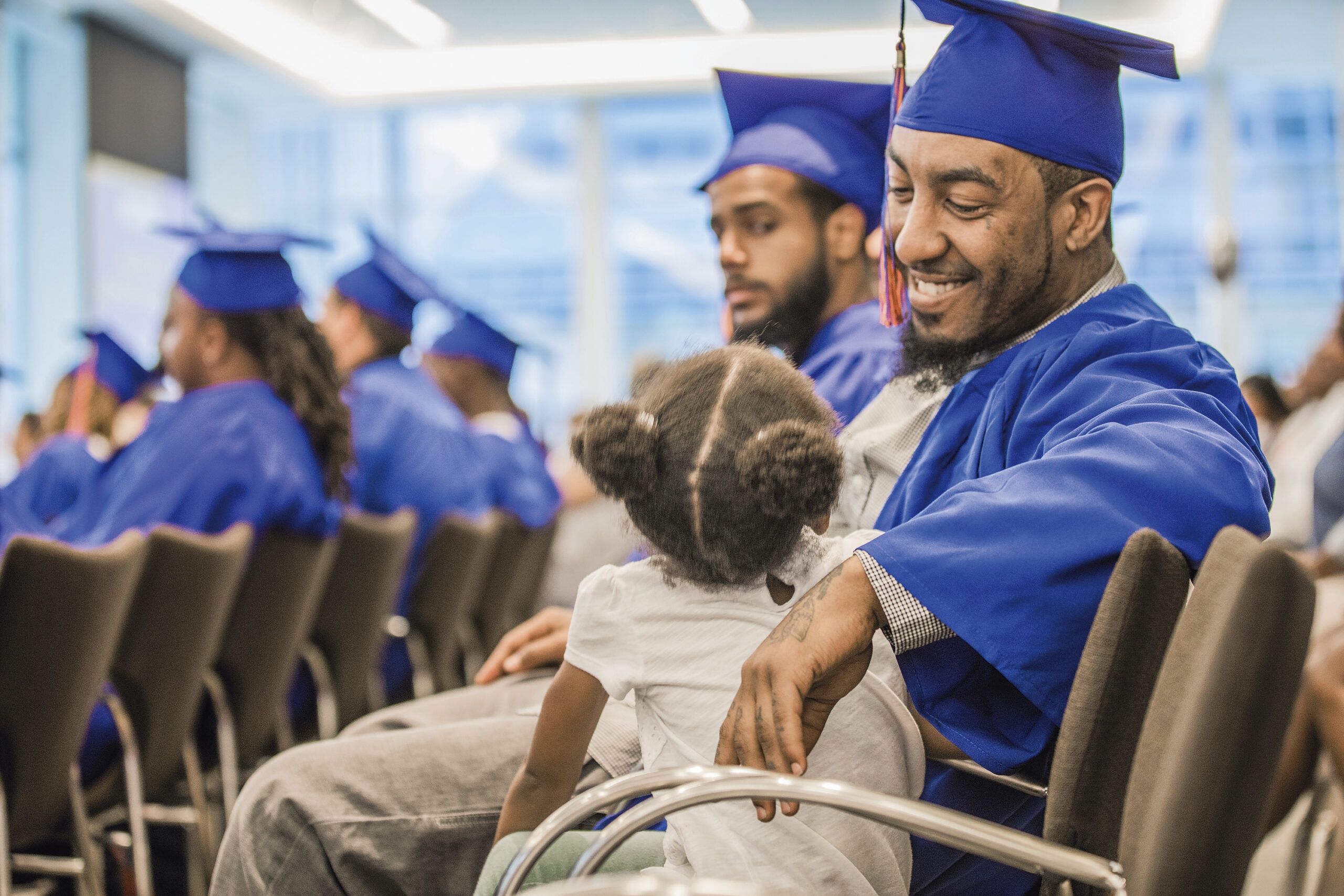
Austin will be starting at Bunker Hill Community College this year. At a ceremony celebrating students starting college, he sat with the daughter of one of his classmates, who often comes to class with her mom.
“Me being who I am, I just click with the kids,” he says. “We was just having fun.”







