
A Car Company and a Conservation Group Groom Innovative Leaders

By Jennifer C. Berkshire
Contributor
May 15, 2011 | Read Time: 5 minutes
Two years ago Molly Tsongas had an idea about how to get her twenty-something peers more involved in environmental activism. Her concept was simple: Find 100 people to spend 100 days calling attention to endangered species in any way they liked.
The 29-year-old San Francisco resident even settled on a prize for the individuals whose campaigns fared best—free tattoos of the species of their choice.
But while Ms. Tsongas was long on inspiration and creativity, she lacked the resources and skills to get what she called “Tatzoo” off the ground. So she applied for an 18-month leadership-training program run by the charity Audubon and the automaker Toyota and was selected as one of 40 participants nationwide.
“At the time, it seemed like such a long shot, but they took a chance on me,” she says.
Ms. Tsongas received her training from TogetherGreen, a program created by Toyota and Audubon, the century-old conservation group with headquarters in New York, to support environmental projects as well as to train and develop the next generation of environmental leaders. A $20-million grant—the largest ever made by Toyota or received by Audubon—will support the program through 2013.
The automaker and the charity came to believe that an investment in conservation leadership now would improve environmental results in the future, partly by helping to mobilize their personal networks for the cause, according to Brenda Timm, a spokeswoman for Audubon.
‘A Shot in the Arm’
Even after the two organizations had agreed to develop a leadership program, however, they spent more than two years working on the effort that would become TogetherGreen. Ultimately, they decided the goal would be to spur “innovation, diversity, and volunteerism,” according to Patricia Pineda, Toyota’s group vice president for national philanthropy.
At the heart of TogetherGreen is the conservation fellows program that Ms. Tsongas participated in. (TogetherGreen also includes a grant program that supports innovative conservation efforts, with $3.5-million awarded since 2008 to 130 projects, and a volunteerism program aimed at getting Toyota employees to lend their help on conservation projects nationwide.) Every year 40 fellows are chosen by a national advisory board on the basis of their leadership potential as well as their commitment to inspiring and engaging diverse audiences. Applicants include emerging leaders in addition to what Judy Braus, Audubon’s senior vice president for education and centers, terms proven leaders who “need a shot in the arm.”
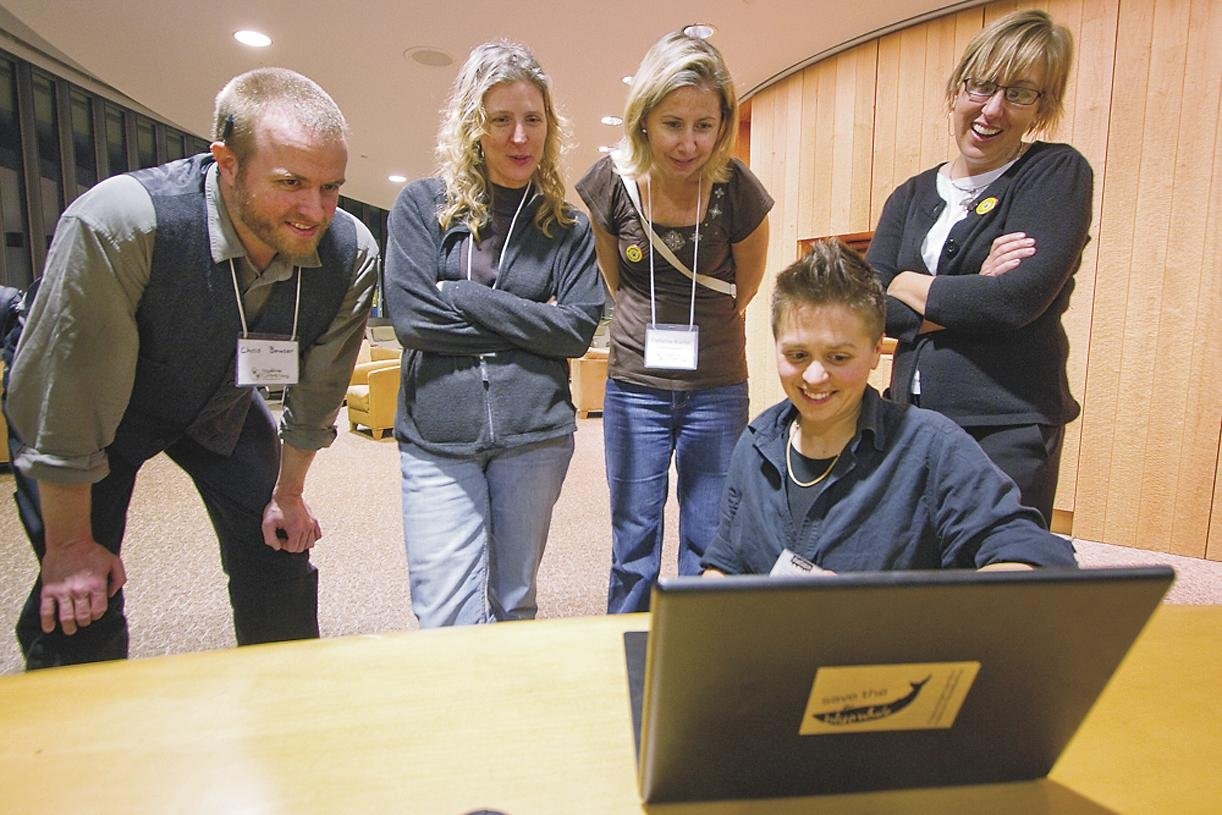
Fellows receive a $10,000 stipend and attend a weeklong boot camp, where they receive extensive training in such skills as conservation planning, fund raising, and strategic communications.
In exchange for the support, fellows must commit to doing a conservation-action project that will reach at least 160 people. One fellow, Lisa Botero, recruited 200 Miami Beach, Fla., residents to help with sand-dune restoration; another fellow, Ralph Rollins, worked with local volunteers to restore a section of the Mississippi River waterfront in St. Louis to its former condition based on historical records and scientific research. “The training the fellows receive helps them to be better conservation professionals,” says Ms. Braus.
She notes that accountability is also a major component of the fellowship program. The fellows return to report on their projects a year into the grant, and an external evaluation team made up of scholars from Stanford University, Clemson University, and Virginia Tech assesses the projects’ effectiveness. What’s more important than the results, says Ms. Braus, is making fellows realize the need to measure those results in the first place.
A ‘Cuddle Mob’
Molly Tsongas used her $10,000 fellowship to turn her Tatzoo concept into a reality.
After returning from the 2009 TogetherGreen training, she invested in a Web site, recruited local tattoo artists to donate their services, and started a contest in which people submitted unusual ideas for promoting species conservation via Facebook.
“The results were just awesome,” says Ms. Tsongas, who works as an account manager and director of social media at the San Francisco marketing firm Citizen Group.
One winner: a woman who brewed her own beer in honor of the spotted owl, then threw a “tasting party” to celebrate the beer’s debut. Each of the approximately 70 attendees paid $20, to benefit the Save the Redwoods League (such forests are the owl’s natural habitat), and heard a presentation by the brewer on the birds and their plight.
Ms. Tsongas’s own Tatzoo project benefited Steller sea lions, which are noted for their tendency to cuddle together for warmth. In November, she organized a “cuddle mob” in San Francisco’s Dolores Park, with attendees snuggling up together on the grass to raise awareness. Donations and proceeds from the sale of sea lion-shaped cookies and T-shirts that read, “I’m a Steller Cuddler” went to the Marine Mammal Center.
TogetherGreen has not only helped Ms. Tsongas make the Tatzoo project a success, she says, but it has also changed the course of her career—even her life.
“I’m hooked. This program gave me a way to act on my passions and feel more hopeful about my ability to make an impact,” says Ms. Tsongas, who plans to start a boot camp of her own to teach young people to shoot video on environmental topics.
Toyota’s Ms. Pineda says that she expects to hear plenty more from the TogetherGreen fellows in the coming years.
“These are all going to be key leaders in the future—they are really going to shape the future of the environmental movement,” she says.
And while Ms. Pineda is convinced that the program has met the goals that Toyota and Audubon established in their two-year-long planning process, she says that the program has also been successful in another way: “This alliance has really demonstrated the power of the corporate-nonprofit partnership.”




