
A Charity Grants Wishes to Brighten People’s Twilight Years

By Caroline Bermudez
Contributor
May 2, 2010 | Read Time: 3 minutes
The power of wishes is something Cass Forkin never underestimates.
She recalls the time a 75-year-old double amputee who was on the verge of dying placed a request to see a Great Dane. He had owned two of the majestic dogs, and so strong was his desire to be around one, he held on just until his wish became a reality.
Ms. Forkin is the founder and executive director of the Twilight Wish Foundation, which grants requests to low-income elderly people who live in nursing homes. Requests are made through word of mouth, the charity’s Web site, and people who learn about the group through news-media coverage. To date, the charity has fulfilled 1,275 wishes in 35 states.
Twilight Wish was created through a simple gesture. In 2003 Ms. Forkin, a former health-care executive, was at a diner in Bucks County, Pa., with her daughter and saw a trio of elderly women counting out change to pay for a $4.99 buffet lunch. Ms. Forkin decided to give $20 to the waitress to pay their bill. Little did she know that this was a life-changing decision. Upon hearing their words of gratitude, Ms. Forkin had an epiphany that led her to leave her lucrative career and instead devote herself to making wishes come true for older adults.
The wishes vary wildly. Some are basic, such as the need for a new hearing aid. Others are sentimental.
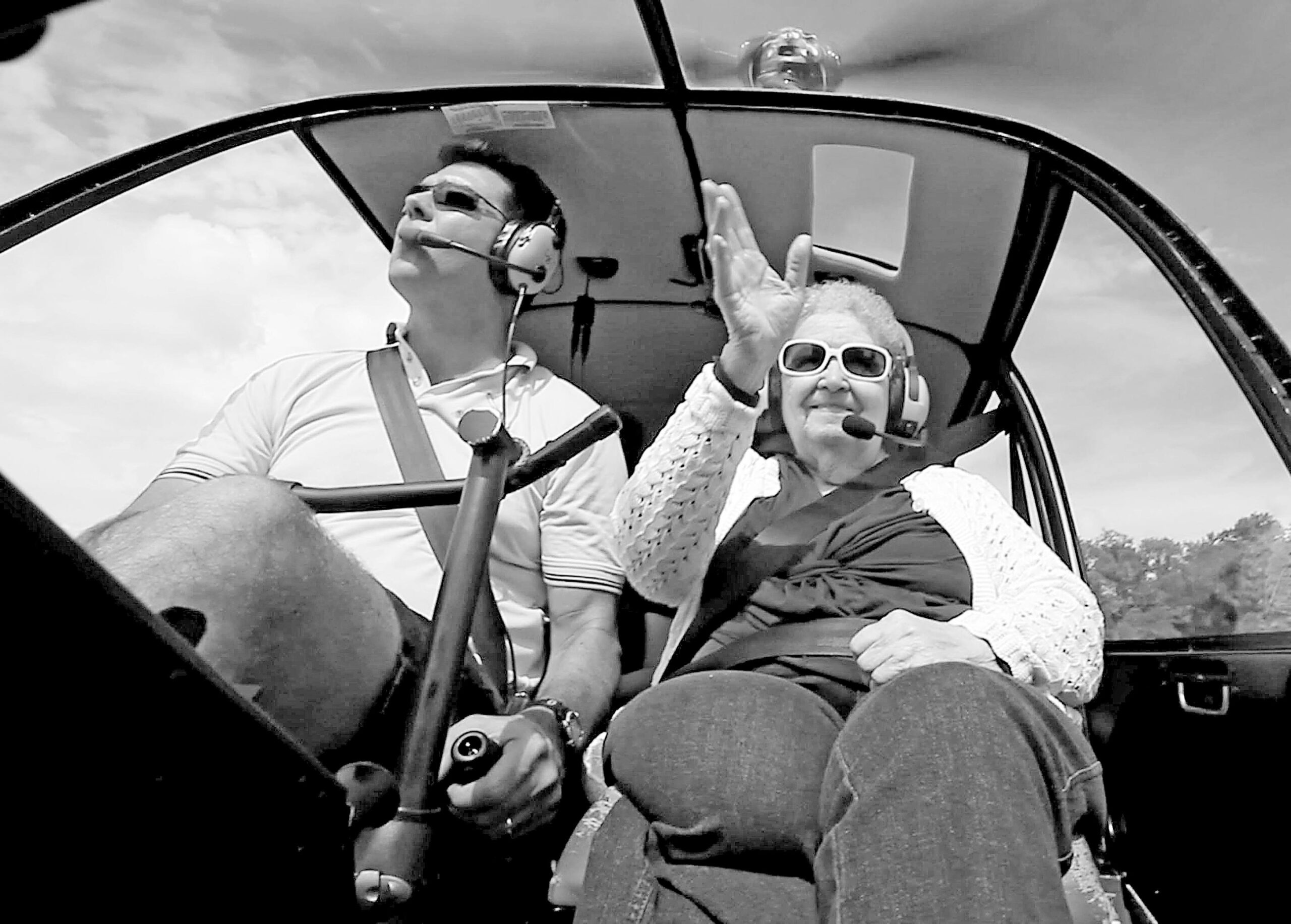
And some lean toward the adventurous: Here, a woman with one leg, who always wanted to fly, fulfills her dream by taking a helicopter ride.
Like many other nonprofit organizations, donations to Twilight Wish have dropped due to the economic downturn, and Ms. Forkin has drawn a salary from the charity only intermittently over the past three years. Its budget last year was $437,972, and this year, Twilight Wish anticipates spending $370,000. Cash gifts from individuals provide nearly 12 percent of the charity’s donations, corporate cash donations account for 10 percent, and grants 19.5 percent. The rest of its budget comes from donations of productions and services.
The organization currently has chapters in 13 states and hopes to expand nationwide as well as internationally.
Ms. Forkin seeks to reach a point at which Twilight Wish will become as well known as the Make-A-Wish Foundation, which bestows wishes on young people who are dying.
The story that makes Ms. Forkin cry involves Mac, an 82-year-old man born and bred in Philadelphia who had a hardscrabble life. He was raised in an orphanage and was never shown much attention until someone introduced him to fishing as a teenager, which became a lifetime passion. A calamitous series of events—a bad fall, a botched surgery, the loss of all his possessions to his landlord, and then his entry into a nursing home—led a neighbor to submit a request to Twilight Wish on Mac’s behalf.
The wish was an expedition in which Mac taught a boat full of disadvantaged children to fish, evoking the cherished memory Mac had as a teenager himself.
Stories such as these allow Ms. Forkin to succinctly describe not only Twilight Wish’s mission but also what she would want for all people: “What I see us doing is making our world a nicer place to age, one wish at a time.”




