July 24, 2011 | Read Time: 2 minutes
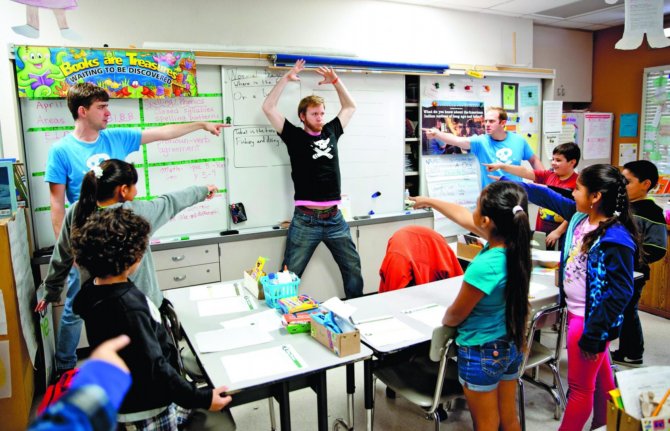
The words “summer school” may conjure images of students trapped in a classroom memorizing math formulas and missing out on sunshine. Not so for the 1,800 children who participate in the education programs run by affiliates of Horizons National, in Norwalk, Conn. Such kids spend their summers on activities such as building robots, making movies, and learning to swim.
The students, who are in kindergarten through eighth grade and come from low-income families, are hand-picked by officials at their public schools to participate in six-week programs in which small classes, creative teaching approaches, and fun extracurricular activities help foster a love of learning while increasing kids’ abilities in reading and math.
Summer learning is an area of growing interest among educators and grant makers. A study by researchers at the Johns Hopkins University, in Baltimore, found that summer takes its toll on education, with poor students particularly at risk for falling behind in grade-level skills. Some summer programs can help close the learning gap between poor and wealthier students, according to a new study commissioned by the Wallace Foundation, in New York, which this year made a two-year grant of $950,000 to Horizons National.
Horizons has been working to help kids keep on learning during the summer. since it began back in 1964 at New Canaan Country School, in Conn. The program now operates in 20 cities across the country, with a goal to expand to 45 locations in the next five years.
Most Horizons programs take place at private schools, while the students come from public schools. Participants tend to achieve learning gains of three to four months in reading and math, according to two assessment tools. Horizons reports that 80 percent of students return to the program from one summer to the next.
Horizons National has a budget of $1.8-million, about $800,000 of which is passed to affiliates that operate in each city; funds are raised from foundations, corporations, and individuals. The local programs raise money for operating costs, which range from $1,500 to $2,000 annually per student.
While the affiliates have leeway in teaching methods, they agree to several rules, including providing some year-round programs to keep students and their families involved—and teaching kids to swim.
“Once students overcome their fear of swimming, it becomes the favorite thing they do,” says Lorna Smith, Horizons National’s executive director. “That spills over into their willingness to take bigger risks in the classroom and to accomplish something they didn’t think they could.”