A Criminal-Justice Group Assesses Which Programs Translate Online — and Which Don’t

By Maria Di Mento
Senior Editor
July 2, 2020 | Read Time: 4 minutes
Like thousands of nonprofits across the country, Young New Yorkers had to race to move its programs online at the beginning of the pandemic. After nearly three months, the criminal-justice group is starting to determine which changes it plans to keep for the long term — and what parts of its programs work best in person.
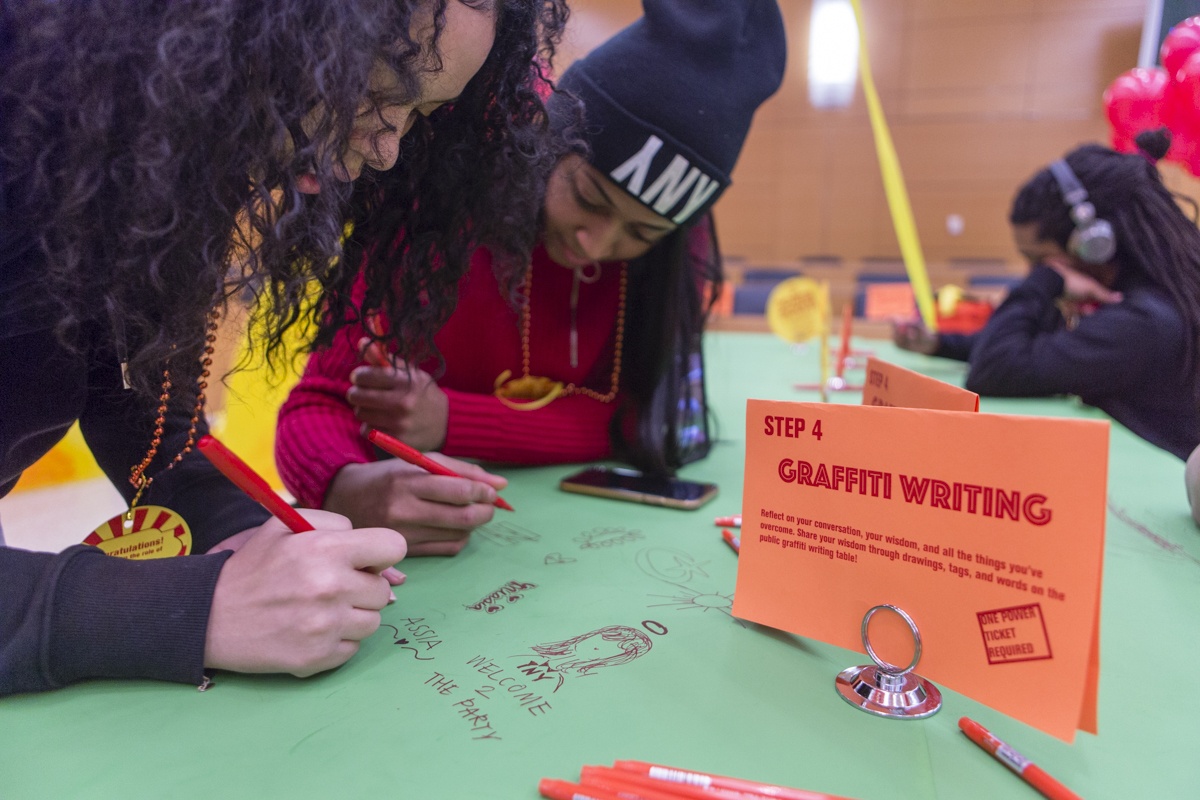
Young New Yorkers uses art therapy, counseling, and other programs to help teens and young adults who have had run-ins with the law. The organization’s programs help young people who are charged and prosecuted as adults avoid jail time and a criminal record.
Before Covid-19, participants and leaders met in a variety of spaces in Brooklyn and Manhattan. When shelter-in-place rules went into effect in mid-March, the group’s founder, Rachel Barnard, and her small team spent a hectic week moving as many programs online as possible.
There were a lot of questions to work through. Which video-conferencing platforms would be easiest for most participants? How could the organization reduce the length of some programs to accommodate participants whose attention spans were shorter because of the stress of the pandemic? Which participants didn’t have internet access or a computer or a smart phone? Without art supplies and space to meet, how could the organization redesign programs to focus on other types of creativity?
The group didn’t have to spend too much additional money to make necessary changes. Luckily, the organization had already invested in a video-conferencing subscription in February when it decided to experiment in its fundraising and hold a virtual meeting with a group of potential donors.
Barnard and her colleagues also had to rework administrative logistics.
“We quickly allocated who was going to manage referrals, who was going to manage outreach, what we would need to say in outreach calls and text messages to the kids, how we could support them turning up virtually in the same way that we support them turning up physically,” says Barnard. “We did all of it that week, and on Monday we were running virtual programs.”
The charity also started a new grief group that lets participants, many of whom were already struggling with trauma, talk about the stress they feel because of the public-health crisis, and how it is affecting them and in some case their families (some of the youths have had parents or other close relatives hospitalized with Covid-19). Barnard and her team hold the group on Monday afternoons both for current participants and some of the program’s recent graduates.
“Some kids are just really happy to be there because they’re bored and restless, and they want to be with their friends on a regular basis in a supportive environment, which is sometimes missing for them,” Barnard says. “And then some kids are there because they’re reaching out and trying to find a way to process some really hard things, whether it’s domestic violence or losing parents or things like that.”
There have been real benefits to working remotely. Because Barnard and her team don’t have to deal with physical logistics, they have been able to expand the nonprofit’s family-court program throughout the city. Barnard says more of the group’s programs are likely to follow. Digital programming is also more accessible for participants who have a hard time traveling to face-to-face sessions.
Magic of Being Together
But not everything works as well in the virtual world. A big part of the group’s court-mandated program are the days when participants present their artwork to prosecutors, social workers, and a judge in a courtroom. They talk about their art, why it matters to them, and what they have learned. That can’t be done well — or with as much resonance — over a video-conferencing app, Barnard says.
Now, her team emails participants’ projects to the professionals involved in their cases. That doesn’t hold the same power as the courtroom presentations, she says, but it’s what must be done during the crisis.
When everyone meets in person, the young people get the opportunity to shine, Barnard says.
“The public and the criminal-legal professionals often come with the really good intention of supporting and giving advice to the young people, but what happens is the young people get to speak from the judge’s bench and the judge is in the audience,” she says. “The adults become very present to the deep wisdom that the young people have and their extraordinary capacity to be a contributor and leader, and it just creates this radical shift in perception and relatedness.”
Barnard says the virtual grief group and some aspects of the other programs may remain digital after social distancing ends. But she says nothing can replace the personal and collaborative nature of being together.
“It’s just so fundamental to humanity and all cultures that people gather together and that communities gather together for dinners and celebrations and funerals and all of those things,” Barnard says. “It’s fundamental to being human, so we will absolutely, once we can, bring back in-person programming.”