
A Delaware Fund Helps State’s Schools With Plenty of ‘Hope, Help, and Heat’

By SUZANNE PERRY
Contributor
April 18, 2010 | Read Time: 6 minutes
Delaware scored a major coup last month when it was one of only two states to win money in the first phase of the Obama administration’s Race to the Top competition, snagging $100-million for its plan to revamp its school system.
While that may have surprised people outside the state, Delaware residents knew they had a strong application. A wide array of state leaders had been working for years to raise educational standards. They also had a secret weapon: the Rodel Foundation of Delaware, an organization founded in 1999 with the sole goal of making the state’s schools among the finest in the nation.
“It would be hard to overemphasize the catalytic influence the Rodel Foundation has had on education reform in Delaware over the last 10 years,” says Marvin N. Schoenhals, chairman of both WSFS Bank, in Wilmington, and of Vision 2015, a coalition of philanthropic, business, education, and government representatives that seeks to improve the state’s public schools.
Like other Race to the Top winners, Delaware will use its money to carry out a comprehensive four-year plan to improve teacher and principal evaluation, use data to measure student achievement, and turn around low-performing schools.
The U.S. Department of Education, which awarded the grants, says peer reviewers had given both Delaware and Tennessee, the other winner, “high marks for the commitment to reform from key stakeholders, including elected officials, teachers’ union leaders, and business leaders.”
The Rodel Foundation played a critical role in that collaboration, providing money, staff work, and leadership. The foundation has spent an estimated $8-million on Vision 2015 since October 2006, on top of about $4.8-million spent by members of the Delaware Business Roundtable, according to figures compiled by Rodel.
“What we’ve tried to do in Delaware is a balance between hope, help, and heat,” says Paul Herdman, the foundation’s president. “We try and say as a foundation, here’s what the highest performers in the world are doing,” he says. The organization then provides grants to help improve the schools and “heat” in the form of building public support for change and “being willing to come out publicly when the public sector isn’t doing all it can do.”
‘The Model for the World’
Rodel, which is an operating foundation, was started by William D. Budinger; his brother, Donald V. Budinger; and his daughter, Susan Budinger, using proceeds from the sale of Rodel Inc.—a global electronics company that William Budinger founded in 1968. The organization reported almost $41.4-million in assets on its 2008 informational tax return.
In an article published last year in Icosa Magazine, Mr. Budinger, who also created a similar foundation in Arizona, explained what motivated him to devote his money to education: “When I was a student in the 1940s and 1950s, America’s public-education system was the model for the world,” he wrote, adding that his education prepared him for college and later his business career.
“In today’s global marketplace, our young people might not feel so ready to take on the world,” he wrote. “U.S. students consistently score below their peers from other countries on international tests.”
Mr. Budinger added that after several years of study, the foundation concluded that school-improvement efforts should be driven by states, rather than the federal government—and that Delaware was an ideal testing ground because, among other reasons, it is small and has policies to encourage charter schools and early-childhood development. Rodel commissioned an analysis of the state’s public-schools system, published in 2005, that found that Delaware ranked eighth among U.S. states in per-student spending, yet only 64 percent of high-school students graduated in four years and achievement gaps between white and minority students were wide—and growing.
That galvanized business, government, and education leaders, who set up a committee that spent one year listening to hundreds of teachers, principals, students, and others. The committee then hired a consulting group to help it draft a plan to make Delaware’s schools among the best in the world by 2015.
The Vision 2015 report called for stepped-up efforts in six areas: academic standards, early-childhood education, teachers’ professional development, authority and accountability for principals, innovative teaching methods and family involvement, and the allocation of education dollars according to students’ academic needs.
Racing to the Top
The conversations were sometimes tough—for example, those about how to fairly hold teachers and schools accountable for student achievement. But, Mr. Herdman says, “we established a way of talking to each other and there was a level of trust even if we weren’t going to agree. We created in effect a functional family.”
The group was helped by a consultant who guided the discussions and stressed that leadership involves “being willing to disappoint some of your own constituents for a greater good,” he adds.
The groundwork laid by that committee helped give Delaware a jump start when it joined 39 other states and the District of Columbia to vie for money in the first phase of the Race to the Top competition, and then became one of 16 finalists. (Race to the Top will award a total of $4.35-billion and is now accepting applications for the second round of grants from states that did not win in the first phase.)
Lillian Lowery, Delaware’s secretary of education, who has been working closely with Vision 2015, says she and others were “elated” when they first saw the language describing Race to the Top’s goals because they were so similar to those of her state. And Delaware was spared some of the controversy that has dogged other Race to the Top efforts.
Several state applications were marked down, for example, because teachers’ unions did not buy into plans that included proposals in areas like tying teacher pay to student test results.
The Bill & Melinda Gates Foundation at first announced it would make up to $250,000 available to help each of 15 specific states hire consultants to assist them with their grant applications.
Afer critics charged that Gates was wielding too much influence by selecting which states to help, it agreed to make grants available to any state that met certain criteria, such as having plans to adopt national reading and mathematics standards. Twenty-four states applied, and 10 won those grants, a foundation spokeswoman said.
Mr. Herdman notes that the Delaware application garnered the support of every school district and all local teachers’ unions. Rodel helped the state prepare its application by lining up national experts to advise working groups in areas like teacher evaluation.
It plans to continue supporting the Race to the Top effort, Mr. Herdman says, for example by helping pay for a plan to tap the NYC Leadership Academy to provide training to principals.
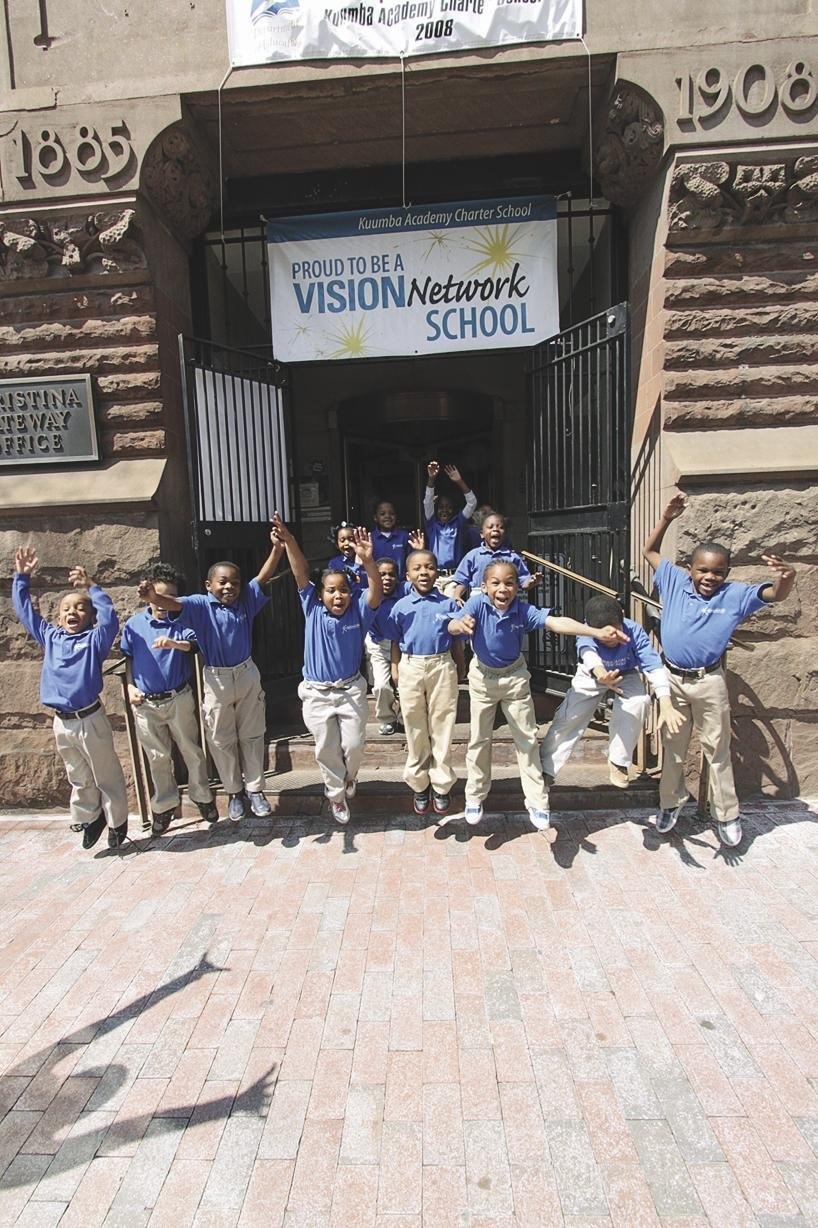
Delaware’s Race to the Top plan seeks to expand the Vision Network, a group of 25 schools that agree to work on the Vision 2015 goals and receive money and training help from the Rodel Foundation and others.
Mr. Herdman says Rodel and business leaders hope to raise an estimated $8-million from private sources, both local and national, to support the plan over the next four years. But he and Mr. Schoenhals say it will be critical to provide more than just money as the Race to the Top plan moves forward.
Secretary Lowery welcomes the scrutiny. “Sometimes it is easy for one to get caught up in his or her world,” she says. “Sometimes there needs to be a tap on the shoulder: Right, you’re doing good things, but is ‘good’ good enough?”




