A Design Firm Creates a Nonprofit Arm to Help Charities Get Better Results

By NICOLE WALLACE
Features Editor
October 16, 2011 | Read Time: 4 minutes
For the past 20 years, the design firm IDEO has helped companies like Apple, Ford, and Bank of America develop new products and services. Now the Palo Alto, Calif., company has started a nonprofit arm to take its approach to innovation to the charitable world.
IDEO.org, as the new effort is called, officially started in September and grew out of the company’s work with nonprofits in recent years.
IDEO’s approach to design starts with learning as much as possible about the people who will eventually use the product rather than starting with a hypothesis about what they need, says Patrice Martin, creative director of IDEO.org. Too often, companies and organizations start by thinking about what’s feasible or viable, but she says that doesn’t matter “unless what you’re creating is actually desired by the people you’re designing it for.”
‘More Dignity’
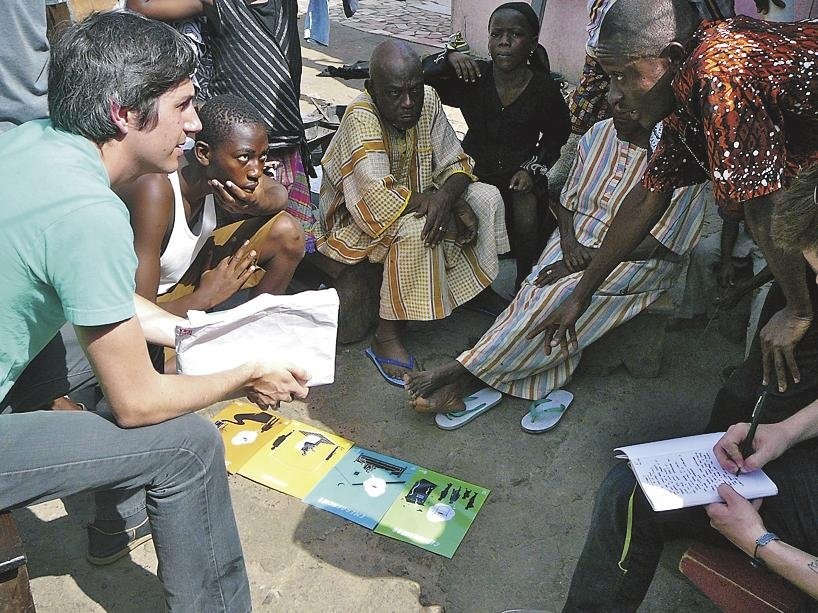
Last year the design company started working with Water & Sanitation for the Urban Poor, a nonprofit in London, and Unilever to develop a business to provide new sanitation products and services for city dwellers in Ghana. On a trip to the West African country, the company’s consultants set up interviews with many types of potential customers, such as women, heads of households, teachers, laborers, the elderly, and people with disabilities.
The consultants asked “an incredible array of questions,” says Andy Narracott, program coordinator at Water & Sanitation for the Urban Poor.
He says some of the questions were very personal: how much money their household earned, what kind of work they did, how many people lived in their home, did they have a toilet, what sanitation products and services did they pay for.
One woman they talked to had a question for her interviewers: Why have you come all the way from your country to ask about my toilet?
Mr. Narracott says most nonprofits would have said, “A toilet is good for your health, and we want to help you.”
By contrast, he says, one of the consultants told the woman that they were with Unilever, and they wanted to create a sanitation product people would be happy to buy but that also improves people’s health.
“From my perspective, that provides a lot more dignity than a typical [nonprofit] approach,” says Mr. Narracott.
Testing Ideas
After gaining an understanding of what customers want, IDEO lays out the options and develops prototypes to be tested.
“It doesn’t have to be a solution that’s ready to go to market,” says Ms. Martin, of IDEO.org. “Instead it’s something that acts like or looks like the experience that we’re trying to create. We get people’s reactions. We see what works; we see what doesn’t. And we can build on that.”
After several iterations, IDEO developed a portable toilet for the project in Ghana. Water & Sanitation for the Urban Poor is now running a six-month test of a service that rents the toilets and charges a weekly fee for the waste to be removed. The trial started with 20 customers, who got the first month of service free. Two months into the trial, all 20 customers had agreed to pay for the service, and the nonprofit group is adding more customers.
Mr. Narracott says the pilot project is providing valuable financial information his group is using to develop a business plan for the service.
Nurturing Talent
IDEO.org has created a fellowship program to spread the company’s design approach in the nonprofit world.
For 11 months, the fellows-five from the nonprofit world and three from IDEO-will work with IDEO.org on nonprofit design projects in areas that focus on agriculture, financial services, health, and other areas.
The idea is that the nonprofit fellows will take their new skills back to their charities and that the IDEO fellows will bring a new understanding of the problems nonprofits face back to their company.
“We’re bringing design and the social sector together in a big way,” says Ms. Martin. “We’re looking at the people who are working on our most intractable challenges and then we’re taking some of the best creative minds in the world and we’re putting them together.”
For more reports on how nonprofits that are taking bold, new approaches to the way they work, visit the Mission: Innovation blog.