
A Digital Superstar Gets Ready to Help an Iconic Museum Get Connected

By Caroline Bermudez
Contributor
July 14, 2013 | Read Time: 4 minutes
In 1947, an electrician and obsessive baseball fan named Jefferson Burdick donated 30,000 baseball cards to the Metropolitan Museum of Art and spent many years after that painstakingly cataloging his beloved collection. The trove included what is now known as the Holy Grail of baseball cards: the Honus Wagner T206, a 1909 card valued in the millions, featuring the Pittsburgh Pirates slugger nicknamed “The Flying Dutchman.”
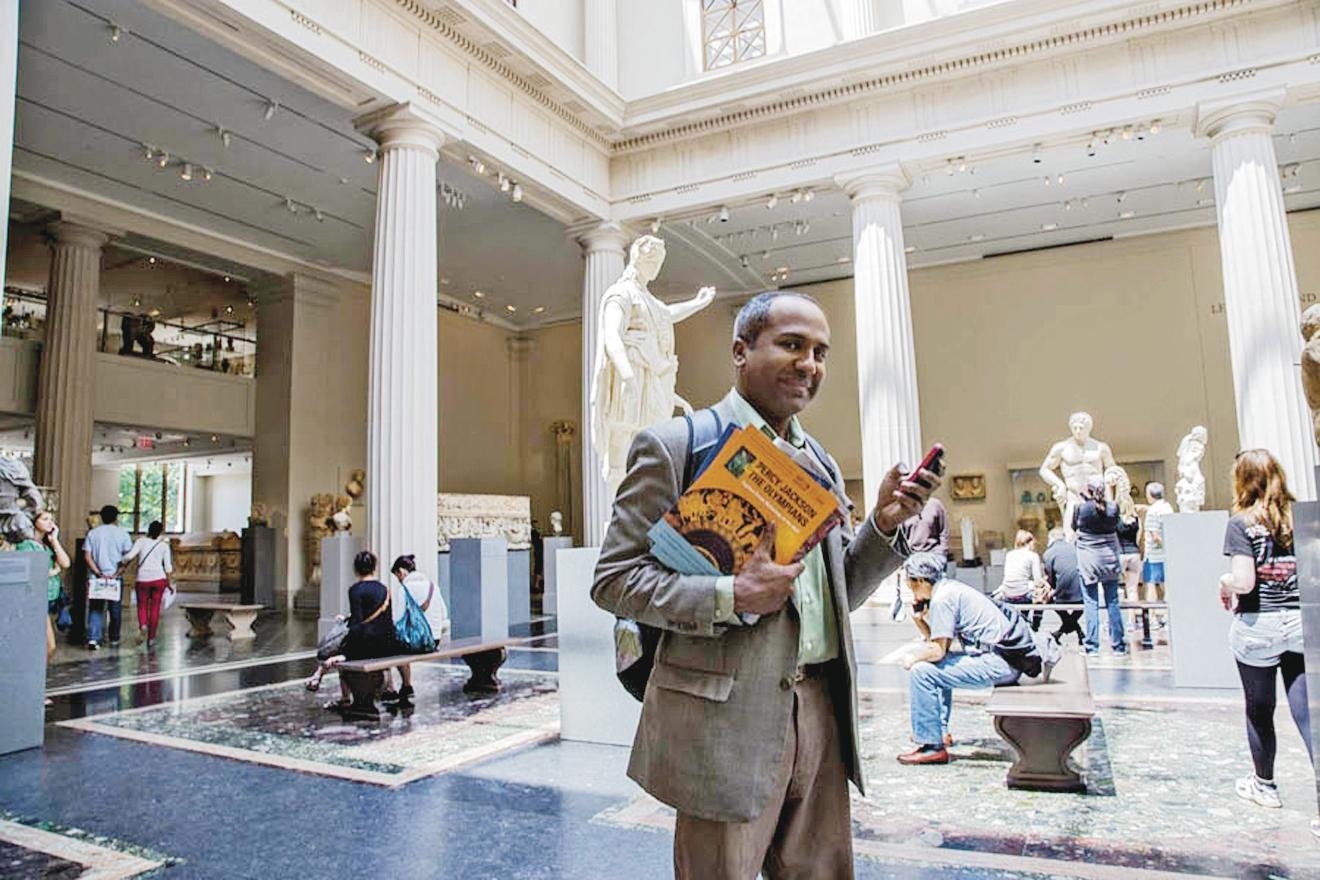
Most people don’t know that the museum has the largest collection of baseball cards outside the Baseball Hall of Fame. But that’s one of the many pieces of knowledge Sree Sreenivasan wants everyone to know. Next month he will become the first person to hold the title of chief digital officer at the museum. His mission will be to reach not only the more than 6 million visitors it attracts annually to its grand Fifth Avenue building but also those who may never set foot inside—all through the touch of their mobile phones.
“I have an obsession with connecting the physical and the digital,” says Mr. Sreenivasan.
Bridging Two Worlds
The 42-year-old has devoted his entire career to bridging the two worlds. As a journalist, professor, and social-media expert, Mr. Sreenivasan (@sree on Twitter) has spent the past 20 years on the faculty of Columbia University, culminating in his role as the first chief digital officer for the entire university, where he was responsible for online-education programs.
On top of his academic duties, Mr. Sreenivasan trains journalists around the world in the use of social and digital media and is often sought out as a television commentator.
Because he has long been leading technology efforts at an educational institution, Mr. Sreenivasan was an ideal candidate for the newly created role, say museum officials. Not only does he understand how to reach the public through his journalism training, says Thomas Campbell, the museum’s director, in a news release, but “his academic background will also position him well within our community of scholars.”
Mr. Sreenivasan has relished making digital media easier to digest for the uninitiated and hopes to continue spreading his influence through his work at the museum. His enthusiasm dates to back to his early days as a business reporter who was less interested in covering finance than in finding out more about the people and technologies behind it.
“People respond to people who can help [them] understand technology better,” he says. “If someone can save you time, money, aggravation, they will listen to you for other things.”
Early Calling
At the age of 12, and to the dismay of his parents, especially his diplomat father, Mr. Sreenivasan declared he wanted to be a journalist.
He got his first byline at 15, in a publication in Fiji that bills itself as one of the first newspapers in the world.
“The newspapers in Fiji like to think of themselves as the first, not the oldest, because they’re right next to the [International] Date Line,” he quips.
After working through college in India as a proofreader and occasional writer for a newspaper, Mr. Sreenivasan says he was hooked. He then decided to apply to Columbia’s journalism school; there, the peripatetic young journalist, who also spent his childhood in Japan, Bhutan, New York, the former Soviet Union, and Myanmar, found a home.
And he was not looking to leave it until a chance encounter steered him away. In February, he was on a panel at the Chief Digital Officer Summit, in New York, when he was approached by an official from the museum.
“I have had this 30-year, one-way love affair with the Met,” Mr. Sreenivasan says. “And when you’ve been in love with somebody for 30 years and they call, you gotta take the call.”
Although he brings a wealth of experience to his new job, he is careful to say that his appointment is that of “chief listening officer.”
During a trip to Washington last month for a speech to the American Society of News Editors, he visited with officials at the Smithsonian and the Library of Congress to learn about their digital projects and ways of engaging visitors, physical and virtual alike.
For all his 21st-century savvy, Mr. Sreenivasan’s aims are quite traditional: He wants to be part of maintaining a collection that spans approximately 5,000 years of human development.
“What we need to do in the museum space in general is to be part of the conversation about saving, keeping, preserving our shared history,” he says. “I can’t think of bigger or more important tasks than that.”
Advice to Nonprofits
In the video below, Mr. Sreenivasan shares his advice to other nonprofits about using social media to advance their missions.




