
A Family Digs Deep to Give Until It Hurts — and Launches a Movement

By Rebecca Koenig
Contributor
November 16, 2015 | Read Time: 6 minutes
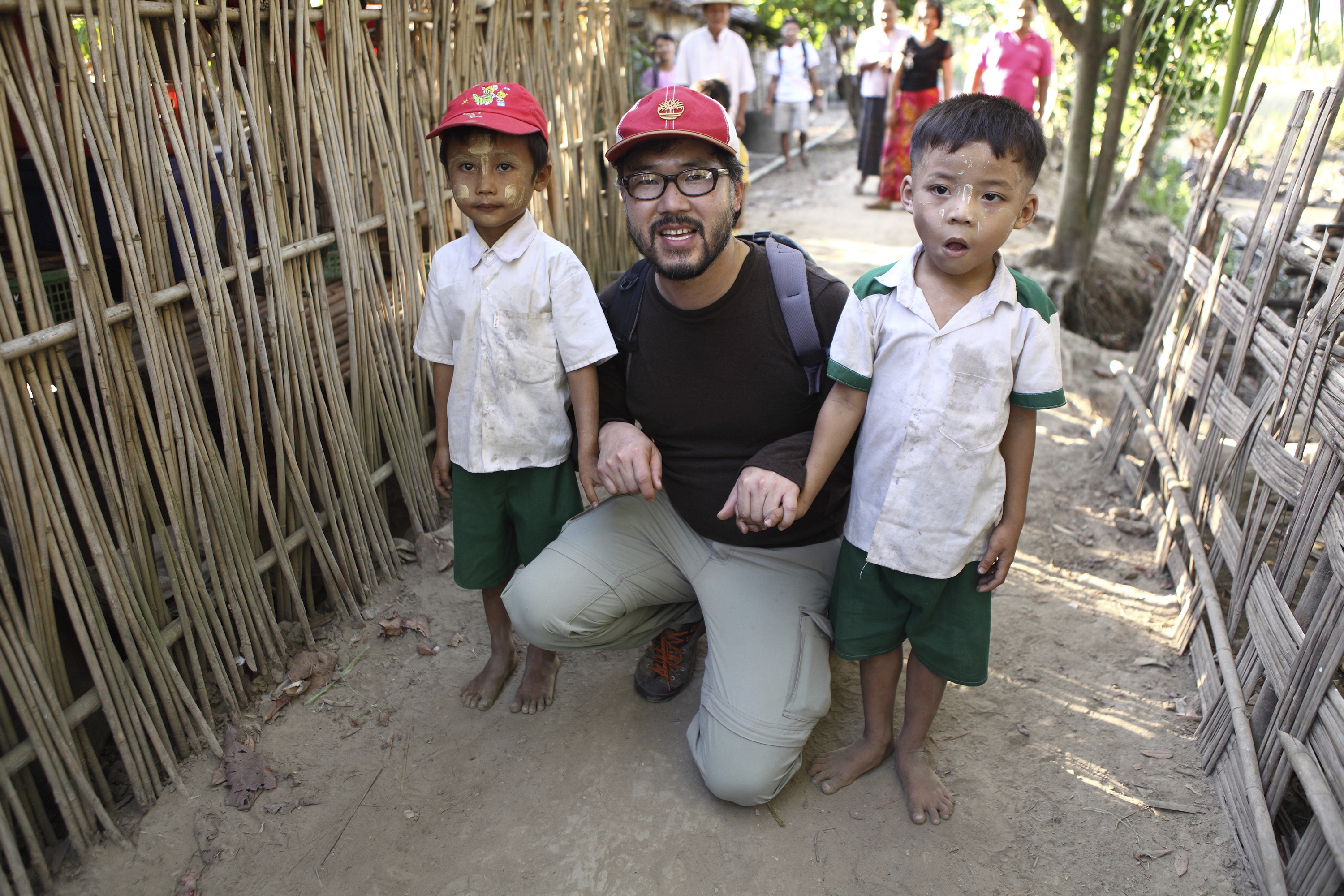
Eugene and Minhee Cho always worked hard to live out their faith — Eugene is the founder and pastor of Quest Church, an Evangelical Covenant Church congregation in Seattle, for starters. But six years ago, they made a decision that stretched even their lifelong commitment to helping others.
After months of discussions, prayer, and handwringing, the Seattle couple pledged the entirety of their $68,000 annual income to start a nonprofit they hoped would alleviate poverty around the globe.
They scrimped for nearly three years, sold a car, and at one point rented out their home for 10 weeks. The night Mr. Cho told his three kids they’d have to pack up and stay with family and friends, he wept.
A half-dozen years later, that sense of moral obligation remains steadfast. And the couple’s gesture has inspired others to give a more modest sum — what they earn in a day — to the couple’s aptly named charity, One Day’s Wages. It’s raised more than $3 million and made 84 grants to projects like a Water School program to improve sanitation in a community in Uganda and a Burmese Migrant Workers’ Education Committee effort to transport students to school. And it strives to appeal to young people by telling donors exactly how their money is being spent.
“We tend to elevate these kinds of individuals — celebrities, billionaires, rock stars — and we abdicate responsibility to other people,” Mr. Cho said. But “we all have the capacity to be philanthropists,” he said.
Growing Up in Poverty
Mr. Cho, 45, considers himself a “direct beneficiary” of others’ generosity. His parents grew up in “extreme poverty” in what is now North Korea, and they immigrated to the U.S. when Mr. Cho was 6 so that he and his two brothers could be educated.
“Folks were generous to my parents,” he said. “Because of compassion and kindness and people seeking fairness and seeking justice, Korea was able to develop as a nation and as a people.”
That family history, as well as his pastoral work, gave Mr. Cho compassion for people in need. But the “overwhelming statistics” about poverty often left him in “a state of paralysis,” he said.
Seeing the effects of scarcity firsthand during a 2007 trip to Myanmar (formerly Burma) compelled him to act. Mr. Cho visited communities of people displaced by violence, and learned that they struggled to pay teachers annual salaries of $40.
He told his wife about the experience, and they eventually decided to make the big donation to found One Day’s Wages.
“I was reminded of a quote of Mother Teresa’s: If you can’t feed a hundred people, then just feed one,” Mr. Cho said. “Through prayer and discernment, this idea came about.”
He’s since published a book about putting his desire to help people into action, titled Overrated: Are We More in Love With the Idea of Changing the World Than Actually Changing the World?
Crowdfunded Revenue
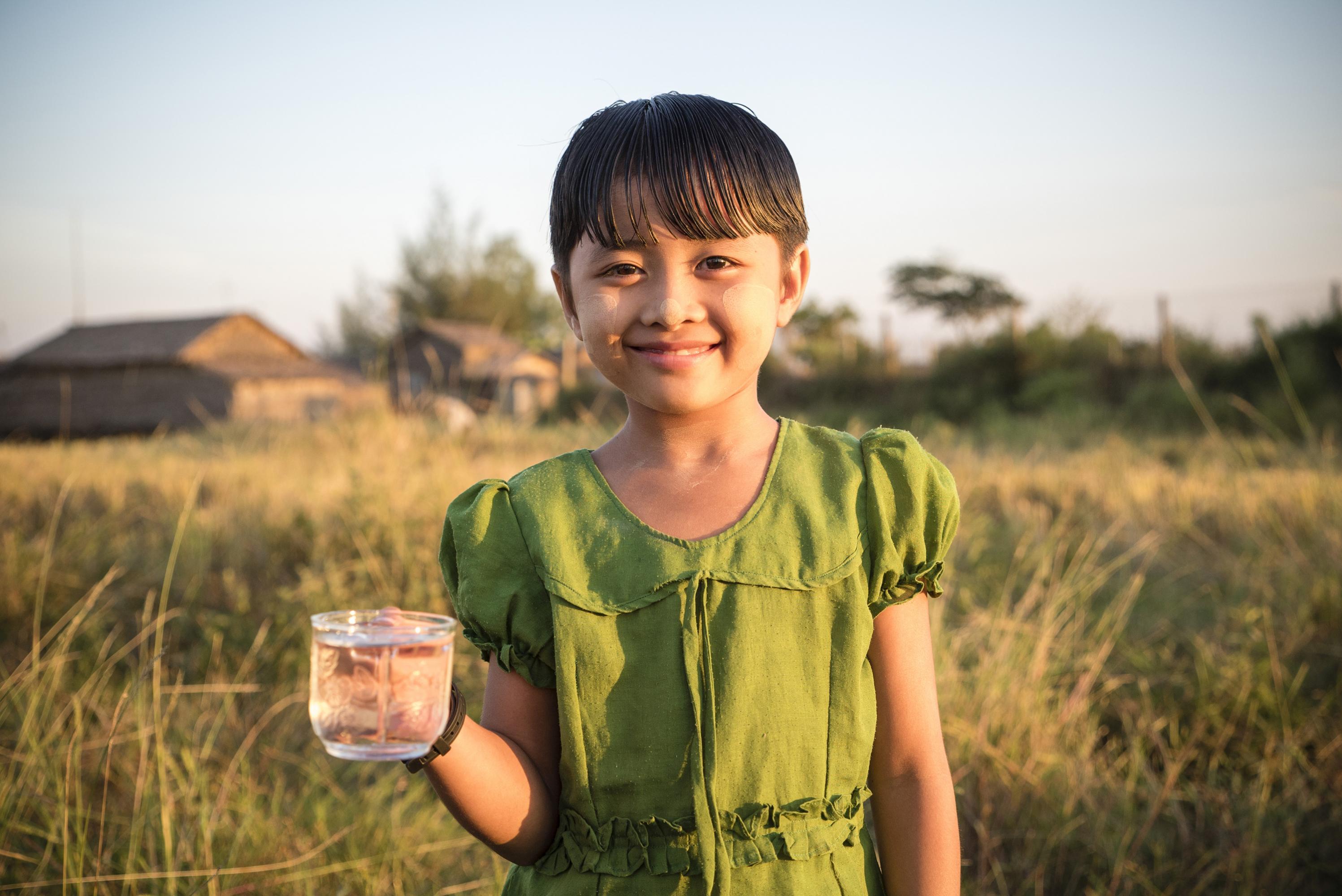
One Day’s Wages functions as a crowdfunded foundation, raising money from individuals and corporations and giving it away through grants to small nonprofits and community organizations run by local people around the world. It is secular, and takes its grant-making cues from the United Nations Millennium Development Goals.
The nonprofit’s website has a tool that calculates how much money a person makes per day and explains what that amount can buy. Someone who makes $50,000 a year, according to the calculator, makes $192.31 a day. It’s a sum that could buy 19 malaria nets, or clean water for nine people, or tuition for four children.
Some people adhere to the guidelines. Mr. Cho recalls an $86 donation from a 16-year-old boy who earned that amount during one of his shifts at Subway. But others give smaller amounts, and some much more. There was the high-school student who biked across the U.S. to raise $10,000 for the nonprofit’s water fund.
“There’s simplicity to the fact that we can all be generous,” said Michael Chang, a board member. “We really love and respect people who can give at any level.”
Youth Support
Mr. Cho attributes young donors’ support of One Day’s Wages to the nonprofit’s commitment to transparency, low costs, and thorough vetting of grant recipients. It raises money for operating expenses during an annual gala, and from board members’ donations. Of all other donations (except credit-card costs), 100 percent goes directly to grantees, Mr. Cho said.
“There’s a lot of uncertainty, cynicism, skepticism,” he said. “I think there are questions people have about transparency, overhead. We’re trying to respond to that.”
The nonprofit’s young audience made One Day’s Wages an attractive philanthropic partner to Bryan Papé, chief executive officer at MiiR, a Seattle-based B Corporation that sells “active lifestyle” products like water bottles and bicycles and uses parts of each sale to support water, education, and transportation development projects in poor areas. MiiR has given more than $100,000 to One Days Wages, Mr. Papé said.
“We liked that One Days Wages engages their following,” he said. “It’s a younger demographic, people who are interested in engaging online and wanting to do something tangible and physical.”
Mr. Papé also appreciates the nonprofit’s openness, which enables MiiR consumers to track exactly where their money is being put to work.
“We love to be transparent about where we’re putting funds,” he said.
Christian Roots
Although the nonprofit is not religious, its founders’ ties to the Christian community allow it to draw on churchgoers’ support.
“Growing up in the Asian American church, it felt very personal” to join One Day’s Wages, Mr. Chang said. “It’s kind of rare to see an Asian-American pastor devote a lot of his time and energy to issues around global poverty and development.”
But it’s Mr. Cho’s ability to reach beyond that audience that has made One Day’s Wages successful, Mr. Chang said.
“He’s not just trying to inspire other Asian-American Christians,” Mr. Chang said. “We can all agree that serving the poor, trying to end poverty, that should be something we’re all about.”




