A Family That Doesn’t Shy Away From Big, Complex Gifts

By Maria Di Mento
Senior Editor
December 5, 2017 | Read Time: 8 minutes
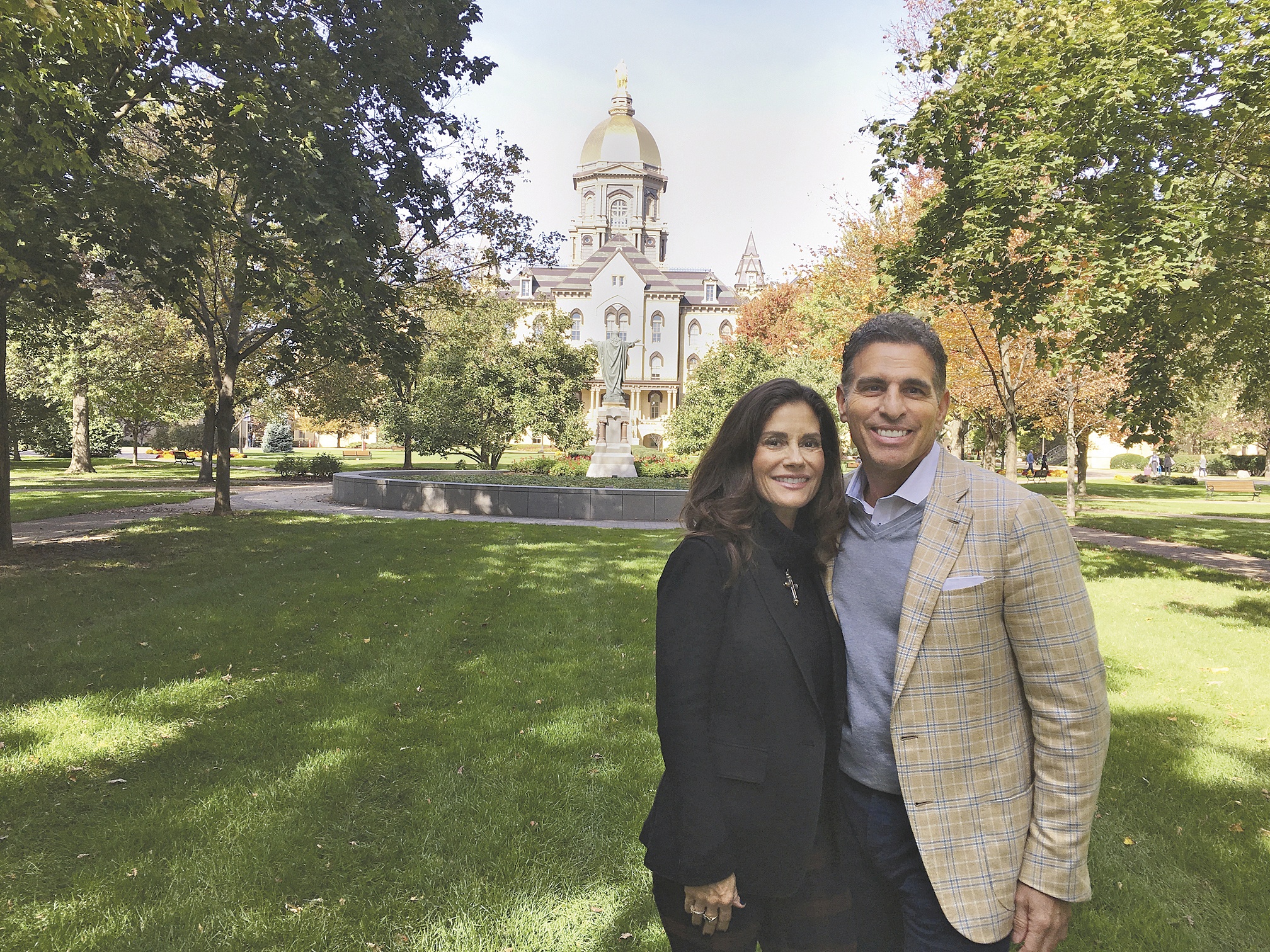
When Kenn and Pamela Ricci pledged $100 million to the University of Notre Dame in October, it was the largest commitment the couple had ever made.
The donation to Mr. Ricci’s alma mater was unusual because the couple said the university could use the money any way it wants — hardly the norm with such big gifts. But that’s not the most surprising aspect of the donation. What really made the news stand out was how the Riccis have structured the commitment.
Mr. Ricci, 61, and Ms. Ricci, 54, plan to leave the university a controlling stake in Directional Aviation Capital, a holding company Mr. Ricci founded in 2003 to manage businesses such as Flight Options and FlexJet he founded or bought.
Under the agreement, Notre Dame will become what’s known as the successor general partner in the family’s company when Mr. Ricci dies. That means the university will be responsible for managing sales of the company’s assets within three years of his death and returning any proceeds over the pledged amount to the Ricci Family Foundation.
The deal could bring the university far more than $100 million if the value of Directional Aviation Capital grows sharply and the Riccis decide to increase the amount of the donation, said Mr. Ricci. The couple also said they might choose to pay some money toward the pledge while they are alive rather than waiting for the company’s sale after his death. “The beauty of this is that it’s adaptable over time,” said Mr. Ricci.
Inspiring Others
Gifts as complex as the one the Riccis made have pros and cons, says Eileen Heisman, a planned-giving expert who leads the National Philanthropic Trust, a donor-advised fund.
The down side is that the institution will have to manage and eventually liquidate the holding company. While that could spell disaster for most small charities, it’s less of a burden for a large nonprofit like a university, she said. “The pros are a university gets a big unrestricted gift that’s very generous and sets the tone for other donors,” said Ms. Heisman.
Mr. Ricci said he and his wife decided to structure the gift this way to avoid succession problems at his company and discourage the feuds families sometimes have when the founder of the family business dies.
They also wanted to make sure their children did not inherit too much. “We wanted our kids to have enough money to do something but not enough money to do nothing,” said Mr. Ricci. “And we wanted to make sure that while we’re alive we have some contribution to what would happen to the money.”
The three Ricci children are all under 30, and each owns a 20 percent stake in the holding company. Under the agreement, the children can choose to buy any of the businesses from Notre Dame (which will own 40 percent.)
Strategic View
Mr. Ricci, who says he is worth about $300 million, didn’t start out wealthy. He grew up an only child in a suburb of Cleveland. His father worked for the Treasury Department’s intelligence division, and his mother was a homemaker.
Between the time he enrolled at Notre Dame in 1974 and graduated in 1978 with a degree in accounting, he had earned private and commercial pilot’s licenses and had become a flight instructor.
In 1981 he bought Corporate Wings, an aircraft management business, and went on to acquire a stable of other aviation companies. He also earned a law degree in 1986.
Mr. Ricci spent the late 1980s and early 1990s as a private pilot for celebrities like Richard Branson and Donald Trump. Throughout this time, Mr. Ricci’s wealth grew as he bought and sold aviation companies.
He started his foundation, now worth $1.1 million in assets, 10 years ago. It primarily supports Catholic groups; cystic fibrosis organizations; Able Flight, a charity that offers disabled people flight and aviation job training; and other human-service and education nonprofits.
Mr. Ricci says the couple had previously given $15 million to Notre Dame and to other nonprofits. He says he and his family tend to give to causes that have touched their lives.
Their support for the Cystic Fibrosis Foundation, for example, grew out of their experiences with Mr. Ricci’s youngest son, Austin, who was born with the disease.
Still, the family didn’t start giving until Mr. Ricci examined whether the nonprofit had a clear strategy for funding research and drug development to cure the disease.
“We usually look for organizations that have a strategic view we agree with, not an immediate need,” said Mr. Ricci, who got to know the nonprofit’s leaders and paid close attention to its financials.
Mr. Ricci was impressed with an investment by a branch of the nonprofit, Cystic Fibrosis Foundation Therapeutic, which put more than $75 million last year into Vertex Pharmaceuticals to help develop medicines for the disease.
The nonprofit has been involved with the company since 2000 and has poured about $200 million into its work developing drug therapies. Those efforts have been successful: At least six new treatments in which the charity has invested have been approved for use in patients with the disease. “They went into the public market, and they raised public capital,” he said. “We understood that strategically they had what it takes.”
Familiar Nonprofits
The Notre Dame commitment is another example of Mr. Ricci’s determination to put his money behind organizations he has gotten to know.
Mr. Ricci had previously given to the university, including $5 million for the marching band and recreational sports, but it was his decades-long involvement as a Notre Dame alumnus and his close friendship with the university president and fellow 1978 graduate John Jenkins that reassured him the complicated gift of his company’s assets would be handled well.
“I know the culture and what Notre Dame stands for,” said Mr. Ricci. “I know what they’ve been doing for 175 years, and I know they’re going to do that for the next 100 years.”
Through his close involvement over the decades, he has also learned how few unrestricted dollars the university has at its disposal.
“People give money to endow a professorship or fellowship or for a scholarship program for someone who is like them, so that money isn’t available for financial aid or the university’s needs,” said Mr. Ricci. “To have unrestricted money that goes to the mission of the university, not my mission of Italian aviators from Ohio, is tremendously important and we wanted to highlight that.”
Children Involved
The Riccis’ desire to be an example to other donors extends to their children.
The family has two foundation meetings a year, and from the time they were in grade school each child has been required to prepare what the family calls a “giving thesis,” a written memo explaining where they want to donate and why the charity is worth supporting. When Mr. Ricci’s youngest son was 6, he first said he wanted to give to Disney because he loved the movies; the couple then explained that wasn’t what charity meant, and he eventually drafted a new concept.
“All of them were involved in crafting the gifts they gave,” he said, “and every one of them could explain to you why we’re giving to that and what it means to them.”