A Grant Maker Champions Support for Overburdened Charity CEOs

By Maria Di Mento
Senior Editor
September 8, 2013 | Read Time: 4 minutes
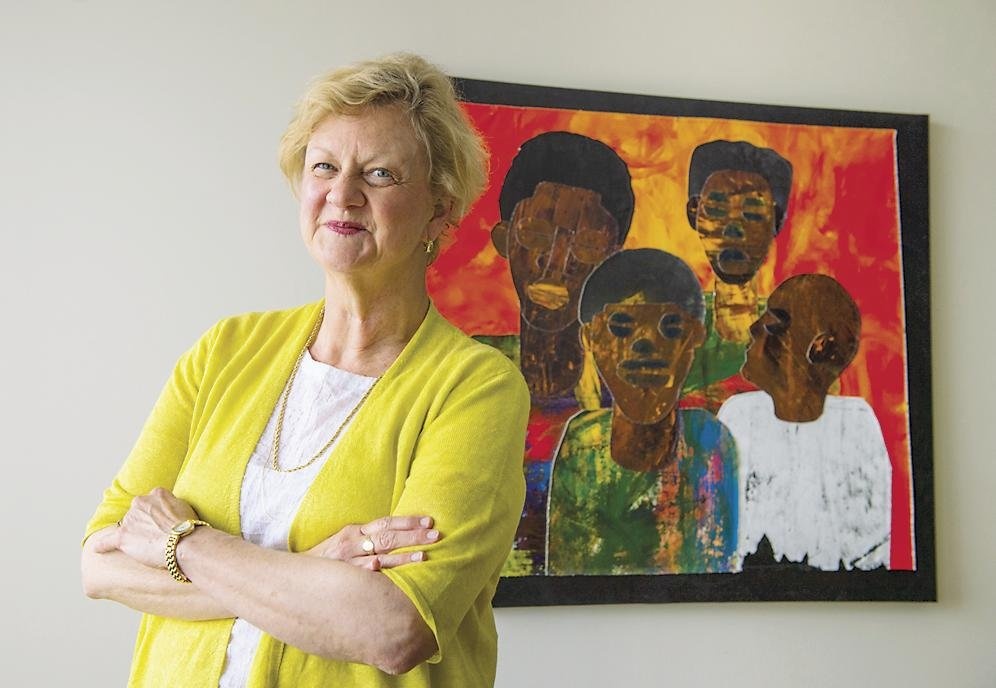
Early in her tenure as head of the Eugene and Agnes E. Meyer Foundation, Julie Rogers learned an indelible lesson: Most charity leaders are on their own.
When she joined the Washington fund 27 years ago, she often went on site visits, checking up on Meyer’s grantees. She learned that even the best-run charities struggled to make ends meet and their CEOs had to spend the bulk of their time raising cash, leaving them little time to further their nonprofit’s mission.
She also discovered that most charity leaders got little help from their boards, who were tough on them when they fell short. In later years, Meyer sponsored research that found one in three nonprofit executives had been hired after their predecessor was fired or pushed out.
All these things, Ms. Rogers says, solidified her commitment to further Meyer’s work to support charity leaders.
“The reason I’ve been happy to be here so many years is we kept evolving programs that would assist the leader,” says Ms. Rogers, 62, who has announced plans to step down from Meyer next summer.
“If it was a management-assistance grant, so they could get the right consultant at the right time, we developed that management-assistance program,” she notes. “For a long time, we had a cash-flow loan program, so if you couldn’t make payroll, you could borrow some money.”
During her tenure at Meyer—a time when its assets have grown from $50-million to more than $200-million—she has seen more foundations join hers in its concern for the people who run charities.
More grant makers today, she notes, “are more willing to give general operating support.”
Embracing Activism
Meyer, a 69-year-old fund started by the longtime owners of The Washington Post, also focuses its $6-million in annual grant making on education, health, and economic security, giving top priority to groups that help low-income people in and around the nation’s capital. But through the research it supports on the nonprofit work force, and through the practical aid it offers, it has also carved a niche in the foundation world as a supporter of nonprofit workers.
“We have seen ourselves as champions for what they’re doing, and that has led us, in all kinds of different ways, to serve those leaders in the name of those they serve,” says Ms. Rogers.
Ms. Rogers, who started her career as an elementary schoolteacher in Maryland, thought she wanted to devote her career to education before she realized she wanted to become more of an activist.
“I loved teaching, but when you’re teaching you can’t provide the kind of social supports in mental health or other things that the child really needs to succeed, so I had a certain frustration,” she says. “You could see they were really going to struggle later on.”
In the late 1970s, as chief of staff for a Washington City Council member, Ms. Rogers got acquainted with local nonprofit leaders, developing respect for them as they helped craft or push legislation to benefit the city’s poor and vulnerable residents.
That broad understanding of the city, of the hardships faced by its poor, and of the challenges its nonprofit leaders were up against when trying to help the needy, all led Ms. Rogers to apply for the Meyer job in 1986.
“I didn’t know the foundation world, but I knew the local nonprofit world, I knew the city well, and I think they liked it that I had taught school, because Mrs. Meyer was very passionate about public education and kids succeeding,” says Ms. Rogers.
Supported Leaders
During her tenure, Ms. Rogers has accomplished much to support charity leaders. She’s especially proud of creating Meyer’s Exponent Awards, which provide talented leaders of the foundation’s grantee organizations with money ($100,000 over two years) to attend leadership and personal-development programs.
It’s aimed at helping overtaxed nonprofit leaders avoid burnout, an all-too-common problem that can hinder a charity’s ability to do its best at helping those it serves, says Ms. Rogers.
Jeanne Bell, chief executive of CompassPoint Nonprofit Services, which has worked with Meyer on studies about the nonprofit work force, says Ms. Rogers’s commitment to charity executives is unique.
“She’s that combination of really strategic but also having this great empathy and warmth about the unique contribution that nonprofit leaders make.”
Ms. Rogers also has advice for all grant makers working on solving society’s problems: Don’t ignore the personal well-being of today’s charity leaders. Foundations do so at their own and society’s peril.
“We need to face the facts: Profound undercapitalization and weak governance are exhausting our best nonprofit leaders, especially founders, longtime leaders, and emerging younger leaders, and we need to be humble.”
Julie Rogers, president, Eugene and Agnes E. Meyer Foundation
Education: bachelor’s degree, Duke University; master’s degree in teaching, George Washington University
Career highlights: staff director, Council of the District of Columbia’s Committee on Human Services; elementary schoolteacher, Montgomery County, Md., public-school system
Salary: $370,000
Retirement plans: Undecided. Options include working with children, teaching yoga, and helping new philanthropists learn how to give. “I plan to sit back, take a moment to breath and relax, and take the time to think about what the next chapter will be like.”