October 26, 2006 | Read Time: 6 minutes
Kim Klein had planned to spend her life counseling parishioners, not grass-roots nonprofit groups. But
while studying to become a Methodist minister 30 years ago, Ms. Klein volunteered at a shelter for battered women, where she solicited donations from churches and synagogues.
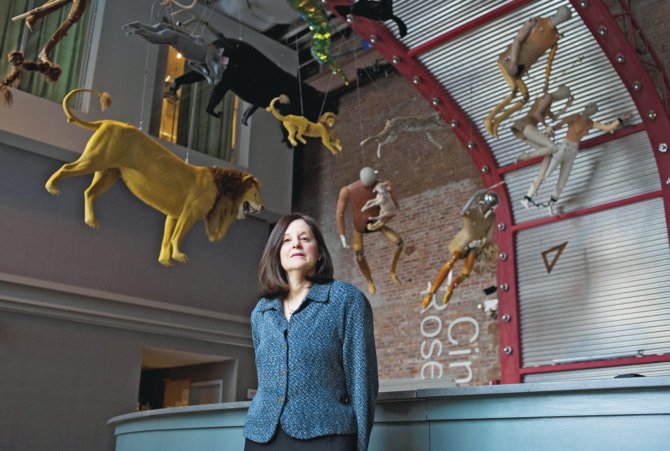
“I really felt I was called to go to seminary, and as soon as I was there I was called to this other ministry of fund raising,” says Ms. Klein. She left her religious studies and has since taught fund raising to thousands of nonprofit groups, seeking to make an impact on social issues through her work as a consultant and co-founder of the Grassroots Fundraising Journal, in Oakland, Calif. In August, Ms. Klein, 52, stepped down as its publisher.
“She is the guru for fund raising for alternative causes,” says Marty Durlin, general manager at KGNU, in Boulder, Colo., who worked with Ms. Klein on a fund-raising campaign for the community radio station two years ago. “Often people don’t know how to begin. She explains those nuts and bolts in a realistic way and also does a lot of cheerleading.”
Ms. Klein offered her consulting advice at a reduced rate to KGNU, but she knew not all nonprofit groups had access to all the in-person advice they needed. So she created the journal to provide basic information, including how to recruit volunteers and build a board, as well as strategies for increasing donations.
Since 1981, the publication has expanded from a small set of subscribers to about 4,000 in the United States and abroad, and its staff has grown from two volunteers to two full-time and four part-time employees.
Two years ago the journal, which used to be part of Ms. Klein’s consulting business — she has never drawn a salary from it — became a nonprofit organization in order to solicit donations to help pay for its publication.
The journal, which had an operating budget of $250,000, is in the process of merging with the Grassroots Institute for Fundraising Training. Last year it raised more than $20,000.
Now the publication must “sink or swim on its own,” says Ms. Klein, who tired of journal-related meetings and is eager to pursue other projects. Its new co-directors are Stephanie Roth, Ms. Klein’s business partner, and Priscilla Hung, the former development director at DataCenter, a nonprofit research and consulting group, in Oakland, Calif.
The journal will benefit from the change in leadership, says Ms. Klein.
Back in 1981, she felt the magazine stood at the “cutting edge” in its writing about grass-roots fund raising, which she defines as raising money from a broad range of people to support a group’s project or cause. Some strategies still apply, but others have changed beyond her expertise, says Ms. Klein.
For example, she says, the next generation of grass-roots leaders have their own set of challenges in raising money for social-justice causes. “There is a new edge of continuing the conversation about the relationship between social justice and fund raising, and how is that impacted by large numbers of young people? What is the role of people of color in all that? How can people build broad bases of individual donors taking into account lots of cultural differences?” she says. “How do you think about that in Spanish and online?”
She is also loath to learn about new technology, including blogs and e-mail discussion groups, which the journal needs to delve into to stay relevant.
“Priscilla is 28, the same age I was when I started the journal,” Ms. Klein says. “She has huge amounts of energy.”
However, Ms. Klein is not clipping her ties completely: Her consulting office sits next door to the journal’s office and she will continue to write the journal’s online advice column, “Dear Kim.”
In an interview with The Chronicle, Ms. Klein discussed changes in grass-roots fund raising and what’s next on her agenda:
What attracted you to grass-roots fund raising?
I absolutely love when you go into a church basement or school cafeteria and there are 20 people sitting there who have all made arrangements to be there and they are talking about “What do we do to stop Wal-Mart?” or “What are we going to do to make our schools better?” The energy of that is so great and so much more fun than professional organizations. Think about how Amnesty International started — this lawyer started it just to get two Portuguese people out of jail and then it went on to be this major world force.
What are the obstacles grass-roots groups encounter in raising money?
People involved with grass-roots groups have to explain themselves over and over, because they are not a household word, like the Red Cross. So they start without visibility and they often start with a self-image that isn’t accurate, which is that they don’t know anyone. I say, “You know as many people as anybody else. Why wouldn’t you?”
Have fund-raising challenges for these groups changed in 25 years?
The fundamental challenge is still the same: No one wants to ask a friendly person who has money to give them some of it. The social- justice movement has not done a good job in deconstructing the taboo about money the way a lot of organizations, particularly with the advent of AIDS, have done to deconstruct the taboo about discussing sex and sexuality. The hospice movement really helped introduce the idea of talking about death and dying. Part of the mission of social-justice groups is to call attention to the gap between the rich and the poor, and what can be done to redistribute wealth. There is enough money in the world to solve all its problems; it just needs to be divided more equitably.
What’s the biggest mistake grass-roots groups make when trying to establish themselves?
Cutting their budgets instead of increasing their fund-raising goals. What is the incentive to work hard only to have the same poor computers and the same poorly paid staff? Why would cutting be a solution to your problems? Raising money is your solution.
What new projects will you focus on now that you have more time?
One of the things I’m trying to do is get people who work for nonprofit groups to actually talk more about what do you feel in your heart of hearts about taxes. Most people, including me, feel, well, I’d rather not pay them. That’s not really true — we have to have public-health departments, sidewalks, etc. But they haven’t stopped to think, what would a fair tax policy look like and how can I influence it? I’m planning a series of workshops around those topics.
|
ABOUT KIM KLEIN, FORMER PUBLISHER OF THE GRASSROOTS FUNDRAISING JOURNAL Education: Earned a bachelor of arts degree in religious studies and classics from Beloit College, in Wisconsin, in 1976. Completed one year of study toward a master’s of divinity at Pacific School of Religion, in Berkeley, Calif., from 1976 to 1977. Previous work experience: Ms. Klein served as the executive director of the Appalachian Community Fund, in Knoxville, Tenn., from 1986 to 1989, and as the endowment coordinator at the Funding Exchange, in New York, from 1989 to 1992. Since 1981, she has also worked as an independent fund-raising consultant. Most recently published book: Fundraising in Times of Crisis (Jossey-Bass, 2004) What she’s reading: Double Crossed: Uncovering the Catholic Church’s Betrayal of American Nuns, by Kenneth Briggs Career she says she might also have enjoyed: Veterinarian |