A Lesson for Fundraisers: Some of the Biggest Philanthropists in 2013 Maintained a Low Profile

By Maria Di Mento
Senior Editor
February 10, 2014 | Read Time: 3 minutes
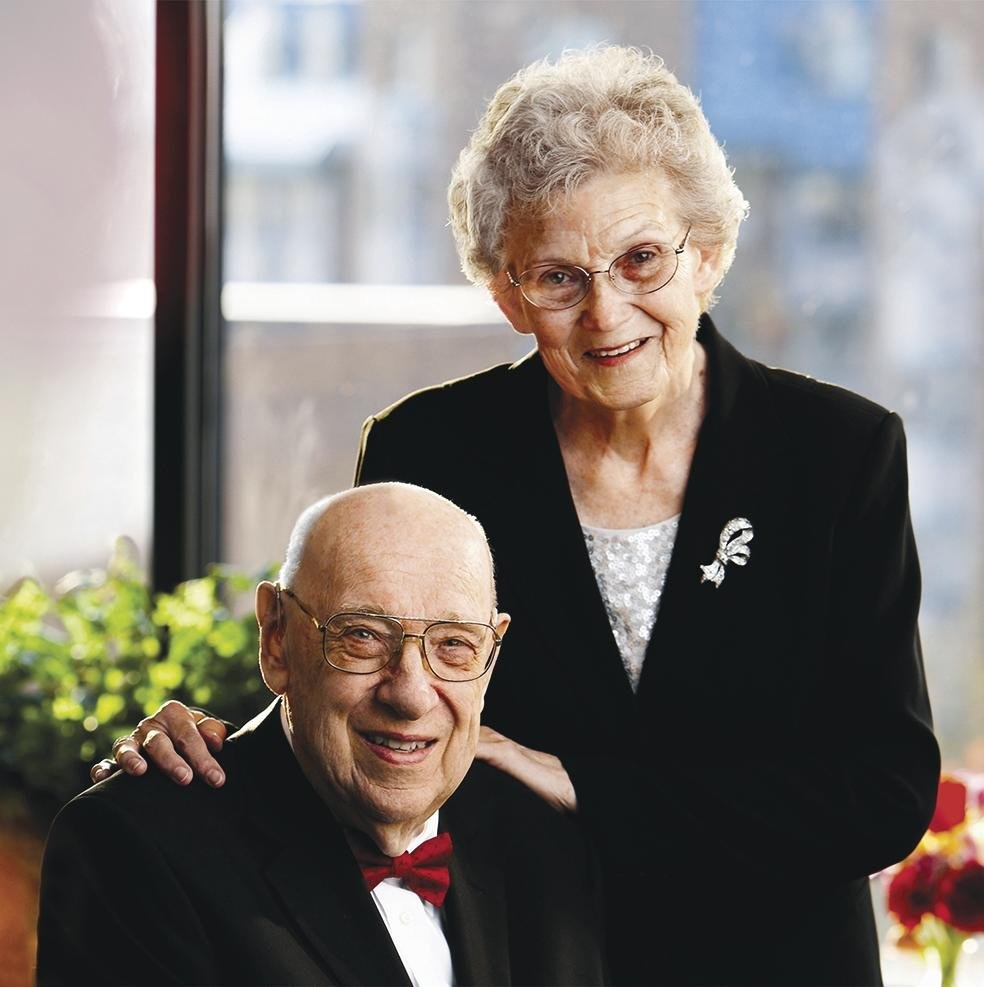
Robert Kern first came to the Mayo Clinic as a 5-year-old patient in 1930. It was the beginning of the Great Depression, and Mr. Kern’s father, a minister with little money, could not pay for his sick little boy’s treatment. The Mayo Clinic provided that care free.
Today, Mr. Kern, 88, and his wife, Patricia, 85, are among the biggest donors to the organization.
Last year they pledged $67.3-million, mostly to support operating costs of the clinic’s Center for the Science of Health Care Delivery, which aims to improve the way patients receive health care. The couple earmarked $10-million of the pledge to endow five scientific-director positions at the center, and $3-million to support the center’s online-education programs.
“Our desire is that the center will establish new standards for more effective, efficient care and bringing the dream of health care for all to reality,” said Mr. Kern, founder of a generator manufacturing company, when the gift was announced in October.
The couple gave Mayo $20-million in 2011 to establish the center, and the institution named the center for the Kerns after last year’s pledge.
Jeffrey Carlton, a businessman, who died in 2012 at age 61, left $212-million to create a foundation that will support four nonprofits: American Lebanese Syrian Associated Charities (the fundraising arm of St. Jude Children’s Research Hospital), Hoag Hospital Foundation, Paralyzed Veterans of America, and Principles Inc. (the nonprofit side of Impact Drug and Alcohol Treatment Center).
Mr. Carlton, a private and modest man, was not much involved with those organizations.
He began donating $200 to $500 a year to the veterans group in the early 1990s and notified the charity that it would receive a bequest but did not hint at its size.
Millicent Atkins, a farmer who was 93 when she died in 2012, shocked two colleges and a church when she left them $37.5-million to split.
Ms. Atkins attended the University of Minnesota’s School of Agriculture in 1937 but had no contact with the institution after that. University officials think she put the institution in her will because it was her mother’s alma mater.
She earned a teaching degree in 1940 from Northern State University, another beneficiary. She then became a farm manager and landowner, eventually amassing more than 4,000 acres of valuable farmland in South Dakota’s Brown County. The third recipient was a church in her state.
John Boruchin, a homebuilder who was 93 when he died in 2012, left $72-million to the Jewish National Fund.
He did not specify how the money should be used, but officials decided to put it toward its water projects and its education programs that connect children to Zionism. Both are areas he had expressed an interest in.
As Holocaust survivors, Mr. Boruchin and his wife, Dora, came to the United States from Eastern Europe with no money and settled in Fontana, Calif. He worked in a steel plant, then joined relatives in a lumber business and eventually began building homes and purchasing real estate.
Although the couple became wealthy over time, they lived in the same modest home (one of the first his company built) until Mr. Boruchin’s death.
Before his bequest, Mr. Boruchin had given a total of about $200,000 to the Jewish National Fund.
Jack MacDonald, a Seattle lawyer, led a thrifty life to avoid attention and set aside as much money as he could for charity.
When he died last year at age 98, he left $139-million to three nonprofits.
His mother, Katherine, was a longtime volunteer at one beneficiary, Seattle Children’s Hospital, and while he told the hospital and the University of Washington School of Law to expect bequests, the Salvation Army knew Mr. McDonald simply as a person who every once in a while gave $20.